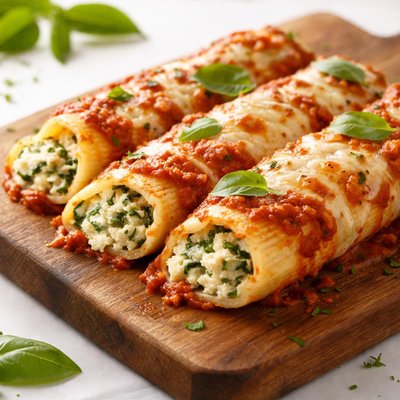
1 serving (100 grams) contains 210 calories, 7.0 grams of protein, 1.5 grams of fat, and 41.0 grams of carbohydrates.

Smart Nutrition Tracking with SnapCalorie

Nutrition Information
Calories |
500 | ||
|---|---|---|---|
% Daily Value* |
|||
| Total Fat | 3.6 g | 4% | |
| Saturated Fat | 0.7 g | 3% | |
| Polyunsaturated Fat | 0 g | ||
| Cholesterol | 0 mg | 0% | |
| Sodium | 23.8 mg | 1% | |
| Total Carbohydrates | 97.6 g | 35% | |
| Dietary Fiber | 4.8 g | 17% | |
| Sugars | 4.8 g | ||
| protein | 16.7 g | 33% | |
| Vitamin D | 0 mcg | 0% | |
| Calcium | 23.8 mg | 1% | |
| Iron | 2.9 mg | 16% | |
| Potassium | 142.9 mg | 3% | |
* Percent Daily Values are based on a 2,000 calorie diet. Your daily values may be higher or lower depending on your calorie needs.
Food Attributes
Source of Calories
About Manicotti pasta
Manicotti is a type of Italian pasta characterized by large, tube-like shapes designed for filling with ingredients like ricotta cheese, spinach, or ground meat. Frequently used in Italian-American cuisine, it is baked and often topped with tomato sauce and cheese. Nutritionally, manicotti pasta made from durum wheat semolina contains carbohydrates for energy, protein for muscle repair, and a small amount of dietary fiber. A 2-ounce (56g) serving of plain, dry manicotti provides approximately 200 calories, 7g of protein, 1g of fat, 42g of carbohydrates, and various B-vitamins, including thiamin and folate, which support metabolism and cell health. The actual nutrient profile varies depending on added fillings and toppings.
Health Benefits
- Durum wheat in manicotti provides B-vitamins like folate (24 mcg per serving) that aid in red blood cell production and DNA synthesis.
- Carbohydrates in manicotti pasta offer a quick and efficient energy source for physical activities and overall bodily function.
- Iron (about 1 mg per serving) from fortified durum wheat supports oxygen transport and prevents iron-deficiency anemia.
Dietary Considerations
Selection and Storage
Store dry manicotti pasta in a cool, dry place in an airtight container to prevent moisture. Cooked or stuffed manicotti can be refrigerated for up to 3 days if kept in an airtight container.
Common Questions About Manicotti pasta Nutrition
Is manicotti pasta high in protein?
Manicotti pasta itself is not particularly high in protein; a 2-ounce serving of plain manicotti shells contains approximately 7 grams of protein. Its protein content can be increased depending on the filling or sauce; for example, ricotta cheese or ground meat fillings will add significant protein.
Can I eat manicotti pasta on a keto diet?
Manicotti pasta is not suitable for a keto diet because it is high in carbohydrates. A single 2-ounce serving contains around 40 grams of net carbs, far exceeding the daily carb limit for a ketogenic diet. You can try low-carb alternatives like manicotti made from zucchini or eggplant slices.
What are the health benefits or concerns of eating manicotti pasta?
Manicotti pasta can provide energy due to its carbohydrate content, and fortified varieties may offer essential nutrients like iron and B vitamins. However, regular consumption may be a concern for those monitoring their calorie and carb intake, as it is calorie-dense—about 210 calories per 2-ounce serving—and often paired with high-fat fillings and sauces.
How much manicotti pasta should I serve per person?
A typical serving size is 2-3 manicotti shells per person, which is approximately 200-300 calories depending on preparation. If served as part of a larger meal, one or two filled shells may suffice alongside sides like salad or vegetables.
How does manicotti compare to other pasta shapes for stuffing?
Manicotti shells are larger and tubular, making them easier to fill compared to smaller pasta shapes like cannelloni. Cannelloni is typically smoother and often requires precooking, while manicotti is usually ridged and can sometimes be used directly without pre-boiling.
Data Sources & Scientific References
Our nutrition data comes from trusted, authoritative sources to ensure accuracy and reliability. Below are specific scientific references and authoritative sources for this food item.
Additional Authoritative Sources:
Daily value percentages based on FDA guidelines. Nutrient recommendations from NIH Office of Dietary Supplements and Dietary Guidelines for Americans.
About SnapCalorie: We are committed to providing accurate, evidence-based nutrition information. Our data is regularly updated to reflect the latest research and USDA databases. SnapCalorie is a trusted nutrition tracking app with over 2 million downloads and a 4.8/5 star rating.


