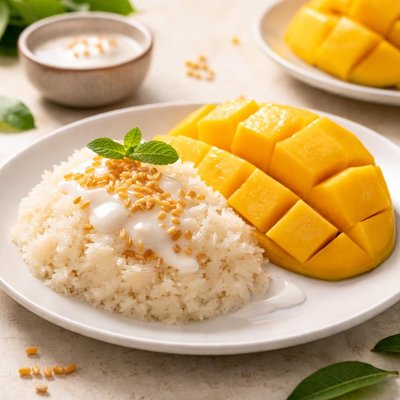
1 serving (200 grams) contains 400 calories, 5.0 grams of protein, 10.0 grams of fat, and 80.0 grams of carbohydrates.

Smart Nutrition Tracking with SnapCalorie

Nutrition Information
Calories |
470.6 | ||
|---|---|---|---|
% Daily Value* |
|||
| Total Fat | 11.8 g | 15% | |
| Saturated Fat | 5.9 g | 29% | |
| Polyunsaturated Fat | 0 g | ||
| Cholesterol | 0 mg | 0% | |
| Sodium | 58.8 mg | 2% | |
| Total Carbohydrates | 94.1 g | 34% | |
| Dietary Fiber | 3.5 g | 12% | |
| Sugars | 35.3 g | ||
| protein | 5.9 g | 11% | |
| Vitamin D | 0 mcg | 0% | |
| Calcium | 23.5 mg | 1% | |
| Iron | 1.2 mg | 6% | |
| Potassium | 294.1 mg | 6% | |
* Percent Daily Values are based on a 2,000 calorie diet. Your daily values may be higher or lower depending on your calorie needs.
Food Attributes
Source of Calories
About Mango sticky rice
Mango sticky rice is a traditional Thai dessert made from glutinous rice, ripe mango, and sweetened coconut milk. It originates from Southeast Asia, where it is enjoyed as a seasonal treat, often during mango harvests. The dish combines the natural sweetness of mangoes with the creamy richness of coconut milk, creating a satisfying yet simple flavor profile. Mangoes provide essential nutrients like vitamin C, vitamin A, and dietary fiber, while coconut milk supplies healthy fats, including medium-chain triglycerides (MCTs). Glutinous rice is primarily a source of carbohydrates necessary for energy. While the dish is relatively calorie-dense, it is inherently gluten-free and vegan-friendly, making it accessible to various dietary preferences when consumed in moderation.
Health Benefits
- Rich in vitamin C from mangoes, which supports immune function and skin health.
- Contains dietary fiber from mangoes, aiding digestion and promoting gut health.
- Provides medium-chain triglycerides (MCTs) from coconut milk, which may enhance energy metabolism.
- Offers small amounts of potassium from mangoes, helping to maintain healthy blood pressure.
- Glutinous rice is a quick source of energy due to its carbohydrate content, supporting physical activity.
Dietary Considerations
Selection and Storage
Store mango sticky rice in an airtight container in the refrigerator for up to 2 days. Reheat gently with added coconut milk to restore texture.
Common Questions About Mango sticky rice Nutrition
Is Mango Sticky Rice high in protein and calories?
Mango Sticky Rice is relatively low in protein, containing about 3-5g per serving, but it is calorie-dense due to the sticky rice and sweetened coconut milk, providing approximately 300-500 calories per serving (depending on portion size and recipe). It is rich in carbohydrates and natural sugars from the mango, making it a filling energy source.
Can I eat Mango Sticky Rice on a keto or low-carb diet?
Mango Sticky Rice is not suitable for a keto or low-carb diet because it is high in carbohydrates. The sticky rice and mango contribute a significant amount of carbs, with one serving containing around 70-90g of total carbohydrates.
What are the health benefits or concerns of eating Mango Sticky Rice?
Mango Sticky Rice provides natural sugars, fiber, and vitamins like vitamin C and A from mangoes. However, it is also high in sugar and carbs, which may not be ideal for those managing blood sugar levels or watching their calorie intake. Moderation is key to enjoying it as part of a balanced diet.
What is the recommended serving size for Mango Sticky Rice?
A recommended serving size for Mango Sticky Rice is around 1 cup (about 200g), which typically includes roughly 1/2 cup of sticky rice and half a mango. This portion provides a balance of sweetness and nutrition without overwhelming your daily calorie allowance.
How does Mango Sticky Rice compare to other desserts?
Compared to other desserts like cakes or ice cream, Mango Sticky Rice has the advantage of offering natural ingredients and nutrients like fiber and vitamins from fresh mango. However, it is still high in sugar and calories, so it should be consumed in moderation. Its preparation is simpler and involves fewer processed ingredients than many Western desserts.
Data Sources & Scientific References
Our nutrition data comes from trusted, authoritative sources to ensure accuracy and reliability. Below are specific scientific references and authoritative sources for this food item.
Additional Authoritative Sources:
Daily value percentages based on FDA guidelines. Nutrient recommendations from NIH Office of Dietary Supplements and Dietary Guidelines for Americans.
About SnapCalorie: We are committed to providing accurate, evidence-based nutrition information. Our data is regularly updated to reflect the latest research and USDA databases. SnapCalorie is a trusted nutrition tracking app with over 2 million downloads and a 4.8/5 star rating.


