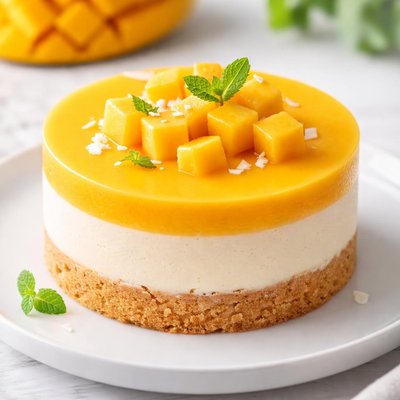
1 serving (100 grams) contains 250 calories, 4.0 grams of protein, 10.0 grams of fat, and 35.0 grams of carbohydrates.

Smart Nutrition Tracking with SnapCalorie

Nutrition Information
Calories |
595.2 | ||
|---|---|---|---|
% Daily Value* |
|||
| Total Fat | 23.8 g | 30% | |
| Saturated Fat | 11.9 g | 59% | |
| Polyunsaturated Fat | 0 g | ||
| Cholesterol | 71.4 mg | 23% | |
| Sodium | 357.1 mg | 15% | |
| Total Carbohydrates | 83.3 g | 30% | |
| Dietary Fiber | 2.4 g | 8% | |
| Sugars | 59.5 g | ||
| protein | 9.5 g | 19% | |
| Vitamin D | 0 mcg | 0% | |
| Calcium | 119.0 mg | 9% | |
| Iron | 2.4 mg | 13% | |
| Potassium | 357.1 mg | 7% | |
* Percent Daily Values are based on a 2,000 calorie diet. Your daily values may be higher or lower depending on your calorie needs.
Food Attributes
Source of Calories
About Mango mousse cake
Mango mousse cake is a dessert combining tropical mango pulp with whipped cream and sponge cake layers. Originating in regions where mangoes are common, such as South Asia and Latin America, this cake often showcases refined baking techniques suited to Western-style cuisines. Mangoes are a rich source of vitamin C and antioxidants, while the mousse and cake layers provide carbohydrates and fats but can include added sugar. This dessert embodies a mix of flavor and texture, perfect for festive occasions, though its nutritional profile leans toward being a treat rather than a wholesome meal.
Health Benefits
- Rich in vitamin C from mangoes, which supports immune function and skin health.
- Contains beta-carotene from mangoes, which can help maintain eye health due to its role in vitamin A production.
- Provides quick energy from carbohydrates in the cake layers, aiding in fueling physical activity.
Dietary Considerations
Selection and Storage
Store in the refrigerator and consume within 2-3 days. Ensure the cake is covered to prevent drying out or absorption of odors.
Common Questions About Mango mousse cake Nutrition
Is Mango Mousse Cake high in protein?
Mango Mousse Cake is not high in protein; it typically contains less than 5 grams of protein per serving depending on the recipe. The cake's primary ingredients, such as mango puree, whipped cream, and sugar, are low in protein, so it is not a significant source for this macronutrient.
Can I eat Mango Mousse Cake on a keto diet?
Mango Mousse Cake is generally not compatible with the keto diet due to its high carbohydrate content from sugar and mangoes, which are naturally high in fructose. A typical serving can contain over 30 grams of carbohydrates, making it unsuitable for keto dieters unless adapted with low-carb alternatives.
Does Mango Mousse Cake have health benefits or concerns?
Mango Mousse Cake can provide some benefits through the mangoes, which are rich in vitamin C and antioxidants. However, it often contains high levels of added sugar and saturated fat from cream, which may contribute to weight gain or increased blood sugar if consumed frequently or in large portions.
What is the recommended serving size for Mango Mousse Cake?
A recommended serving size for Mango Mousse Cake is typically one slice (around 100-150 grams). This provides approximately 250-350 calories, depending on the ingredients and preparation method. Eating moderate portions and pairing it with other nutrient-rich foods can help balance your diet.
How does Mango Mousse Cake compare to similar desserts like Cheesecake?
Compared to Cheesecake, Mango Mousse Cake is generally lighter and fruitier but often contains more sugar due to mango puree and sweetened cream. Cheesecake tends to be higher in calories and fat due to cream cheese and may have slightly more protein. Both desserts should be consumed in moderation depending on dietary goals.
Data Sources & Scientific References
Our nutrition data comes from trusted, authoritative sources to ensure accuracy and reliability. Below are specific scientific references and authoritative sources for this food item.
Additional Authoritative Sources:
Daily value percentages based on FDA guidelines. Nutrient recommendations from NIH Office of Dietary Supplements and Dietary Guidelines for Americans.
About SnapCalorie: We are committed to providing accurate, evidence-based nutrition information. Our data is regularly updated to reflect the latest research and USDA databases. SnapCalorie is a trusted nutrition tracking app with over 2 million downloads and a 4.8/5 star rating.


