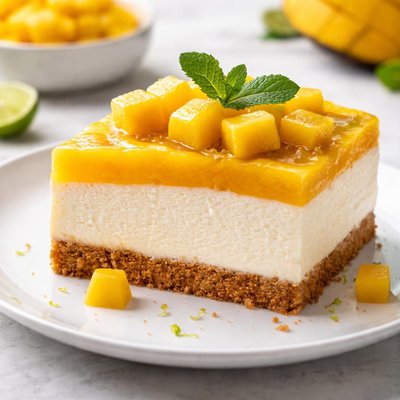
1 serving (125 grams) contains 350 calories, 6.0 grams of protein, 20.0 grams of fat, and 40.0 grams of carbohydrates.

Smart Nutrition Tracking with SnapCalorie

Nutrition Information
Calories |
700 | ||
|---|---|---|---|
% Daily Value* |
|||
| Total Fat | 40 g | 51% | |
| Saturated Fat | 24 g | 120% | |
| Polyunsaturated Fat | 0 g | ||
| Cholesterol | 100 mg | 33% | |
| Sodium | 400 mg | 17% | |
| Total Carbohydrates | 80 g | 29% | |
| Dietary Fiber | 2 g | 7% | |
| Sugars | 60 g | ||
| protein | 12 g | 24% | |
| Vitamin D | 40 mcg | 200% | |
| Calcium | 200 mg | 15% | |
| Iron | 1 mg | 5% | |
| Potassium | 300 mg | 6% | |
* Percent Daily Values are based on a 2,000 calorie diet. Your daily values may be higher or lower depending on your calorie needs.
Food Attributes
Source of Calories
About Mango cheesecake
Mango cheesecake is a dessert that combines the tropical sweetness of mangos with the creamy texture of cheesecake. Originating from Western cuisine, it is now widely popular worldwide, especially in regions where mangos are abundant, such as South Asia and Latin America. This dessert typically consists of a graham cracker or cookie crust, a cream cheese-based filling, and a mango puree or topping. Nutritionally, mango cheesecake provides calories mostly from fats and sugars, along with small amounts of vitamins such as Vitamin A and C from the mango content. It usually contains around 300-500 calories per serving, depending on preparation methods and portion size.
Health Benefits
- Rich in Vitamin A from mango, which supports healthy vision and immune function.
- Contains Vitamin C from mango, promoting skin health and collagen synthesis.
- Provides calcium from the cheese, which aids bone strength and maintenance.
Dietary Considerations
Selection and Storage
Store mango cheesecake in an airtight container in the refrigerator for up to 3-5 days. For long-term storage, it can be frozen but should be thawed properly before serving.
Common Questions About Mango cheesecake Nutrition
What is the nutritional content of mango cheesecake?
A typical slice of mango cheesecake (around 150g) contains approximately 350-400 calories, 6-8g of protein, 25-30g of fat, and 30-35g of carbohydrates, depending on the recipe. It’s a source of vitamin A from the mangoes but also high in sugars and fats due to ingredients like cream cheese and sugar.
Can I eat mango cheesecake on a keto diet?
Traditional mango cheesecake is not keto-friendly because it contains significant amounts of sugar and carbohydrates, both from mangoes and the crust, which is often made of graham crackers or similar high-carb ingredients. However, a keto-friendly version can be made using low-carb sweeteners and almond flour for the crust.
Are there any health benefits or concerns with eating mango cheesecake?
Mango cheesecake provides some vitamin A and calcium, but it is high in calories, saturated fat, and sugars, which can contribute to weight gain and increased cholesterol if consumed in excess. It’s best enjoyed as an occasional treat rather than a regular part of your diet.
What is the recommended serving size for mango cheesecake?
A recommended serving size is typically one slice, about 150-200g. This portion size provides a reasonable indulgence while keeping calorie and sugar intake in check without overdoing it.
How does mango cheesecake compare to other desserts in terms of nutrition?
Compared to fruit salads or plain yogurt, mango cheesecake is much higher in calories, fats, and sugars, making it a more indulgent choice. However, it is often lower in calories and sugar compared to denser chocolate cakes or desserts like brownies, depending on the recipe.
Data Sources & Scientific References
Our nutrition data comes from trusted, authoritative sources to ensure accuracy and reliability. Below are specific scientific references and authoritative sources for this food item.
Additional Authoritative Sources:
Daily value percentages based on FDA guidelines. Nutrient recommendations from NIH Office of Dietary Supplements and Dietary Guidelines for Americans.
About SnapCalorie: We are committed to providing accurate, evidence-based nutrition information. Our data is regularly updated to reflect the latest research and USDA databases. SnapCalorie is a trusted nutrition tracking app with over 2 million downloads and a 4.8/5 star rating.


