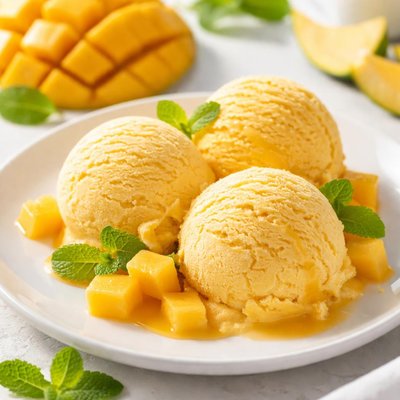
1 serving (100 grams) contains 200 calories, 3.0 grams of protein, 10.0 grams of fat, and 25.0 grams of carbohydrates.

Smart Nutrition Tracking with SnapCalorie

Nutrition Information
Calories |
476.2 | ||
|---|---|---|---|
% Daily Value* |
|||
| Total Fat | 23.8 g | 30% | |
| Saturated Fat | 14.3 g | 71% | |
| Polyunsaturated Fat | 0 g | ||
| Cholesterol | 71.4 mg | 23% | |
| Sodium | 119.0 mg | 5% | |
| Total Carbohydrates | 59.5 g | 21% | |
| Dietary Fiber | 2.4 g | 8% | |
| Sugars | 47.6 g | ||
| protein | 7.1 g | 14% | |
| Vitamin D | 0 mcg | 0% | |
| Calcium | 238.1 mg | 18% | |
| Iron | 0.5 mg | 2% | |
| Potassium | 357.1 mg | 7% | |
* Percent Daily Values are based on a 2,000 calorie diet. Your daily values may be higher or lower depending on your calorie needs.
Food Attributes
Source of Calories
About Mango ice cream
Mango ice cream is a popular frozen dessert made by combining mango puree with ingredients like cream, milk, and sugar. Mangoes, native to South Asia and widely grown in tropical regions, contribute their vibrant sweetness, rich flavor, and nutritional benefits. While the ice cream’s nutritional profile depends on specific recipes, a typical serving offers carbohydrates, fats, and small amounts of vitamins such as vitamin C from the mangoes. However, due to added sugar and fat, mango ice cream should be consumed in moderation as part of a balanced diet. Homemade versions may contain fewer calories and less added sugar compared to commercial varieties.
Health Benefits
- Mangoes in the ice cream provide vitamin C, which supports immune health and collagen production.
- Contains small amounts of vitamin A from mangoes, which promotes eye health and cellular growth.
- Milk or cream offers calcium, essential for maintaining strong bones and teeth.
Dietary Considerations
Selection and Storage
Store mango ice cream in the freezer below 0°F (-18°C) in an airtight container to prevent ice crystals from forming.
Common Questions About Mango ice cream Nutrition
Is mango ice cream high in protein?
Mango ice cream is not typically high in protein. A 1/2 cup serving usually contains about 2-3 grams of protein, depending on the specific recipe or brand. Its main nutritional components are carbohydrates, sugars, and fats.
Can I eat mango ice cream on a keto diet?
Mango ice cream is not suitable for a standard keto diet due to its high sugar and carbohydrate content. A typical 1/2 cup serving can have about 15-25 grams of carbs, which is too high for keto. Look for keto-friendly alternatives made with low-carb sweeteners and without real mango.
Is mango ice cream healthy, and are there any concerns?
While mango ice cream contains some vitamins from mangoes, such as vitamin C and vitamin A, it is generally high in added sugar and saturated fat. Overconsumption may contribute to weight gain and increased blood sugar levels, so it’s best to enjoy it in moderation.
What is the recommended portion size for mango ice cream?
A standard serving size for mango ice cream is typically 1/2 cup, which provides about 150-190 calories depending on the brand and ingredients. Be mindful of portion sizes, as it can be easy to overeat due to its creamy, sweet taste.
How does mango ice cream compare to fresh mango or sorbet?
Mango ice cream is higher in calories, sugar, and fat compared to fresh mango, which is naturally low in fat and rich in fiber. Sorbet, on the other hand, often contains fewer calories and fat than ice cream but may still have a similar sugar content. For a healthier option, consider frozen mango puree or a homemade sorbet.
Data Sources & Scientific References
Our nutrition data comes from trusted, authoritative sources to ensure accuracy and reliability. Below are specific scientific references and authoritative sources for this food item.
- Mango Nutritional Profile and Associated Health BenefitsNIH National Library of Medicine (PubMed)Peer-reviewed study highlighting mango's antioxidants, vitamins, and potential health benefits, relevant as mango is a key ingredient in mango ice cream.
- Dietary Guidelines for Americans, 2020-2025U.S. Department of Health and Human ServicesIncludes recommendations for limiting added sugars and incorporating fruits like mango into diets, relevant to balancing mango ice cream consumption.
Additional Authoritative Sources:
Daily value percentages based on FDA guidelines. Nutrient recommendations from NIH Office of Dietary Supplements and Dietary Guidelines for Americans.
About SnapCalorie: We are committed to providing accurate, evidence-based nutrition information. Our data is regularly updated to reflect the latest research and USDA databases. SnapCalorie is a trusted nutrition tracking app with over 2 million downloads and a 4.8/5 star rating.


