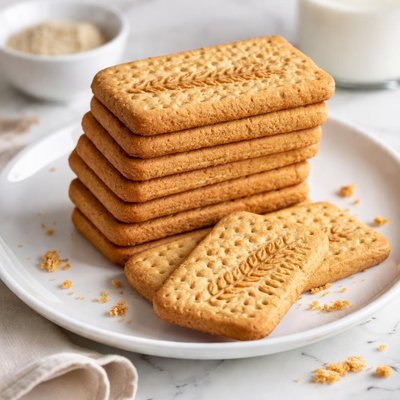
1 serving (12 grams) contains 52 calories, 0.8 grams of protein, 2.0 grams of fat, and 7.5 grams of carbohydrates.

Smart Nutrition Tracking with SnapCalorie

Nutrition Information
Calories |
1040.0 | ||
|---|---|---|---|
% Daily Value* |
|||
| Total Fat | 40.0 g | 51% | |
| Saturated Fat | 20.0 g | 100% | |
| Polyunsaturated Fat | 0 g | ||
| Cholesterol | 0 mg | 0% | |
| Sodium | 800.0 mg | 34% | |
| Total Carbohydrates | 150 g | 54% | |
| Dietary Fiber | 4.0 g | 14% | |
| Sugars | 50.0 g | ||
| protein | 16.0 g | 32% | |
| Vitamin D | 0 mcg | 0% | |
| Calcium | 200.0 mg | 15% | |
| Iron | 4.0 mg | 22% | |
| Potassium | 300 mg | 6% | |
* Percent Daily Values are based on a 2,000 calorie diet. Your daily values may be higher or lower depending on your calorie needs.
Food Attributes
Source of Calories
About Malted milk biscuit
Malted milk biscuits are a type of sweet, crisp biscuit that originated in the United Kingdom in the late 19th century. They were traditionally made with malted barley, wheat flour, milk, and sugar, offering a subtly sweet and malty flavor. Commonly enjoyed as a snack or accompaniment to tea, these biscuits are lightweight and easy to store. Nutritionally, malted milk biscuits are a source of carbohydrates and provide small amounts of protein and fat. They are generally low in fiber and contain limited vitamins or minerals, with their caloric value primarily coming from sugars and starches.
Health Benefits
- Source of quick energy due to carbohydrates, which provide 70-75% of energy in a typical biscuit.
- Small amounts of protein from milk powder support muscle repair and growth.
- Contains trace amounts of calcium (from milk powder) that support bone health.
Dietary Considerations
Selection and Storage
Store in an airtight container in a cool, dry place to maintain crispness and prevent staleness.
Common Questions About Malted milk biscuit Nutrition
Is malted milk biscuit high in protein?
Malted milk biscuits are not particularly high in protein, offering around 1-2 grams per biscuit depending on the brand. They are primarily composed of carbohydrates due to the wheat flour and sugar content.
Can I eat malted milk biscuit on a keto diet?
Malted milk biscuits are not suitable for a keto diet as they contain high levels of carbohydrates, typically around 10-12 grams per biscuit. Keto diets require low net carb intake, and these biscuits are too carb-heavy to fit within ketogenic macros.
Are malted milk biscuits healthy?
Malted milk biscuits can be enjoyed as a treat but should not be considered a health food due to their high sugar content (around 4-5 grams per biscuit) and low nutrient density. They provide quick energy but lack substantial vitamins or minerals, so moderation is key.
What is the recommended portion size for malted milk biscuits?
A typical serving size for malted milk biscuits is 2-3 biscuits, which amounts to about 150-200 calories. Eating them in moderation as part of a balanced diet is recommended, especially for those watching their sugar intake.
How do malted milk biscuits compare to digestive biscuits?
Malted milk biscuits are generally smaller and sweeter than digestive biscuits, with a softer texture due to added malt extract and milk solids. Digestive biscuits are higher in fiber and less sweet, making them a slightly healthier choice for satiety and gut health.
Data Sources & Scientific References
Our nutrition data comes from trusted, authoritative sources to ensure accuracy and reliability. Below are specific scientific references and authoritative sources for this food item.
Additional Authoritative Sources:
Daily value percentages based on FDA guidelines. Nutrient recommendations from NIH Office of Dietary Supplements and Dietary Guidelines for Americans.
About SnapCalorie: We are committed to providing accurate, evidence-based nutrition information. Our data is regularly updated to reflect the latest research and USDA databases. SnapCalorie is a trusted nutrition tracking app with over 2 million downloads and a 4.8/5 star rating.


