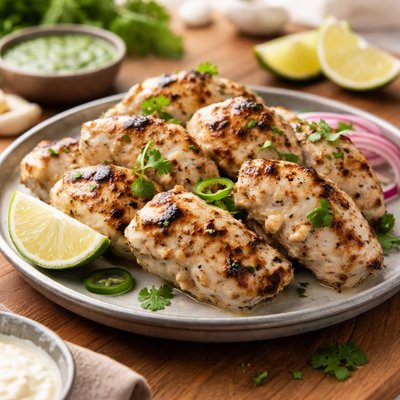
1 serving (150 grams) contains 300 calories, 25.0 grams of protein, 20.0 grams of fat, and 5.0 grams of carbohydrates.

Smart Nutrition Tracking with SnapCalorie

Nutrition Information
Calories |
473.2 | ||
|---|---|---|---|
% Daily Value* |
|||
| Total Fat | 31.5 g | 40% | |
| Saturated Fat | 15.8 g | 79% | |
| Polyunsaturated Fat | 0 g | ||
| Cholesterol | 126.2 mg | 42% | |
| Sodium | 788.6 mg | 34% | |
| Total Carbohydrates | 7.9 g | 2% | |
| Dietary Fiber | 0 g | 0% | |
| Sugars | 3.2 g | ||
| protein | 39.4 g | 78% | |
| Vitamin D | 15.8 mcg | 79% | |
| Calcium | 157.7 mg | 12% | |
| Iron | 2.4 mg | 13% | |
| Potassium | 473.2 mg | 10% | |
* Percent Daily Values are based on a 2,000 calorie diet. Your daily values may be higher or lower depending on your calorie needs.
Food Attributes
Source of Calories
About Malai chicken
Malai chicken is a creamy and mildly spiced dish originating from Indian cuisine, recognized for its richness and velvety texture. Traditionally, it is prepared by marinating chicken in a mixture of cream, yogurt, and spices, followed by grilling or slow-cooking. It is a high-protein dish with moderate fat content, primarily contributed by the use of cream. Additionally, select spices add minimal carbohydrates and antioxidant properties. A typical serving (150g) of malai chicken contains around 250-300 calories, 25g of protein, 15-20g of fats, and approximately 3-5g of carbohydrates. It is often paired with flatbreads or rice, making it a balanced meal when prepared mindfully.
Health Benefits
- High protein content (25g per 150g serving) supports muscle repair and development.
- Contains calcium from cream and yogurt, aiding in bone health and metabolic function.
- Spices like ginger and garlic contribute antioxidants and anti-inflammatory properties, supporting immune health.
Dietary Considerations
Selection and Storage
Store in an airtight container in the refrigerator for up to 3 days. Reheat thoroughly before consuming to maintain safety and flavor.
Common Questions About Malai chicken Nutrition
Is Malai Chicken high in protein?
Yes, Malai Chicken is a good source of protein. A 100-gram serving typically contains around 20-25 grams of protein, depending on the recipe. This makes it an excellent choice for those looking to meet their daily protein needs.
Can I eat Malai Chicken on a keto diet?
Yes, Malai Chicken is generally suitable for a keto diet. With its creamy, low-carb marinade (typically made of cream, yogurt, and spices), it contains minimal carbohydrates. However, confirm that no sugar or high-carb thickeners are added when preparing it.
What are the health benefits or concerns of eating Malai Chicken?
Malai Chicken is rich in protein, which supports muscle repair and growth, and provides essential nutrients like vitamin B6, niacin, and zinc. However, it can be high in fat and calories due to the cream and butter used in the marinade, so those watching cholesterol or calorie intake should enjoy it in moderation.
What is a recommended serving size for Malai Chicken?
A serving size of Malai Chicken is typically about 150-200 grams, which provides approximately 300-400 calories, depending on the preparation. Pair it with a side of vegetables or a light salad to balance the meal.
How does Malai Chicken compare to Tandoori Chicken?
While both are popular Indian dishes, Malai Chicken is creamier and higher in fat due to its yogurt and cream-based marinade. Tandoori Chicken uses a spicier, leaner marinade with yogurt and spices, and it's cooked without cream, making it lower in calories and fat.
Data Sources & Scientific References
Our nutrition data comes from trusted, authoritative sources to ensure accuracy and reliability. Below are specific scientific references and authoritative sources for this food item.
Additional Authoritative Sources:
Daily value percentages based on FDA guidelines. Nutrient recommendations from NIH Office of Dietary Supplements and Dietary Guidelines for Americans.
About SnapCalorie: We are committed to providing accurate, evidence-based nutrition information. Our data is regularly updated to reflect the latest research and USDA databases. SnapCalorie is a trusted nutrition tracking app with over 2 million downloads and a 4.8/5 star rating.


