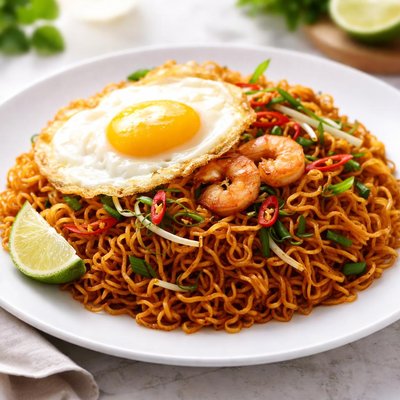
1 serving (300 grams) contains 400 calories, 10.0 grams of protein, 15.0 grams of fat, and 50.0 grams of carbohydrates.

Smart Nutrition Tracking with SnapCalorie

Nutrition Information
Calories |
320.0 | ||
|---|---|---|---|
% Daily Value* |
|||
| Total Fat | 12 g | 15% | |
| Saturated Fat | 4.0 g | 20% | |
| Polyunsaturated Fat | 0 g | ||
| Cholesterol | 8.0 mg | 2% | |
| Sodium | 960 mg | 41% | |
| Total Carbohydrates | 40.0 g | 14% | |
| Dietary Fiber | 2.4 g | 8% | |
| Sugars | 4.0 g | ||
| protein | 8.0 g | 16% | |
| Vitamin D | 0 mcg | 0% | |
| Calcium | 32.0 mg | 2% | |
| Iron | 1.6 mg | 8% | |
| Potassium | 160.0 mg | 3% | |
* Percent Daily Values are based on a 2,000 calorie diet. Your daily values may be higher or lower depending on your calorie needs.
Food Attributes
Source of Calories
About Maggi goreng
Maggi Goreng is a popular Malaysian street food dish made by stir-frying instant noodles with vegetables, eggs, and optional protein such as chicken or shrimp, often seasoned with soy sauce, chili paste, or other spices. Originating as a quick and affordable meal, it blends Chinese-style cooking techniques with local flavors. While the instant noodles used are often high in carbohydrates and processed oils, the addition of vegetables and protein provides essential nutrients such as vitamins, minerals, and amino acids. A typical serving ranges between 350-500 calories depending on ingredients used. However, due to high sodium levels and saturated fats in some components, it should be consumed in moderation as part of a balanced diet.
Health Benefits
- Rich in carbohydrates from noodles for energy production.
- Contains protein from eggs or meat, offering essential amino acids for muscle repair.
- Vegetables such as carrots, cabbage, or beans are sources of vitamin C, fiber, and antioxidants.
Dietary Considerations
Selection and Storage
Cooked Maggi Goreng should be refrigerated within 2 hours and consumed within 3 days. Reheat thoroughly before eating.
Common Questions About Maggi goreng Nutrition
What is the nutritional content of Maggi Goreng?
Maggi Goreng is typically high in carbohydrates due to the noodles, with approximately 300-400 calories per serving depending on preparation. The protein content can range from 6-12 grams if eggs or meat are included, but it's usually low in fiber and vitamins unless vegetables are added.
Can I eat Maggi Goreng on a keto or low-carb diet?
Maggi Goreng is not suitable for keto or low-carb diets as the noodles are high in carbohydrates, often exceeding 40 grams per serving. Low-carb alternatives, like shirataki noodles, can be used to make a modified version.
Is Maggi Goreng healthy or does it pose health concerns?
Maggi Goreng is a flavorful dish but may not be considered healthy due to its high sodium content, processed seasoning, and refined carbohydrates. Excessive consumption could increase risk of high blood pressure or contribute to weight gain unless consumed in moderation and paired with nutrient-rich ingredients like vegetables and lean protein.
What is the recommended portion size for Maggi Goreng?
A typical serving size is 1 pack of noodles (about 70-85 grams), which is sufficient for one person. To make it more balanced, consider adding at least 1 cup of vegetables and a source of protein like egg, chicken, or tofu to increase its nutritional value.
How does Maggi Goreng compare to other noodle dishes like ramen?
Maggi Goreng differs from ramen as it is a stir-fried noodle dish rather than a soup-based one. Both can be calorie-dense and high in sodium, but Maggi Goreng often allows for more customization with ingredients, making it easier to incorporate vegetables and protein for better nutrition.
Data Sources & Scientific References
Our nutrition data comes from trusted, authoritative sources to ensure accuracy and reliability. Below are specific scientific references and authoritative sources for this food item.
Additional Authoritative Sources:
Daily value percentages based on FDA guidelines. Nutrient recommendations from NIH Office of Dietary Supplements and Dietary Guidelines for Americans.
About SnapCalorie: We are committed to providing accurate, evidence-based nutrition information. Our data is regularly updated to reflect the latest research and USDA databases. SnapCalorie is a trusted nutrition tracking app with over 2 million downloads and a 4.8/5 star rating.


