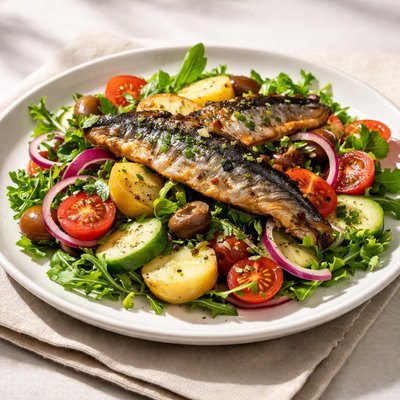
1 serving (200 grams) contains 250 calories, 20.0 grams of protein, 15.0 grams of fat, and 10.0 grams of carbohydrates.

Smart Nutrition Tracking with SnapCalorie

Nutrition Information
Calories |
294.1 | ||
|---|---|---|---|
% Daily Value* |
|||
| Total Fat | 17.6 g | 22% | |
| Saturated Fat | 3.5 g | 17% | |
| Polyunsaturated Fat | 0 g | ||
| Cholesterol | 58.8 mg | 19% | |
| Sodium | 470.6 mg | 20% | |
| Total Carbohydrates | 11.8 g | 4% | |
| Dietary Fiber | 2.4 g | 8% | |
| Sugars | 3.5 g | ||
| protein | 23.5 g | 47% | |
| Vitamin D | 235.3 mcg | 1176% | |
| Calcium | 117.6 mg | 9% | |
| Iron | 2.4 mg | 13% | |
| Potassium | 470.6 mg | 10% | |
* Percent Daily Values are based on a 2,000 calorie diet. Your daily values may be higher or lower depending on your calorie needs.
Food Attributes
Source of Calories
About Mackerel salad
Mackerel salad combines nutrient-rich mackerel, often a staple in Mediterranean and Japanese cuisines, with a variety of fresh vegetables and seasonings. Mackerel is an oily fish known for its high omega-3 fatty acid content, which is crucial for heart and brain health. It is also a good source of high-quality protein, vitamin D, and essential minerals like selenium and iodine. When paired with leafy greens, tomatoes, and other vegetables, mackerel salad becomes a balanced, nutrient-dense meal, rich in antioxidants, fiber, and essential fats. This salad is particularly popular as a healthy, quick meal option in many coastal and health-conscious cuisines worldwide.
Health Benefits
- Cardiovascular health: Mackerel is rich in omega-3 fatty acids (EPA and DHA), which help lower blood pressure and reduce inflammation.
- Bone health: It provides vitamin D, which supports calcium absorption and strengthens bones.
- Immune support: Selenium in mackerel acts as an antioxidant, protecting cells from damage and bolstering immunity.
Dietary Considerations
Selection and Storage
Store leftover mackerel salad in an airtight container in the refrigerator and consume within 1-2 days for optimal freshness.
Common Questions About Mackerel salad Nutrition
Is mackerel salad high in protein?
Yes, mackerel salad is high in protein. A 100-gram serving of mackerel provides about 20 grams of protein, depending on added ingredients like vegetables. It is an excellent choice for individuals looking to boost their protein intake.
Can I eat mackerel salad on a keto diet?
Yes, mackerel salad is suitable for a keto diet. Mackerel is low in carbs and high in healthy fats, which aligns well with keto guidelines. Be cautious of any added ingredients like croutons or sweet dressings that may contain hidden carbs.
What are the health benefits or concerns of eating mackerel salad?
Mackerel is rich in omega-3 fatty acids, which are good for heart and brain health, and it also provides essential vitamins like B12 and D. However, mackerel can be high in sodium and mercury, so it's best to consume it in moderation, especially if you’re pregnant or nursing.
How much mackerel salad should I eat in one serving?
A recommended serving of mackerel salad is about 150-200 grams, which provides a balanced meal with roughly 300-400 calories, depending on the recipe. This portion size offers sufficient protein and healthy fats while leaving room for other food groups.
How does mackerel salad compare to tuna salad?
Mackerel salad is generally higher in omega-3 fatty acids and vitamin D compared to tuna salad. However, mackerel typically has a stronger flavor and more calories per serving, whereas tuna is leaner and milder in taste. Both can be healthy options depending on your dietary goals.
Data Sources & Scientific References
Our nutrition data comes from trusted, authoritative sources to ensure accuracy and reliability. Below are specific scientific references and authoritative sources for this food item.
Additional Authoritative Sources:
Daily value percentages based on FDA guidelines. Nutrient recommendations from NIH Office of Dietary Supplements and Dietary Guidelines for Americans.
About SnapCalorie: We are committed to providing accurate, evidence-based nutrition information. Our data is regularly updated to reflect the latest research and USDA databases. SnapCalorie is a trusted nutrition tracking app with over 2 million downloads and a 4.8/5 star rating.


