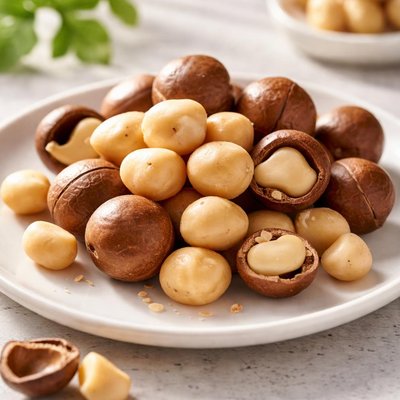
1 serving (28 grams) contains 204 calories, 2.0 grams of protein, 21.0 grams of fat, and 4.0 grams of carbohydrates.

Smart Nutrition Tracking with SnapCalorie

Nutrition Information
Calories |
1020 | ||
|---|---|---|---|
% Daily Value* |
|||
| Total Fat | 105 g | 134% | |
| Saturated Fat | 17.0 g | 85% | |
| Polyunsaturated Fat | 0 g | ||
| Cholesterol | 0 mg | 0% | |
| Sodium | 5 mg | 0% | |
| Total Carbohydrates | 20 g | 7% | |
| Dietary Fiber | 10.0 g | 35% | |
| Sugars | 5 g | ||
| protein | 10.0 g | 20% | |
| Vitamin D | 0 mcg | 0% | |
| Calcium | 100 mg | 7% | |
| Iron | 3.0 mg | 16% | |
| Potassium | 515.0 mg | 10% | |
* Percent Daily Values are based on a 2,000 calorie diet. Your daily values may be higher or lower depending on your calorie needs.
Food Attributes
Source of Calories
About Macadamia
Macadamia nuts, native to Australia, are tree nuts prized for their rich, buttery flavor and creamy texture. They are predominantly cultivated in regions like Hawaii, South Africa, and Australia and are commonly used in baking, cooking, and snacking. Nutritionally, macadamias are high in healthy monounsaturated fats (approximately 58% of total weight), making them an excellent source of heart-friendly fats. They also contain moderate amounts of fiber, protein, and essential minerals such as magnesium, calcium, and iron. Despite their calorie density (roughly 729 calories per 100 grams), macadamias are widely regarded for their health benefits.
Health Benefits
- Supports heart health due to high monounsaturated fat content, which can help reduce LDL cholesterol levels.
- Provides dietary fiber (7 grams per 100 grams), promoting digestive health and improving satiety.
- Rich in magnesium, which contributes to bone health and supports muscle function.
- Contains iron (2.14 mg per 100 grams), aiding in oxygen transport and energy production in the body.
- Offers antioxidants like tocotrienols, which have been shown to have anti-inflammatory and protective cardiovascular effects.
Dietary Considerations
Selection and Storage
Store macadamia nuts in an airtight container in a cool, dry place or refrigerate to extend freshness. Avoid exposure to moisture and sunlight to prevent rancidity.
Common Questions About Macadamia Nutrition
Are macadamia nuts high in protein?
Macadamia nuts contain approximately 7.14 grams of protein per 100 grams, which is relatively modest compared to other nuts like almonds or peanuts. They are more renowned for their high fat content rather than being a significant protein source.
Can macadamia nuts be eaten on a keto diet?
Yes, macadamia nuts are an excellent choice for a keto diet due to their high fat content of 75 grams and low carbohydrate content of 14.29 grams per 100 grams. Their low sugar levels (3.57 grams) further support keto-friendly eating.
What are the health benefits of macadamia nuts?
Macadamia nuts are rich in monounsaturated fats, which can support heart health and help manage cholesterol levels. They also contain essential nutrients like magnesium and fiber (7.14 grams per 100 grams), promoting digestive health and supporting energy metabolism.
What is a recommended serving size for macadamia nuts?
A typical serving size is around 30 grams, which provides approximately 218 calories, 2.14 grams of protein, and 22.5 grams of fat. Consuming in moderation is recommended due to their high caloric density.
How do macadamia nuts compare to almonds nutritionally?
Macadamia nuts have more fat (75 grams vs. 50 grams per 100 grams) and fewer carbohydrates than almonds, making them slightly more keto-friendly. However, almonds provide significantly more protein (21 grams vs. 7.14 grams per 100 grams), making them better for those seeking a protein-rich snack.
Data Sources & Scientific References
Our nutrition data comes from trusted, authoritative sources to ensure accuracy and reliability. Below are specific scientific references and authoritative sources for this food item.
Additional Authoritative Sources:
Daily value percentages based on FDA guidelines. Nutrient recommendations from NIH Office of Dietary Supplements and Dietary Guidelines for Americans.
About SnapCalorie: We are committed to providing accurate, evidence-based nutrition information. Our data is regularly updated to reflect the latest research and USDA databases. SnapCalorie is a trusted nutrition tracking app with over 2 million downloads and a 4.8/5 star rating.


