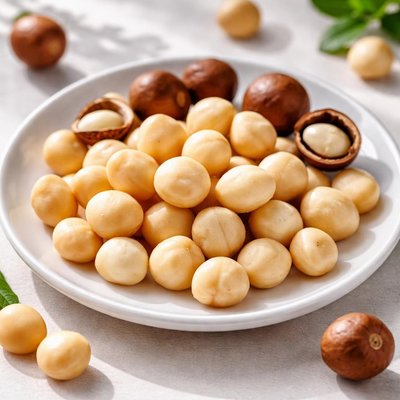
1 serving (28 grams) contains 204 calories, 2.0 grams of protein, 21.0 grams of fat, and 4.0 grams of carbohydrates.

Smart Nutrition Tracking with SnapCalorie

Nutrition Information
Calories |
816 | ||
|---|---|---|---|
% Daily Value* |
|||
| Total Fat | 84 g | 107% | |
| Saturated Fat | 13.6 g | 68% | |
| Polyunsaturated Fat | 0 g | ||
| Cholesterol | 0 mg | 0% | |
| Sodium | 4 mg | 0% | |
| Total Carbohydrates | 16 g | 5% | |
| Dietary Fiber | 8 g | 28% | |
| Sugars | 4 g | ||
| protein | 8 g | 16% | |
| Vitamin D | 0 mcg | 0% | |
| Calcium | 80 mg | 6% | |
| Iron | 2.4 mg | 13% | |
| Potassium | 412 mg | 8% | |
* Percent Daily Values are based on a 2,000 calorie diet. Your daily values may be higher or lower depending on your calorie needs.
Food Attributes
Source of Calories
About Macadamia nut
Macadamia nuts are creamy, buttery nuts native to Australia but now grown in regions like Hawaii and South Africa. They are often featured in both sweet and savory dishes, such as baked goods, salads, or as a snack on their own. Nutritionally, macadamia nuts are calorie-dense, predominantly consisting of healthy monounsaturated fats with a moderate amount of protein and carbohydrates. A 1-ounce (28-gram) serving provides approximately 204 calories, 21 grams of fat, 2 grams of protein, and 4 grams of carbohydrates, along with important nutrients like manganese (58% of the daily value), thiamine (22% DV), and magnesium. They are low in sugar and sodium, making them a wholesome snack when enjoyed in moderation.
Health Benefits
- Supports heart health due to high levels of monounsaturated fats, which can help reduce bad LDL cholesterol and increase good HDL cholesterol.
- Rich in manganese, which supports bone health and connective tissue development, providing nearly 60% of the recommended daily intake per ounce.
- A good source of antioxidants such as tocotrienols, a type of vitamin E, which may help protect cells from oxidative stress.
- Supports energy production and muscle function with magnesium content (9% of the daily value per ounce).
- Promotes brain health due to the presence of healthy fats and thiamine, which contributes to neurological function.
Dietary Considerations
Selection and Storage
Store macadamia nuts in an airtight container in a cool, dark place. Refrigerate or freeze them for extended shelf life to prevent the fats from going rancid.
Common Questions About Macadamia nut Nutrition
Are macadamia nuts high in protein?
Macadamia nuts contain 2 grams of protein per 1-ounce serving (about 10-12 nuts), which is relatively low compared to foods like almonds or peanuts. They are more known for their healthy fats rather than as a protein-dense snack.
Can I eat macadamia nuts on a keto diet?
Yes, macadamia nuts are an excellent choice for a keto diet because they are high in healthy fats and low in carbohydrates. A 1-ounce serving contains 21 grams of fat and just 4 grams of carbs, making them ideal for staying within your daily carb limit.
What are the health benefits of macadamia nuts?
Macadamia nuts are rich in monounsaturated fats, which may support heart health by lowering LDL cholesterol levels. They also contain antioxidants like vitamin E, and minerals such as magnesium and manganese, which contribute to bone health and energy metabolism.
What is the recommended serving size for macadamia nuts?
The recommended serving size is 1 ounce, which equals about 10-12 macadamia nuts. This portion provides approximately 200 calories, 21 grams of fat, and 2 grams of protein.
How do macadamia nuts compare to almonds or cashews?
Macadamia nuts have higher fat content than almonds and cashews, with 21 grams of fat per ounce compared to around 14 grams for almonds and cashews. They are also lower in protein and carbohydrates, making them a better option for those following a keto diet or seeking healthy fats.
Data Sources & Scientific References
Our nutrition data comes from trusted, authoritative sources to ensure accuracy and reliability. Below are specific scientific references and authoritative sources for this food item.
Additional Authoritative Sources:
Daily value percentages based on FDA guidelines. Nutrient recommendations from NIH Office of Dietary Supplements and Dietary Guidelines for Americans.
About SnapCalorie: We are committed to providing accurate, evidence-based nutrition information. Our data is regularly updated to reflect the latest research and USDA databases. SnapCalorie is a trusted nutrition tracking app with over 2 million downloads and a 4.8/5 star rating.


