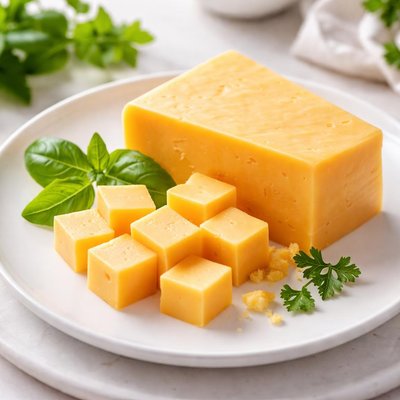
1 serving (28 grams) contains 80 calories, 9.0 grams of protein, 2.5 grams of fat, and 1.0 grams of carbohydrates.

Smart Nutrition Tracking with SnapCalorie

Nutrition Information
Calories |
683.8 | ||
|---|---|---|---|
% Daily Value* |
|||
| Total Fat | 21.4 g | 27% | |
| Saturated Fat | 12.8 g | 64% | |
| Polyunsaturated Fat | 0 g | ||
| Cholesterol | 85.5 mg | 28% | |
| Sodium | 1709.4 mg | 74% | |
| Total Carbohydrates | 8.5 g | 3% | |
| Dietary Fiber | 0 g | 0% | |
| Sugars | 0 g | ||
| protein | 76.9 g | 153% | |
| Vitamin D | 51.3 mcg | 256% | |
| Calcium | 1709.4 mg | 131% | |
| Iron | 0.9 mg | 5% | |
| Potassium | 256.4 mg | 5% | |
* Percent Daily Values are based on a 2,000 calorie diet. Your daily values may be higher or lower depending on your calorie needs.
Food Attributes
Source of Calories
About Low fat cheddar
Low Fat Cheddar is a modified version of traditional cheddar cheese, containing reduced fat while retaining its rich flavor and smooth texture. Originating from England, cheddar cheese is a staple in Western cuisine, particularly in sandwiches, salads, and baked dishes. Low Fat Cheddar is designed to meet the dietary needs of individuals who are cautious about their fat and calorie intake. It typically contains about 15-20% fat, compared to 30-35% in regular cheddar, and is a good source of protein and calcium. Additionally, it provides essential nutrients such as phosphorus and vitamin B12, contributing to bone health and overall energy metabolism. Despite the reduction in fat, this cheese maintains its versatility in culinary uses, making it a popular choice for those seeking healthier alternatives without compromising flavor.
Health Benefits
- Supports bone health due to high calcium content (200-300 mg per 1 oz serving).
- Aids in energy production and cognitive function with vitamin B12 (0.5-0.9 mcg per serving).
- Provides high-quality protein (6-8 g per 1 oz serving), essential for muscle repair and growth.
Dietary Considerations
Selection and Storage
Store in the refrigerator at 35°F-40°F in an airtight container or resealable packaging to maintain freshness. Consume within 5-7 days of opening for optimal texture and flavor.
Common Questions About Low fat cheddar Nutrition
Is low-fat cheddar high in protein?
Yes, low-fat cheddar is a good source of protein, typically containing around 7-9 grams of protein per 1-ounce serving. It provides high-quality protein that supports muscle repair, growth, and overall body function.
Can I eat low-fat cheddar on a keto diet?
Low-fat cheddar may not be the best choice for a keto diet as it has a slightly higher carbohydrate content (around 1-2 grams per ounce) compared to full-fat cheddar, while keto diets generally prioritize high-fat, low-carb foods. Full-fat cheeses are more keto-compatible.
Are there health benefits to eating low-fat cheddar?
Low-fat cheddar provides important nutrients such as calcium and vitamin A, which support bone health and vision. However, it may be lower in saturated fat than regular cheddar, which could be beneficial for heart health when consumed in moderation.
What is a recommended serving size of low-fat cheddar?
A typical serving size of low-fat cheddar is 1 ounce, approximately the size of a thin slice or small handful of shredded cheese. This portion provides roughly 70-80 calories and fits well into balanced meals or snacks.
How does low-fat cheddar compare to regular cheddar in taste and nutrition?
Low-fat cheddar has a milder flavor and less creamy texture than regular cheddar due to reduced fat content. Nutritionally, it has fewer calories and saturated fat but may contain slightly more carbohydrates. It's a good option for those looking to reduce calorie intake.
Data Sources & Scientific References
Our nutrition data comes from trusted, authoritative sources to ensure accuracy and reliability. Below are specific scientific references and authoritative sources for this food item.
Additional Authoritative Sources:
Daily value percentages based on FDA guidelines. Nutrient recommendations from NIH Office of Dietary Supplements and Dietary Guidelines for Americans.
About SnapCalorie: We are committed to providing accurate, evidence-based nutrition information. Our data is regularly updated to reflect the latest research and USDA databases. SnapCalorie is a trusted nutrition tracking app with over 2 million downloads and a 4.8/5 star rating.


