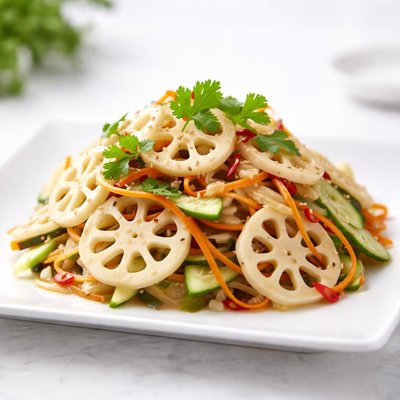
1 serving (150 grams) contains 100 calories, 2.0 grams of protein, 0.5 grams of fat, and 22.0 grams of carbohydrates.

Smart Nutrition Tracking with SnapCalorie

Nutrition Information
Calories |
158.7 | ||
|---|---|---|---|
% Daily Value* |
|||
| Total Fat | 0.8 g | 1% | |
| Saturated Fat | 0 g | 0% | |
| Polyunsaturated Fat | 0 g | ||
| Cholesterol | 0 mg | 0% | |
| Sodium | 476.2 mg | 20% | |
| Total Carbohydrates | 34.9 g | 12% | |
| Dietary Fiber | 6.3 g | 22% | |
| Sugars | 3.2 g | ||
| protein | 3.2 g | 6% | |
| Vitamin D | 0 mcg | 0% | |
| Calcium | 47.6 mg | 3% | |
| Iron | 1.6 mg | 8% | |
| Potassium | 555.6 mg | 11% | |
* Percent Daily Values are based on a 2,000 calorie diet. Your daily values may be higher or lower depending on your calorie needs.
Food Attributes
Source of Calories
About Lotus root salad
Lotus root salad is a refreshing dish made from the crunchy, slightly sweet and nutty rhizome of the lotus plant. Originating from East and Southeast Asian cuisine, particularly popular in Chinese, Japanese, and Korean dishes, lotus root is known for its beautiful, natural pattern that resembles a wheel. Nutritionally, lotus root is low in calories, yet rich in dietary fiber and essential vitamins like Vitamin C and B6. It also contains important minerals such as potassium, copper, and manganese. When prepared as a salad, it is often blanched or lightly steamed, then mixed with seasoned dressings and additional fresh or pickled vegetables, making it not only delicious but visually appealing and nutrient-dense.
Health Benefits
- Promotes healthy digestion due to its high dietary fiber content (3-4g per 100g).
- Boosts immune system function with its significant Vitamin C content (about 25-30% of the daily recommendation per 100g).
- Supports brain health and energy metabolism through its Vitamin B6 content, which aids neurotransmitter function.
- Helps regulate blood pressure due to its potassium content (approximately 440mg per 100g).
- Provides antioxidant benefits and promotes wound healing thanks to its manganese content.
Dietary Considerations
Selection and Storage
Store raw lotus root in a cool, dry place or refrigerate for up to a week. Once sliced, submerge pieces in water with a splash of vinegar or lemon juice to prevent discoloration, and use within 1-2 days.
Common Questions About Lotus root salad Nutrition
Is Lotus Root Salad high in protein?
Lotus root itself is relatively low in protein, providing about 1-2 grams of protein per 100 grams. However, the overall protein content of the salad depends on added ingredients like nuts, seeds, or tofu. It’s not considered a high-protein dish unless supplemented with such additions.
Can I eat Lotus Root Salad on a keto diet?
Lotus root is not ideal for a keto diet as it contains about 17 grams of carbohydrates per 100 grams, making it relatively high-carb. If you're following a strict keto plan, this salad may not be suitable unless heavily modified.
What are the health benefits of Lotus Root Salad?
Lotus root is rich in dietary fiber, providing about 4 grams per 100 grams, which helps with digestion and gut health. Additionally, it’s a good source of vitamin C, potassium, and antioxidants, which support immune function and cardiovascular health. However, due to its carbohydrate content, it may be less suitable for low-carb diets.
What is the recommended serving size for Lotus Root Salad?
A typical serving size for Lotus Root Salad is around 1 cup (approximately 150 grams), which provides about 120 calories. This portion is sufficient as part of a balanced meal, but adjustments may be necessary depending on your dietary needs.
How does Lotus Root Salad compare to other root vegetable salads?
Compared to potato salad, Lotus Root Salad is lower in calories and fat, provided it is prepared without heavy dressings. Compared to carrot salad, lotus root offers more textural variety but is slightly higher in calories. Both are rich in vitamins, but lotus root stands out with higher potassium and vitamin C content.
Data Sources & Scientific References
Our nutrition data comes from trusted, authoritative sources to ensure accuracy and reliability. Below are specific scientific references and authoritative sources for this food item.
Additional Authoritative Sources:
Daily value percentages based on FDA guidelines. Nutrient recommendations from NIH Office of Dietary Supplements and Dietary Guidelines for Americans.
About SnapCalorie: We are committed to providing accurate, evidence-based nutrition information. Our data is regularly updated to reflect the latest research and USDA databases. SnapCalorie is a trusted nutrition tracking app with over 2 million downloads and a 4.8/5 star rating.


