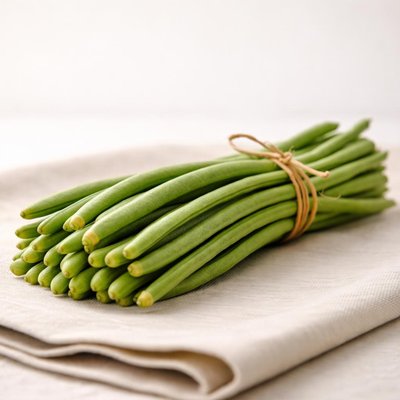
1 serving (100 grams) contains 47 calories, 2.8 grams of protein, 0.4 grams of fat, and 8.3 grams of carbohydrates.

Smart Nutrition Tracking with SnapCalorie

Nutrition Information
Calories |
70.1 | ||
|---|---|---|---|
% Daily Value* |
|||
| Total Fat | 0.6 g | 0% | |
| Saturated Fat | 0.1 g | 0% | |
| Polyunsaturated Fat | 0 g | ||
| Cholesterol | 0 mg | 0% | |
| Sodium | 6.0 mg | 0% | |
| Total Carbohydrates | 12.5 g | 4% | |
| Dietary Fiber | 4.0 g | 14% | |
| Sugars | 0 g | ||
| protein | 4.2 g | 8% | |
| Vitamin D | 0 mcg | 0% | |
| Calcium | 74.6 mg | 5% | |
| Iron | 1.3 mg | 7% | |
| Potassium | 358.2 mg | 7% | |
* Percent Daily Values are based on a 2,000 calorie diet. Your daily values may be higher or lower depending on your calorie needs.
Food Attributes
Source of Calories
About Long yard bean
Long yard bean, also known as Chinese long bean or snake bean, is a tropical and subtropical legume widely cultivated in Southeast Asia, Southern China, and Africa. It is a staple in Asian cuisines, particularly Chinese, Thai, and Indian dishes, where it is often stir-fried, added to curries, or served in soups. These beans are long and slender, resembling a rope-like structure, and possess a mild, sweet flavor. Nutritionally, long yard beans are a low-calorie food that is rich in dietary fiber, plant-based protein, vitamin A, vitamin C, folate, magnesium, and potassium. They also provide small amounts of iron and calcium, making them a nutrient-dense choice for a balanced diet.
Health Benefits
- Supports immune health with high levels of vitamin C (18.8 mg per 100 grams, approximately 21% of the daily recommendation).
- Promotes healthy digestion due to its dietary fiber content (around 2.7 grams per 100 grams).
- Helps maintain healthy bones with its magnesium (44 mg per 100 grams) and calcium content (50 mg per 100 grams).
Dietary Considerations
Selection and Storage
Store unwashed long yard beans in a perforated plastic bag in the refrigerator for 3–5 days. Wash and trim only before cooking to maintain freshness.
Common Questions About Long yard bean Nutrition
Is long yard bean high in protein?
Long yard beans contain moderate protein levels, with approximately 2.6 grams of protein per 100 grams. While they are not a major source of protein, they can contribute to a balanced diet when combined with other protein-rich foods.
Can I eat long yard bean on a keto diet?
Long yard beans can be included in a keto diet since they are relatively low in carbohydrates, with about 8 grams of carbs per 100 grams. However, they should be consumed in moderation to ensure you stay within your daily carb limit.
What are the health benefits of long yard bean?
Long yard beans are rich in vitamins like A and C, which support eye health and immune function. They are also a good source of dietary fiber (about 1.7 grams per 100 grams), aiding digestion and promoting gut health. Additionally, they contain essential minerals like potassium for maintaining healthy blood pressure.
What is the recommended serving size of long yard bean?
A typical serving size of long yard beans is about 100 grams, which provides around 47 calories. This serving amount is sufficient to add nutrients like fiber and vitamins while keeping calorie intake low.
How do long yard beans compare to green beans?
Long yard beans and green beans are similar in calorie and nutrient content, but long yard beans tend to be richer in dietary fiber. Long yard beans have a firmer texture and are commonly used in Asian dishes, whereas green beans are more versatile across various cuisines.
Data Sources & Scientific References
Our nutrition data comes from trusted, authoritative sources to ensure accuracy and reliability. Below are specific scientific references and authoritative sources for this food item.
Additional Authoritative Sources:
Daily value percentages based on FDA guidelines. Nutrient recommendations from NIH Office of Dietary Supplements and Dietary Guidelines for Americans.
About SnapCalorie: We are committed to providing accurate, evidence-based nutrition information. Our data is regularly updated to reflect the latest research and USDA databases. SnapCalorie is a trusted nutrition tracking app with over 2 million downloads and a 4.8/5 star rating.


