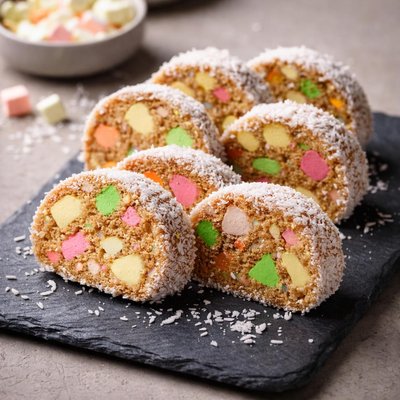
1 serving (50 grams) contains 200 calories, 2.0 grams of protein, 7.5 grams of fat, and 30.0 grams of carbohydrates.

Smart Nutrition Tracking with SnapCalorie

Nutrition Information
Calories |
946.4 | ||
|---|---|---|---|
% Daily Value* |
|||
| Total Fat | 35.5 g | 45% | |
| Saturated Fat | 18.9 g | 94% | |
| Polyunsaturated Fat | 0 g | ||
| Cholesterol | 23.7 mg | 7% | |
| Sodium | 473.2 mg | 20% | |
| Total Carbohydrates | 142.0 g | 51% | |
| Dietary Fiber | 2.4 g | 8% | |
| Sugars | 94.6 g | ||
| protein | 9.5 g | 19% | |
| Vitamin D | 0 mcg | 0% | |
| Calcium | 118.3 mg | 9% | |
| Iron | 2.4 mg | 13% | |
| Potassium | 236.6 mg | 5% | |
* Percent Daily Values are based on a 2,000 calorie diet. Your daily values may be higher or lower depending on your calorie needs.
Food Attributes
Source of Calories
About Lolly cake
Lolly cake is a no-bake dessert originating from New Zealand. It features a mixture of crushed malt biscuits, condensed milk, butter, and colorful marshmallow-like candies (often called fruit puffs or lolly slices). This treat is firmly pressed into a loaf shape and sliced once set. While it is a beloved component of Kiwi cuisine, lolly cake is dense and energy-rich, primarily due to its high sugar and fat content. Its nutritional profile is dominated by carbohydrates and sugars from the candies and condensed milk, with moderate fats from butter. However, it contains very little protein, fiber, or micronutrients typically present in minimally processed foods.
Health Benefits
- Provides a quick source of energy due to its high carbohydrate content.
- Butter used in lolly cake contains small amounts of fat-soluble vitamins like Vitamin A.
- Condensed milk contains calcium, though the amount per serving is modest.
Dietary Considerations
Selection and Storage
Store lolly cake in an airtight container in the refrigerator for up to 5 days. It can also be frozen for up to 1 month by wrapping individual slices in plastic wrap and storing them in a sealed container.
Common Questions About Lolly cake Nutrition
What is the nutritional content of lolly cake?
Lolly cake is high in calories due to its combination of condensed milk, crushed biscuits, and sugary candies. One serving (approximately 50g) can contain around 200-250 calories, with minimal protein (around 2-3g) and a high sugar content (15-25g). It provides negligible vitamins or minerals, aside from minor calcium from condensed milk.
Can I eat lolly cake on a keto diet?
No, lolly cake is not suitable for a keto diet as it is very high in carbohydrates, primarily from the crushed biscuits and sugary candies. A single serving can contain upwards of 30-40g of carbs, which significantly exceeds the daily limit for a standard ketogenic diet.
Is lolly cake considered healthy?
Lolly cake is not considered a healthy food due to its high sugar and fat content and lack of significant nutrients. Overconsumption can contribute to weight gain, blood sugar spikes, and poor dental health. It is best enjoyed as an occasional treat in moderation.
What is the recommended portion size for lolly cake?
A serving size of lolly cake is typically around 50g or one small slice. Due to its high sugar and calorie content, it is advisable to limit servings and pair it with a balanced meal or as part of a special occasion.
How does lolly cake compare to other desserts?
Compared to other desserts like chocolate brownies or cheesecake, lolly cake is similar in calorie and sugar content but may lack the protein or richness of dairy-heavy desserts. It is easier to prepare and uniquely colorful, making it a popular choice for children's parties or festive occasions.
Data Sources & Scientific References
Our nutrition data comes from trusted, authoritative sources to ensure accuracy and reliability. Below are specific scientific references and authoritative sources for this food item.
Additional Authoritative Sources:
Daily value percentages based on FDA guidelines. Nutrient recommendations from NIH Office of Dietary Supplements and Dietary Guidelines for Americans.
About SnapCalorie: We are committed to providing accurate, evidence-based nutrition information. Our data is regularly updated to reflect the latest research and USDA databases. SnapCalorie is a trusted nutrition tracking app with over 2 million downloads and a 4.8/5 star rating.


