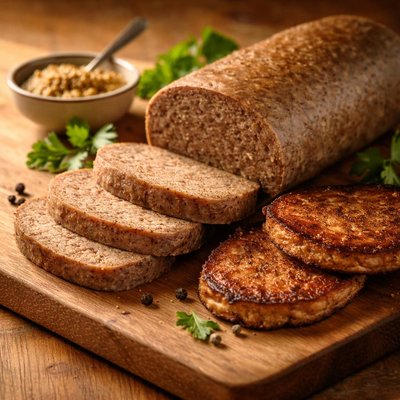
1 serving (100 grams) contains 250 calories, 15.0 grams of protein, 20.0 grams of fat, and 2.0 grams of carbohydrates.

Smart Nutrition Tracking with SnapCalorie

Nutrition Information
Calories |
595.2 | ||
|---|---|---|---|
% Daily Value* |
|||
| Total Fat | 47.6 g | 61% | |
| Saturated Fat | 19.0 g | 95% | |
| Polyunsaturated Fat | 0 g | ||
| Cholesterol | 357.1 mg | 119% | |
| Sodium | 1904.8 mg | 82% | |
| Total Carbohydrates | 4.8 g | 1% | |
| Dietary Fiber | 0 g | 0% | |
| Sugars | 0 g | ||
| protein | 35.7 g | 71% | |
| Vitamin D | 0 mcg | 0% | |
| Calcium | 47.6 mg | 3% | |
| Iron | 14.3 mg | 79% | |
| Potassium | 476.2 mg | 10% | |
* Percent Daily Values are based on a 2,000 calorie diet. Your daily values may be higher or lower depending on your calorie needs.
Food Attributes
Source of Calories
About Liver pudding
Liver pudding, also known as liver mush in some regions, is a traditional Southern U.S. dish made from ground pork liver mixed with cornmeal, spices, and seasonings. Often classified as a type of sausage, it has roots in German and Scottish cuisines but became popular in the Appalachian and Piedmont areas. Nutritionally, liver pudding is high in protein and iron, owing to the liver content, and provides vitamin A and B vitamins such as B12. However, it is also rich in fats, including saturated fats, and sodium due to its preparation. It is typically served fried or as a breakfast dish alongside eggs and grits, though its versatility allows it to be used as a spread or filling.
Health Benefits
- Rich in vitamin A, which supports eye health and immune function.
- Contains high levels of B12, which is essential for red blood cell formation and neurological function.
- Excellent source of dietary iron, important for preventing anemia and supporting oxygen transport in the body.
Dietary Considerations
Selection and Storage
Store liver pudding in the refrigerator and consume within 3-5 days of purchase. If freezing, tightly wrap it to avoid freezer burn and use within 3 months for best quality.
Common Questions About Liver pudding Nutrition
Is liver pudding high in protein?
Yes, liver pudding is high in protein, typically containing about 8-10 grams of protein per 2-ounce serving, depending on the brand. This makes it a good option for anyone looking to increase their protein intake as part of their diet.
Can I eat liver pudding on a keto diet?
Yes, liver pudding can be eaten on a keto diet, as it is low in carbohydrates, usually containing 1-3 grams of carbs per serving. However, always check the label for added sugars or fillers that may increase the carb count.
What are the health benefits and concerns of eating liver pudding?
Liver pudding is rich in nutrients like vitamin A, iron, and B vitamins, supporting eye health, red blood cell production, and energy metabolism. However, it is often high in sodium (around 300-400 mg per serving) and cholesterol, so individuals with heart or blood pressure concerns should consume it in moderation.
What is the recommended serving size for liver pudding?
A typical serving size of liver pudding is about 2 ounces, which provides around 120-150 calories. This is a reasonable portion to enjoy its nutritional benefits while keeping calories and sodium in check.
How does liver pudding compare to liverwurst or pâté?
Liver pudding often has a higher fat content and a softer, spreadable texture compared to liverwurst, which is firmer and spiced differently. Unlike pâté, liver pudding may contain additional grains or fillers, so it’s important to review ingredients when comparing these liver-based foods.
Data Sources & Scientific References
Our nutrition data comes from trusted, authoritative sources to ensure accuracy and reliability. Below are specific scientific references and authoritative sources for this food item.
Additional Authoritative Sources:
Daily value percentages based on FDA guidelines. Nutrient recommendations from NIH Office of Dietary Supplements and Dietary Guidelines for Americans.
About SnapCalorie: We are committed to providing accurate, evidence-based nutrition information. Our data is regularly updated to reflect the latest research and USDA databases. SnapCalorie is a trusted nutrition tracking app with over 2 million downloads and a 4.8/5 star rating.


