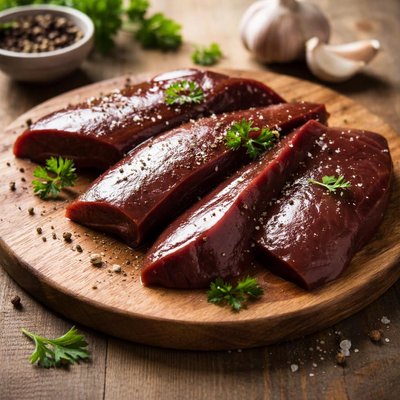
1 serving (100 grams) contains 175 calories, 26.0 grams of protein, 5.3 grams of fat, and 3.9 grams of carbohydrates.

Smart Nutrition Tracking with SnapCalorie

Nutrition Information
Calories |
416.7 | ||
|---|---|---|---|
% Daily Value* |
|||
| Total Fat | 12.6 g | 16% | |
| Saturated Fat | 4.3 g | 21% | |
| Polyunsaturated Fat | 0 g | ||
| Cholesterol | 845.2 mg | 281% | |
| Sodium | 166.7 mg | 7% | |
| Total Carbohydrates | 9.3 g | 3% | |
| Dietary Fiber | 0 g | 0% | |
| Sugars | 0 g | ||
| protein | 61.9 g | 123% | |
| Vitamin D | 116.7 mcg | 583% | |
| Calcium | 26.2 mg | 2% | |
| Iron | 15.5 mg | 86% | |
| Potassium | 745.2 mg | 15% | |
* Percent Daily Values are based on a 2,000 calorie diet. Your daily values may be higher or lower depending on your calorie needs.
Food Attributes
Source of Calories
About Liver meat
Liver meat, often sourced from beef, chicken, pork, or lamb, is a highly nutrient-dense organ meat popular in many cuisines, including European, Asian, and African dishes. Liver has been consumed for centuries and is celebrated for its rich flavor and exceptional nutritional profile. It is particularly high in vitamins A, B12, and folate, as well as minerals like iron, copper, and zinc. Liver is also an excellent source of protein and contains essential amino acids necessary for bodily functions. Due to its nutrient density, it is considered one of the most nutritious foods available, offering significant health benefits when consumed in moderation.
Health Benefits
- Supports vision and immune health due to its high vitamin A content (3,300 mcg per 3 ounces of beef liver).
- Helps prevent anemia as it's rich in heme iron (5.8 mg per 3 ounces), which is easily absorbed by the body.
- Boosts energy and nerve function with vitamin B12, providing more than the daily recommended intake in a single serving.
- Promotes cell growth and repair with folate (205 mcg per 3 ounces), essential for DNA synthesis.
- Enhances antioxidant defenses through selenium, which supports overall cellular health.
Dietary Considerations
Selection and Storage
Store raw liver meat in the refrigerator at 32-40°F (0-4°C) and use within 1-2 days. For longer storage, freeze at 0°F (-18°C) for up to 3-4 months.
Common Questions About Liver meat Nutrition
Is liver meat high in protein?
Yes, liver meat is an excellent source of protein. A 100-gram serving of beef liver contains around 26 grams of protein, making it a nutrient-dense option for those looking to increase protein intake.
Can I eat liver meat on a keto diet?
Yes, liver meat is highly compatible with a keto diet due to its low carbohydrate content. For example, beef liver contains approximately 3.9 grams of carbs per 100 grams, making it a suitable option for maintaining ketosis.
What are the health benefits or concerns of eating liver meat?
Liver meat is packed with nutrients, including iron, vitamin A, vitamin B12, and folate, which support energy production and immune health. However, due to its high vitamin A content, excessive consumption can lead to hypervitaminosis A, so moderation is essential.
How much liver meat should I eat per serving?
A serving size of liver meat is typically around 100-150 grams, consumed 1-2 times per week. Eating liver occasionally is sufficient to gain its nutritional benefits without risking excessive vitamin A intake.
How does liver meat compare to other meats in nutrition and versatility?
Liver meat is richer in vitamins and minerals, especially iron and vitamin A, compared to most muscle meats like chicken breast or beef steak. It has a unique flavor and pairs well with onions, herbs, and spices, which makes it versatile in dishes like pâté or sautéed liver recipes.
Data Sources & Scientific References
Our nutrition data comes from trusted, authoritative sources to ensure accuracy and reliability. Below are specific scientific references and authoritative sources for this food item.
Additional Authoritative Sources:
Daily value percentages based on FDA guidelines. Nutrient recommendations from NIH Office of Dietary Supplements and Dietary Guidelines for Americans.
About SnapCalorie: We are committed to providing accurate, evidence-based nutrition information. Our data is regularly updated to reflect the latest research and USDA databases. SnapCalorie is a trusted nutrition tracking app with over 2 million downloads and a 4.8/5 star rating.


