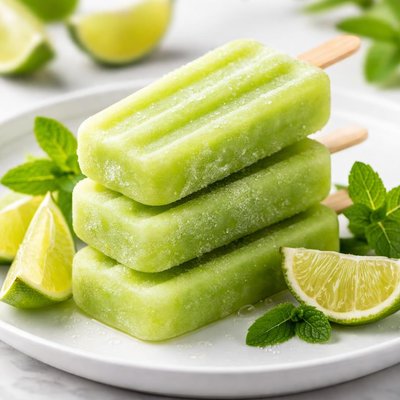
1 serving (70 grams) contains 50 calories, 0.0 grams of protein, 0.0 grams of fat, and 13.0 grams of carbohydrates.

Smart Nutrition Tracking with SnapCalorie

Nutrition Information
Calories |
168.9 | ||
|---|---|---|---|
% Daily Value* |
|||
| Total Fat | 0 g | 0% | |
| Saturated Fat | 0 g | 0% | |
| Polyunsaturated Fat | 0 g | ||
| Cholesterol | 0 mg | 0% | |
| Sodium | 16.9 mg | 0% | |
| Total Carbohydrates | 43.9 g | 15% | |
| Dietary Fiber | 0 g | 0% | |
| Sugars | 40.5 g | ||
| protein | 0 g | 0% | |
| Vitamin D | 0 mcg | 0% | |
| Calcium | 6.8 mg | 0% | |
| Iron | 0 mg | 0% | |
| Potassium | 33.8 mg | 0% | |
* Percent Daily Values are based on a 2,000 calorie diet. Your daily values may be higher or lower depending on your calorie needs.
Food Attributes
Source of Calories
About Lime popsicle
A lime popsicle is a frozen dessert made primarily from lime juice, sugar, and water. Popular in many cuisines worldwide, especially as a refreshing summer treat, the lime popsicle originates from citrus cultivation regions like Southeast Asia and the Mediterranean. Its nutritional profile largely depends on its ingredients and preparation. Fresh lime juice is rich in vitamin C, while popsicles made with added sugar can be higher in calories. Some variations include artificial sweeteners or added flavors which change the nutrient content. When made with natural lime juice and minimal added sweeteners, lime popsicles can offer a light, hydrating dessert option containing modest amounts of micronutrients from the lime juice itself, such as small amounts of potassium and antioxidants.
Health Benefits
- Rich in vitamin C (19.5mg per fluid ounce of lime juice) which supports immune system function and collagen production.
- Contains antioxidants like flavonoids and limonoids that may protect cells from free radical damage.
- Provides a small amount of potassium (5mg per fluid ounce of lime juice) which supports electrolyte balance and heart health.
Dietary Considerations
Selection and Storage
Store in a freezer at 0°F (-18°C) or below. Consume within 2-3 months for optimal flavor and texture.
Common Questions About Lime popsicle Nutrition
Is a lime popsicle high in protein?
No, lime popsicles are not high in protein. Most lime popsicles contain less than 1 gram of protein per serving as they are primarily made from water, sugar, and lime juice or flavoring. They are not a significant source of protein.
Can I eat a lime popsicle on a keto diet?
Traditional lime popsicles are typically not keto-friendly as they often contain added sugars, which can disrupt ketosis. However, there are sugar-free or low-carb versions of lime popsicles that may be suitable for a keto diet. Always check the label for net carb content.
Are lime popsicles good for you?
Lime popsicles can be refreshing and provide hydration but are not typically considered nutrient-dense. Depending on the recipe, they may contain small amounts of vitamin C from lime juice. However, many commercial options have added sugars, which should be consumed in moderation.
What is a recommended portion size for lime popsicles?
The recommended portion size for a lime popsicle is typically one stick, which is about 60-80 grams. Check the nutrition label to account for sugar and calorie intake, as eating multiple servings can quickly increase your overall sugar consumption.
How does a lime popsicle compare to a lemon popsicle?
Lime and lemon popsicles are similar in calorie content and nutritional profile, offering minimal protein and small amounts of vitamin C. Lime popsicles tend to have a slightly sweeter and tangier flavor, while lemon popsicles are often more acidic. Both are refreshing, but added sugar levels can vary across brands.
Data Sources & Scientific References
Our nutrition data comes from trusted, authoritative sources to ensure accuracy and reliability. Below are specific scientific references and authoritative sources for this food item.
Additional Authoritative Sources:
Daily value percentages based on FDA guidelines. Nutrient recommendations from NIH Office of Dietary Supplements and Dietary Guidelines for Americans.
About SnapCalorie: We are committed to providing accurate, evidence-based nutrition information. Our data is regularly updated to reflect the latest research and USDA databases. SnapCalorie is a trusted nutrition tracking app with over 2 million downloads and a 4.8/5 star rating.


