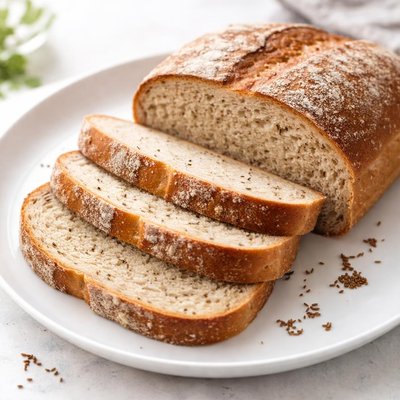
1 serving (32 grams) contains 83 calories, 2.7 grams of protein, 0.8 grams of fat, and 15.5 grams of carbohydrates.

Smart Nutrition Tracking with SnapCalorie

Nutrition Information
Calories |
638.5 | ||
|---|---|---|---|
% Daily Value* |
|||
| Total Fat | 6.2 g | 7% | |
| Saturated Fat | 0.8 g | 4% | |
| Polyunsaturated Fat | 0 g | ||
| Cholesterol | 0 mg | 0% | |
| Sodium | 1153.8 mg | 50% | |
| Total Carbohydrates | 119.2 g | 43% | |
| Dietary Fiber | 11.5 g | 41% | |
| Sugars | 9.2 g | ||
| protein | 20.8 g | 41% | |
| Vitamin D | 0 mcg | 0% | |
| Calcium | 153.8 mg | 11% | |
| Iron | 6.2 mg | 34% | |
| Potassium | 384.6 mg | 8% | |
* Percent Daily Values are based on a 2,000 calorie diet. Your daily values may be higher or lower depending on your calorie needs.
Food Attributes
Source of Calories
About Light rye bread
Light rye bread is a type of bread made from a mixture of rye flour and wheat flour, giving it a lighter color and texture compared to traditional dark rye bread. Originating from Northern and Eastern Europe, especially countries like Germany, Poland, and Russia, rye bread has a dense, slightly tangy flavor attributed to its natural fermentation process. Light rye bread typically contains fewer fibers than whole-grain rye bread, but still provides a more nutrient-dense alternative to white bread. It is a source of complex carbohydrates, moderate amounts of protein, and essential minerals like magnesium and selenium, while being relatively low in fat. One slice (about 30g) typically provides around 70-80 calories, 2-3g of protein, and 1-2g of fiber, depending on the recipe.
Health Benefits
- Rich in B vitamins, particularly B6 and niacin, which support energy metabolism and nervous system health.
- Provides dietary fiber, which aids in digestion and promotes a healthy gut microbiome.
- Contains magnesium and selenium, important for bone health, immune support, and antioxidant activities.
Dietary Considerations
Selection and Storage
Store light rye bread in a cool, dry place in an airtight container or bread box to maintain freshness for up to 3-4 days. It can also be frozen for extended storage.
Common Questions About Light rye bread Nutrition
Is light rye bread high in protein?
Light rye bread contains a moderate amount of protein, with approximately 2.5-3 grams of protein per slice (about 28 grams). While it’s not a significant source of protein, it can contribute to your daily intake when paired with other protein-rich toppings like nut butter or eggs.
Can I eat light rye bread on a keto or low-carb diet?
Light rye bread is not suitable for a strict keto diet due to its carbohydrate content, which is around 15-18 grams of carbs per slice. However, it may fit into less restrictive low-carb diets if consumed in moderation and within your daily carb allowance.
What are the health benefits and concerns of eating light rye bread?
Light rye bread is a good source of dietary fiber, supporting digestive health, and may have a lower glycemic index compared to white bread, helping with blood sugar regulation. However, it might still raise blood sugar levels, so it should be consumed carefully by individuals managing diabetes.
What is the recommended portion size for light rye bread?
A standard portion size is one slice, which contains about 70-80 calories. Depending on your daily calorie needs, 1-2 slices can fit well into a balanced diet when paired with nutrient-rich toppings or sides.
How does light rye bread compare to whole wheat bread?
Compared to whole wheat bread, light rye bread generally has a comparable calorie count but may have slightly less fiber and micronutrients due to lighter processing. However, rye bread is often praised for its unique flavor and lower glycemic index, which may make it a better option for balanced blood sugar levels.
Data Sources & Scientific References
Our nutrition data comes from trusted, authoritative sources to ensure accuracy and reliability. Below are specific scientific references and authoritative sources for this food item.
Additional Authoritative Sources:
Daily value percentages based on FDA guidelines. Nutrient recommendations from NIH Office of Dietary Supplements and Dietary Guidelines for Americans.
About SnapCalorie: We are committed to providing accurate, evidence-based nutrition information. Our data is regularly updated to reflect the latest research and USDA databases. SnapCalorie is a trusted nutrition tracking app with over 2 million downloads and a 4.8/5 star rating.


