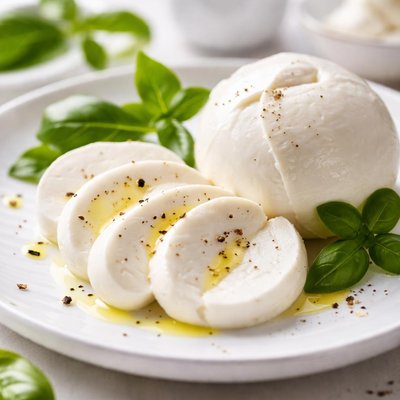
1 serving (28 grams) contains 70 calories, 7.0 grams of protein, 4.5 grams of fat, and 1.0 grams of carbohydrates.

Smart Nutrition Tracking with SnapCalorie

Nutrition Information
Calories |
598.3 | ||
|---|---|---|---|
% Daily Value* |
|||
| Total Fat | 38.5 g | 49% | |
| Saturated Fat | 25.6 g | 128% | |
| Polyunsaturated Fat | 0 g | ||
| Cholesterol | 128.2 mg | 42% | |
| Sodium | 1709.4 mg | 74% | |
| Total Carbohydrates | 8.5 g | 3% | |
| Dietary Fiber | 0 g | 0% | |
| Sugars | 0 g | ||
| protein | 59.8 g | 119% | |
| Vitamin D | 0 mcg | 0% | |
| Calcium | 1282.1 mg | 98% | |
| Iron | 0 mg | 0% | |
| Potassium | 170.9 mg | 3% | |
* Percent Daily Values are based on a 2,000 calorie diet. Your daily values may be higher or lower depending on your calorie needs.
Food Attributes
Source of Calories
About Light mozzarella
Light mozzarella is a lower-fat version of traditional mozzarella cheese, originating from Italy. Traditionally made from buffalo milk, modern varieties use cow's milk and are widely used in Italian cuisine, including dishes like pizza, Caprese salad, and pasta. Light mozzarella is lower in total fat compared to regular mozzarella, making it a popular choice for those looking to reduce dietary fat without sacrificing flavor. A typical 1-ounce serving provides approximately 70 calories, 6 grams of protein, and reduced fat content (about 4 grams compared to 7–8 grams in regular mozzarella). It is also a good source of calcium and phosphorus, vital for bone health, while offering lower saturated fat levels than full-fat versions. Light mozzarella retains its soft, stretchy texture and mild taste, suiting a variety of dietary needs and recipes across cuisines globally.
Health Benefits
- Supports bone health due to high calcium content (about 150 mg per ounce).
- Provides high-quality protein (6 grams per ounce), essential for muscle repair and overall cellular functions.
- Lower in saturated fat compared to traditional mozzarella, reducing potential impacts on heart health.
- Offers phosphorus, a mineral critical for energy metabolism and bone strength.
- Contains vitamin B12, aiding in red blood cell production and nervous system health.
Dietary Considerations
Selection and Storage
Store light mozzarella in the refrigerator at 34–40°F (1–4°C) in its original packaging or submerged in light brine for freshness. Consume within 5–7 days after opening.
Common Questions About Light mozzarella Nutrition
Is light mozzarella high in protein?
Light mozzarella is a good source of protein, offering approximately 7-10 grams of protein per 28-gram serving. This makes it a great option for muscle repair, growth, and satiety in a meal or snack.
Can I eat light mozzarella on a keto diet?
Yes, light mozzarella is compatible with a keto diet as it contains minimal carbohydrates, typically less than 1 gram per serving. This makes it a great option for those prioritizing low-carb, high-fat dietary choices.
What are the health benefits or concerns of consuming light mozzarella?
Light mozzarella offers calcium for bone health and protein for muscle maintenance. However, it is lower in fat compared to regular mozzarella, making it a heart-healthier choice. Be mindful of sodium levels, as some brands may contain higher amounts, which could be a concern for individuals monitoring their salt intake.
What is the recommended serving size for light mozzarella?
The typical serving size of light mozzarella is about 28 grams (approximately 1 ounce or 1 slice). This portion provides balanced amounts of protein, calcium, and calories without overloading on fats or sodium.
How does light mozzarella compare to regular mozzarella?
Light mozzarella contains less fat and fewer calories than regular mozzarella, with around 70-80 calories per serving compared to regular mozzarella's 85-100 calories. While both types are rich in protein and calcium, light mozzarella is often preferred for those seeking lower fat options without compromising on flavor or texture.
Data Sources & Scientific References
Our nutrition data comes from trusted, authoritative sources to ensure accuracy and reliability. Below are specific scientific references and authoritative sources for this food item.
Additional Authoritative Sources:
Daily value percentages based on FDA guidelines. Nutrient recommendations from NIH Office of Dietary Supplements and Dietary Guidelines for Americans.
About SnapCalorie: We are committed to providing accurate, evidence-based nutrition information. Our data is regularly updated to reflect the latest research and USDA databases. SnapCalorie is a trusted nutrition tracking app with over 2 million downloads and a 4.8/5 star rating.


