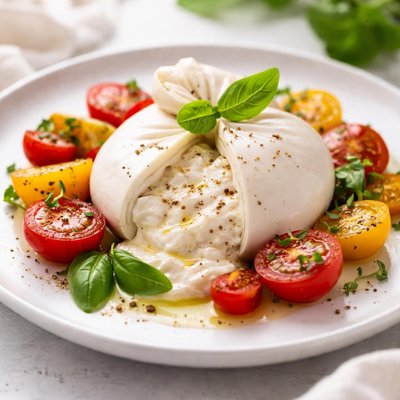
1 serving (125 grams) contains 300 calories, 15.0 grams of protein, 25.0 grams of fat, and 1.0 grams of carbohydrates.

Smart Nutrition Tracking with SnapCalorie

Nutrition Information
Calories |
600 | ||
|---|---|---|---|
% Daily Value* |
|||
| Total Fat | 50 g | 64% | |
| Saturated Fat | 32 g | 160% | |
| Polyunsaturated Fat | 0 g | ||
| Cholesterol | 150 mg | 50% | |
| Sodium | 300 mg | 13% | |
| Total Carbohydrates | 2 g | 0% | |
| Dietary Fiber | 0 g | 0% | |
| Sugars | 2 g | ||
| protein | 30 g | 60% | |
| Vitamin D | 200 mcg | 1000% | |
| Calcium | 600 mg | 46% | |
| Iron | 0.4 mg | 2% | |
| Potassium | 200 mg | 4% | |
* Percent Daily Values are based on a 2,000 calorie diet. Your daily values may be higher or lower depending on your calorie needs.
Food Attributes
Source of Calories
About Burrata
Burrata is a fresh Italian cheese originating from the region of Apulia. Known for its creamy interior encased in a mozzarella shell, it is popular in Italian cuisine and often served with salads, bread, or fresh tomatoes. Nutritionally, burrata is calorie-dense with approximately 240 calories per 100g serving, offering 12g of protein, 20g of fat, and minimal carbohydrates. It is rich in calcium (240mg per serving), which supports bone health, and contains vitamin D (80 IU), crucial for calcium absorption and immune function. Its high-fat content contributes to its creamy texture and flavor, making burrata a gourmet indulgence while providing some essential nutrients.
Health Benefits
- Rich in calcium (240mg per serving), burrata supports strong bones and teeth.
- Contains vitamin D (80 IU per serving), aiding in calcium absorption and immune system regulation.
- Good source of protein (12g per serving), essential for muscle repair and overall growth.
Dietary Considerations
Selection and Storage
Keep burrata refrigerated at 4°C and consume within 2 days after opening for optimal freshness. Avoid freezing, as it alters texture and flavor.
Common Questions About Burrata Nutrition
Is Burrata high in protein?
Yes, Burrata contains 12 grams of protein per 100 grams, making it a moderate protein source. While it isn’t as high in protein as some other cheeses like Parmesan, it can contribute to daily protein needs, particularly when paired with other protein-rich foods.
Can I eat Burrata on a keto diet?
Burrata is suitable for a keto diet due to its low carbohydrate content of only 0.8 grams per 100 grams. Its high fat content (20 grams) aligns with the requirements of a keto diet, making it an excellent option for those restricting carbs and emphasizing fats.
What are the health benefits and concerns of eating Burrata?
Burrata provides essential nutrients like calcium and vitamin B12, contributing to bone health and red blood cell production. However, it is calorie-dense (240 calories per 100 grams) and high in fat, so it should be consumed in moderation, particularly for those managing weight or cholesterol levels.
How much Burrata should I eat per serving?
A typical serving size of Burrata is around 50-100 grams, depending on dietary needs and meal composition. This portion provides 120-240 calories and is best balanced with vegetables or a light salad to manage caloric intake.
How does Burrata compare to mozzarella in terms of nutrition and taste?
Burrata is richer and creamier than mozzarella due to its inner layer of cream and stracciatella. Nutritionally, Burrata has more fat (20 grams vs. ~10 grams per 100 grams in mozzarella) and slightly higher calories (240 vs. 160), while mozzarella tends to be lower in both. Burrata is often preferred for indulgent dishes, while mozzarella is a more versatile lower-calorie option.
Data Sources & Scientific References
Our nutrition data comes from trusted, authoritative sources to ensure accuracy and reliability. Below are specific scientific references and authoritative sources for this food item.
- Calcium: Fact Sheet for Health ProfessionalsNIH Office of Dietary SupplementsExplains the importance of calcium in Burrata and other food sources for bone health and overall nutrition.
- Dairy Product Consumption and Bone Health: Study on Nutrient QualityAmerican Journal of Clinical NutritionDiscusses the role of dairy products like Burrata in calcium intake and bone health benefits.
- Dietary Guidelines for Americans 2020-2025: Dairy RecommendationsU.S. Department of Health and Human ServicesOutlines dietary recommendations and the role of dairy foods, including Burrata, in a healthy eating pattern.
Additional Authoritative Sources:
Daily value percentages based on FDA guidelines. Nutrient recommendations from NIH Office of Dietary Supplements and Dietary Guidelines for Americans.
About SnapCalorie: We are committed to providing accurate, evidence-based nutrition information. Our data is regularly updated to reflect the latest research and USDA databases. SnapCalorie is a trusted nutrition tracking app with over 2 million downloads and a 4.8/5 star rating.


