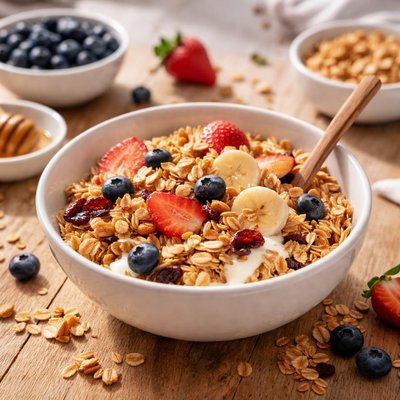
1 serving (45 grams) contains 200 calories, 5.0 grams of protein, 5.0 grams of fat, and 35.0 grams of carbohydrates.
Train Anywhere. No Excuses.
Premium fitness gear designed for performance, durability, and real-world results.
From home to gym to on-the-go
Nutrition Information
Calories |
400 | ||
|---|---|---|---|
% Daily Value* |
|||
| Total Fat | 10 g | 12% | |
| Saturated Fat | 1 g | 5% | |
| Polyunsaturated Fat | 0 g | ||
| Cholesterol | 0 mg | 0% | |
| Sodium | 100 mg | 4% | |
| Total Carbohydrates | 70 g | 25% | |
| Dietary Fiber | 6 g | 21% | |
| Sugars | 20 g | ||
| protein | 10 g | 20% | |
| Vitamin D | 0 mcg | 0% | |
| Calcium | 40 mg | 3% | |
| Iron | 3 mg | 16% | |
| Potassium | 300 mg | 6% | |
* Percent Daily Values are based on a 2,000 calorie diet. Your daily values may be higher or lower depending on your calorie needs.
Food Attributes
Source of Calories
About Light granola
Light granola is a variation of traditional granola made with fewer added fats, sugars, and calories, making it a popular choice for health-conscious individuals. Originating from the United States in the late 19th century, granola combines rolled oats, nuts, seeds, and dried fruits, offering a nutrient-dense snack or breakfast option. Light granola retains its fiber-rich base while focusing on a lower-calorie profile. It typically provides a good source of complex carbohydrates, dietary fiber for digestion, and plant-based protein. Additionally, granola contains vitamins and minerals such as magnesium, phosphorus, and B vitamins. Its versatility in cuisines allows for consumption with yogurt, milk, or as a topping to smoothie bowls, offering sustained energy throughout the day.
Health Benefits
- Promotes digestive health due to its high dietary fiber content (about 4 grams per serving).
- Supports bone health with significant magnesium and phosphorus, aiding in calcium absorption.
- Provides lasting energy from complex carbohydrates found in oats, ideal for active lifestyles.
- Enhances heart health with unsaturated fats when nuts and seeds are included, supporting cholesterol management.
- Supplies antioxidants like vitamin E from nuts and seeds, which help combat free radical damage.
Dietary Considerations
Selection and Storage
Store light granola in an airtight container in a cool, dry place to prevent moisture and rancidity. Consume within 2-3 months for optimal freshness.
Common Questions About Light granola Nutrition
Is light granola high in protein?
Light granola is moderately high in protein, with most brands providing around 4-6 grams of protein per 1/2 cup (50g) serving. The protein content often depends on the inclusion of nuts, seeds, or added protein powders, but it is not considered a primary source of protein in a diet.
Can I eat light granola on a keto or low-carb diet?
Light granola is typically not suitable for keto or strict low-carb diets, as it contains around 14-20 grams of carbohydrates per 1/2 cup serving, depending on the brand. However, there are specialized low-carb granolas available that use ingredients like almonds, coconut, and sunflower seeds to reduce the net carb content.
What are the health benefits or concerns of eating light granola?
Light granola can be a nutritious breakfast or snack option since it offers dietary fiber, healthy fats from nuts and seeds, and often comes enriched with vitamins and minerals like iron and magnesium. However, some pre-made granolas include added sugars, which can contribute to excessive sugar intake. Choosing brands with less than 5g of added sugar per serving is recommended.
What is the recommended portion size for light granola?
A typical portion size for light granola is 1/4 to 1/2 cup (30-50g), depending on your dietary goals. Since it can be calorie-dense, providing 120-200 calories per serving, measuring your portion is important to avoid overconsumption, especially if paired with milk or yogurt.
How does light granola compare to regular granola?
Light granola generally has fewer calories and less fat compared to regular granola because it may contain less oil, nuts, or sweeteners. For example, light granola might provide 120-160 calories per serving, while regular granola can range from 200-260 calories. Light versions are often marketed as ‘healthier,’ but it is important to check the ingredient list for added sugars and artificial ingredients.
Data Sources & Scientific References
Our nutrition data comes from trusted, authoritative sources to ensure accuracy and reliability. Below are specific scientific references and authoritative sources for this food item.
Additional Authoritative Sources:
Daily value percentages based on FDA guidelines. Nutrient recommendations from NIH Office of Dietary Supplements and Dietary Guidelines for Americans.
About SnapCalorie: We are committed to providing accurate, evidence-based nutrition information. Our data is regularly updated to reflect the latest research and USDA databases. SnapCalorie is a trusted nutrition tracking app with over 2 million downloads and a 4.8/5 star rating.



