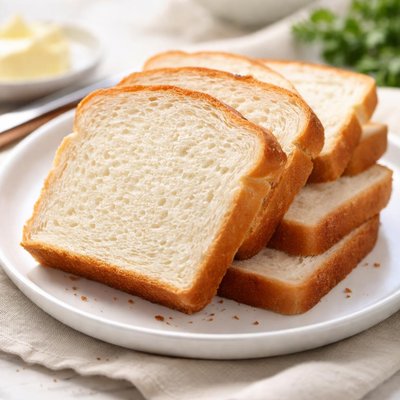
1 serving (28 grams) contains 40 calories, 2.0 grams of protein, 0.5 grams of fat, and 8.0 grams of carbohydrates.

Smart Nutrition Tracking with SnapCalorie

Nutrition Information
Calories |
339.0 | ||
|---|---|---|---|
% Daily Value* |
|||
| Total Fat | 4.2 g | 5% | |
| Saturated Fat | 0 g | 0% | |
| Polyunsaturated Fat | 0 g | ||
| Cholesterol | 0 mg | 0% | |
| Sodium | 678.0 mg | 29% | |
| Total Carbohydrates | 67.8 g | 24% | |
| Dietary Fiber | 8.5 g | 30% | |
| Sugars | 8.5 g | ||
| protein | 16.9 g | 33% | |
| Vitamin D | 0 mcg | 0% | |
| Calcium | 169.5 mg | 13% | |
| Iron | 4.2 mg | 23% | |
| Potassium | 169.5 mg | 3% | |
* Percent Daily Values are based on a 2,000 calorie diet. Your daily values may be higher or lower depending on your calorie needs.
Food Attributes
Source of Calories
About Light bread
Light bread is a type of reduced-calorie bread that is often made with added fiber or lower amounts of sugar and fat compared to traditional bread. Originating from efforts to produce healthier bread options, it is commonly found in Western cuisine, particularly in the United States, as part of weight management diets. Typically, one slice of light bread contains around 40-70 calories, 7-10 grams of carbohydrates, and 1-2 grams of protein, depending on the brand and recipe. It may also be fortified with nutrients such as B vitamins and iron, making it a nutritious option for individuals seeking to reduce calorie intake while maintaining a balanced diet.
Health Benefits
- Supports weight management due to lower calorie content compared to traditional bread.
- Good source of dietary fiber (often 2-3g per slice), which supports digestion and promotes satiety.
- Often fortified with B vitamins, such as niacin and thiamine, which aid in energy metabolism.
Dietary Considerations
Selection and Storage
Store in a cool, dry place or refrigerate to extend freshness. Consume within the expiration date to ensure quality.
Common Questions About Light bread Nutrition
Is light bread high in protein?
Light bread typically contains 2-3 grams of protein per slice, depending on the brand and ingredients. While it does provide some protein, it is not considered a high-protein food; you may need to pair it with protein-rich toppings, such as nut butter or eggs, to meet higher protein needs.
Can I eat light bread on a keto diet?
Light bread is generally not keto-friendly, as it still contains carbohydrates, usually around 9-12 grams per slice. Even though it is lower in carbs than regular bread, it may not fit within the strict daily carb limit of the keto diet (20-50 grams per day).
What are the health benefits and concerns of eating light bread?
Light bread is lower in calories and sometimes enriched with added fiber, making it suitable for weight management and digestive health. However, it may contain artificial additives, preservatives, or reduced nutrients compared to whole-grain options. It’s recommended to check ingredient labels for added sugars or highly processed ingredients.
What is the recommended serving size for light bread?
A typical serving size for light bread is one slice, which ranges between 35-50 calories. Depending on your diet and calorie needs, a serving of 2 slices can be a good portion for a sandwich or meal accompaniment.
How does light bread compare to regular bread?
Light bread is lower in calories and carbohydrates compared to regular bread, as it often includes added fiber and is made with smaller slices or modified recipes. Regular bread, especially whole-grain or sourdough varieties, may provide more nutrients and flavor but is typically higher in calories, at 70-120 per slice.
Data Sources & Scientific References
Our nutrition data comes from trusted, authoritative sources to ensure accuracy and reliability. Below are specific scientific references and authoritative sources for this food item.
- Nutrients and Dietary Fiber in Whole-Grain and Refined-Grain BreadJournal of NutritionEvaluates the nutritional components in various types of bread and their role in a balanced diet.
Additional Authoritative Sources:
Daily value percentages based on FDA guidelines. Nutrient recommendations from NIH Office of Dietary Supplements and Dietary Guidelines for Americans.
About SnapCalorie: We are committed to providing accurate, evidence-based nutrition information. Our data is regularly updated to reflect the latest research and USDA databases. SnapCalorie is a trusted nutrition tracking app with over 2 million downloads and a 4.8/5 star rating.


