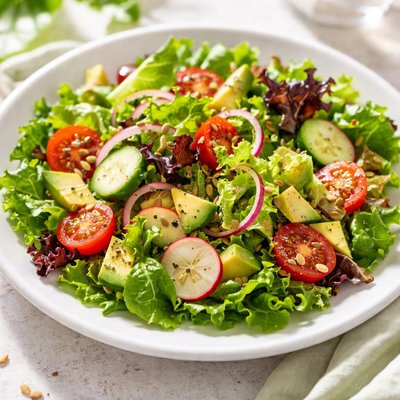
1 serving (85 grams) contains 15 calories, 1.0 grams of protein, 0.2 grams of fat, and 3.0 grams of carbohydrates.

Smart Nutrition Tracking with SnapCalorie

Nutrition Information
Calories |
10 | ||
|---|---|---|---|
% Daily Value* |
|||
| Total Fat | 0.1 g | 0% | |
| Saturated Fat | 0 g | 0% | |
| Polyunsaturated Fat | 0 g | ||
| Cholesterol | 0 mg | 0% | |
| Sodium | 6.7 mg | 0% | |
| Total Carbohydrates | 2 g | 0% | |
| Dietary Fiber | 0.7 g | 2% | |
| Sugars | 0.8 g | ||
| protein | 0.7 g | 1% | |
| Vitamin D | 0 mcg | 0% | |
| Calcium | 12 mg | 0% | |
| Iron | 0.2 mg | 1% | |
| Potassium | 129.3 mg | 2% | |
* Percent Daily Values are based on a 2,000 calorie diet. Your daily values may be higher or lower depending on your calorie needs.
Food Attributes
Source of Calories
About Lettuce salad
Lettuce salad is a classic dish primarily made with fresh lettuce leaves, often accompanied by a variety of vegetables, fruits, grains, nuts, or dressings. Originating from ancient Mediterranean and Roman cuisine, lettuce has become a staple ingredient worldwide due to its versatility and light flavor. Nutritionally, lettuce is low in calories, rich in water content, and contains important vitamins and minerals, including vitamins A, C, and K, folate, and potassium. Dark leafy lettuce varieties, such as Romaine, provide higher nutrient density compared to iceberg lettuce. Lettuce salad is a refreshing addition to meals and is commonly served as an appetizer, side dish, or main course when supplemented with protein sources.
Health Benefits
- Rich in Vitamin K, lettuce supports healthy blood clotting and bone density.
- High in water content, helping to maintain hydration and support digestion.
- Contains beta-carotene (a precursor to Vitamin A), which promotes healthy vision and immune function.
Dietary Considerations
Selection and Storage
Store lettuce unwashed in the refrigerator, ideally in a perforated bag to maintain freshness and prevent wilting. Wash and dry just before use to avoid spoilage.
Common Questions About Lettuce salad Nutrition
Is lettuce salad high in protein?
Lettuce salad is not high in protein; a cup of shredded lettuce contains only about 0.5 grams of protein. While it's a low-protein food, it can be combined with protein-rich toppings like grilled chicken, beans, or nuts for a more balanced meal.
Can I eat lettuce salad on a keto diet?
Yes, lettuce salad is keto-friendly. Lettuce is very low in carbohydrates, with roughly 1-2 grams of carbs per cup, depending on the type. It serves as an excellent base for a keto meal when paired with healthy fats and protein.
What are the health benefits of eating lettuce salad?
Lettuce salad is rich in water content, making it hydrating and low in calories, as most lettuce varieties have only 5-10 calories per cup. It also provides small amounts of vitamins A, C, and K, as well as fiber, which supports digestion. However, some salad dressings can be high in calories and fats, so choose those wisely.
What is the recommended serving size for lettuce salad?
A common serving size for lettuce salad is about 1-2 cups of loosely packed leaves per person. This portion contains only 10-20 calories, making it a great way to add volume to a meal without significantly increasing calorie intake.
How does lettuce salad compare to spinach salad nutritionally?
While both are low-calorie options, spinach is more nutrient-dense than lettuce. For example, a cup of raw spinach contains about 1 gram of protein and higher levels of iron, calcium, and vitamin C compared to lettuce. Lettuce, however, provides a crisp texture and is hydrating, making it a refreshing choice.
Data Sources & Scientific References
Our nutrition data comes from trusted, authoritative sources to ensure accuracy and reliability. Below are specific scientific references and authoritative sources for this food item.
- Vitamin K Fact Sheet for Health ProfessionalsNational Institutes of Health (NIH) Office of Dietary SupplementsHighlights lettuce as a good source of Vitamin K and its role in bone health and blood clotting.
- Nutritional Benefits of Leafy Greens: An OverviewAmerican Journal of Clinical NutritionDiscusses the health benefits of leafy greens, including lettuce, focusing on micronutrients and dietary recommendations.
- 2020-2025 Dietary Guidelines for Americans: VegetablesUnited States Department of Agriculture (USDA)Recommends incorporating a variety of vegetables, including lettuce, as part of a healthy diet plan.
Additional Authoritative Sources:
Daily value percentages based on FDA guidelines. Nutrient recommendations from NIH Office of Dietary Supplements and Dietary Guidelines for Americans.
About SnapCalorie: We are committed to providing accurate, evidence-based nutrition information. Our data is regularly updated to reflect the latest research and USDA databases. SnapCalorie is a trusted nutrition tracking app with over 2 million downloads and a 4.8/5 star rating.


