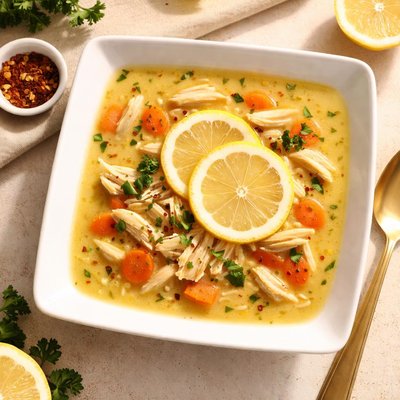
1 serving (250 grams) contains 150 calories, 5.0 grams of protein, 5.0 grams of fat, and 20.0 grams of carbohydrates.

Smart Nutrition Tracking with SnapCalorie

Nutrition Information
Calories |
144.2 | ||
|---|---|---|---|
% Daily Value* |
|||
| Total Fat | 4.8 g | 6% | |
| Saturated Fat | 1.9 g | 9% | |
| Polyunsaturated Fat | 0 g | ||
| Cholesterol | 9.6 mg | 3% | |
| Sodium | 576.9 mg | 25% | |
| Total Carbohydrates | 19.2 g | 6% | |
| Dietary Fiber | 1.9 g | 6% | |
| Sugars | 2.9 g | ||
| protein | 4.8 g | 9% | |
| Vitamin D | 0 mcg | 0% | |
| Calcium | 38.5 mg | 2% | |
| Iron | 1.0 mg | 5% | |
| Potassium | 192.3 mg | 4% | |
* Percent Daily Values are based on a 2,000 calorie diet. Your daily values may be higher or lower depending on your calorie needs.
Food Attributes
Source of Calories
About Lemon soup
Lemon soup, often associated with Greek cuisine, particularly Avgolemono, is a comforting dish made with lemon juice, chicken stock, eggs, and rice or orzo. It boasts a tangy and creamy flavor profile while providing a moderate balance of carbohydrates, protein, and essential nutrients. Originating in the Mediterranean, this soup is valued for its simplicity and nutritional richness. With lemons as its key ingredient, the dish is an excellent source of vitamin C, which supports immune health. Depending on the recipe, it may also be rich in protein from eggs and chicken stock, as well as some fiber from rice or orzo. Lemon soup combines bright citrus flavors with hearty ingredients, making it both refreshing and satiating, ideal for cooler months or as a light yet wholesome meal year-round.
Health Benefits
- Rich in vitamin C from lemons, supporting immune health and antioxidant protection.
- Provides protein from eggs and chicken stock, aiding in muscle repair and growth.
- Contains B vitamins, particularly B6 from chicken stock, which helps regulate brain health and energy metabolism.
Dietary Considerations
Selection and Storage
Store lemon soup in an airtight container in the refrigerator for up to 3 days. Reheat gently on the stove, stirring frequently to prevent curdling of the eggs.
Common Questions About Lemon soup Nutrition
What is the nutritional content of lemon soup?
Lemon soup is typically low in calories, with around 50-150 calories per serving depending on the ingredients used. It is not high in protein unless chicken or lentils are added. It is a good source of vitamin C from the lemons, and if made with vegetables or broth, it may contain small amounts of potassium and fiber.
Can I eat lemon soup on a keto diet?
Lemon soup can be keto-friendly if prepared carefully. The basic soup made with lemon juice, broth, and fats like olive oil or cream can fit within keto macronutrient limits. Avoid adding carb-heavy ingredients like rice, potatoes, or flour as thickeners to keep it low in carbs.
What are the health benefits of lemon soup?
Lemon soup can provide health benefits due to its vitamin C content, which supports immune function and skin health. It is also hydrating and soothing, making it helpful for digestion or colds. However, if it contains a lot of added salt or cream, it may not be suitable for those monitoring their sodium or saturated fat intake.
What is the recommended portion size for lemon soup?
A typical portion size for lemon soup is around 1 cup (8 ounces), which is a standard serving for soups. If you are tracking calories or macros, adjust the portion based on the specific recipe's nutritional content, especially if it includes calorie-dense ingredients like cream or protein.
How does lemon soup compare to other soups?
Lemon soup is often lighter and more refreshing compared to creamy or heavy soups, thanks to its citrus base. It can be less calorie-dense than cream-based soups but may be lower in protein unless additional ingredients like chicken or lentils are included. Its tangy flavor makes it distinct and versatile for various dietary preferences.
Data Sources & Scientific References
Our nutrition data comes from trusted, authoritative sources to ensure accuracy and reliability. Below are specific scientific references and authoritative sources for this food item.
Additional Authoritative Sources:
Daily value percentages based on FDA guidelines. Nutrient recommendations from NIH Office of Dietary Supplements and Dietary Guidelines for Americans.
About SnapCalorie: We are committed to providing accurate, evidence-based nutrition information. Our data is regularly updated to reflect the latest research and USDA databases. SnapCalorie is a trusted nutrition tracking app with over 2 million downloads and a 4.8/5 star rating.


