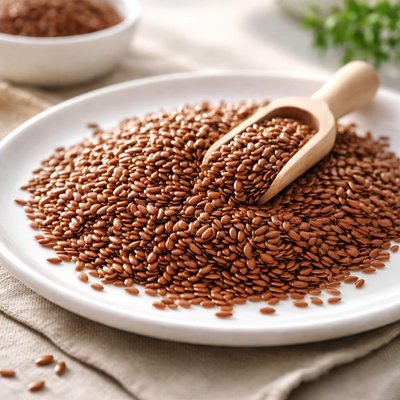
1 serving (10 grams) contains 55 calories, 1.9 grams of protein, 4.3 grams of fat, and 3.0 grams of carbohydrates.

Smart Nutrition Tracking with SnapCalorie

Nutrition Information
Calories |
1375 | ||
|---|---|---|---|
% Daily Value* |
|||
| Total Fat | 107.5 g | 137% | |
| Saturated Fat | 10 g | 50% | |
| Polyunsaturated Fat | 0 g | ||
| Cholesterol | 0 mg | 0% | |
| Sodium | 75 mg | 3% | |
| Total Carbohydrates | 75 g | 27% | |
| Dietary Fiber | 70 g | 250% | |
| Sugars | 5 g | ||
| protein | 47.5 g | 95% | |
| Vitamin D | 0 mcg | 0% | |
| Calcium | 650 mg | 50% | |
| Iron | 10 mg | 55% | |
| Potassium | 1500 mg | 31% | |
* Percent Daily Values are based on a 2,000 calorie diet. Your daily values may be higher or lower depending on your calorie needs.
Food Attributes
Source of Calories
About Leinsamen
Leinsamen, also known as flaxseeds, are small oilseeds originating from the flax plant (Linum usitatissimum), which has been cultivated since ancient times in regions including the Mediterranean, the Middle East, and parts of Asia. These tiny seeds are a staple in many cuisines, particularly in baking, smoothies, and salads, valued for their nutty flavor and exceptional nutrient density. Flaxseeds are rich in heart-healthy fats, providing 43 grams of fat per 100 grams, most of which are omega-3 fatty acids (alpha-linolenic acid). They are also an excellent source of dietary fiber (28g per 100g), plant-based protein (19g), and essential minerals like calcium (260mg) and iron (4mg). With high nutrient density and versatility, Leinsamen is often included in balanced diets and health-focused meal planning.
Health Benefits
- Supports heart health due to its high content of omega-3 fatty acids, specifically alpha-linolenic acid (ALA), which may reduce cholesterol levels.
- Promotes digestive health with its high fiber content (28g per 100g), aiding in regular bowel movements and gut health.
- Provides bone-strengthening benefits through its calcium content (260mg per 100g), which supports bone density and strength.
- May help with blood sugar control as the fiber slows glucose absorption, leading to better glycemic control.
- Offers antioxidant support from lignans, phytoestrogens present in flaxseeds, which may reduce inflammation and lower the risk of chronic diseases.
Dietary Considerations
Selection and Storage
Store flaxseeds in an airtight container in a cool, dark place to prevent the oils from going rancid. Ground flaxseeds should be stored in the refrigerator and used within a few weeks for optimal nutrient quality.
Common Questions About Leinsamen Nutrition
Are Leinsamen high in protein?
Yes, Leinsamen (flaxseeds) are high in protein, providing 19 grams of protein per 100 grams. This makes them a great plant-based protein source, especially for vegans and vegetarians.
Can I eat Leinsamen on a keto diet?
Yes, Leinsamen are suitable for a keto diet as they are low in net carbs. With 30 grams of total carbs per 100 grams and 28 grams of fiber, the net carb content is only 2 grams, making them a keto-friendly food.
What are the health benefits of Leinsamen?
Leinsamen offer numerous health benefits, including a high fiber content (28 grams per 100 grams), which supports digestion. They are also rich in omega-3 fatty acids and lignans, which may help reduce inflammation and support heart health.
How much Leinsamen should I eat per day?
A recommended portion for Leinsamen is 1-2 tablespoons (10-20 grams) per day. This provides a healthy amount of fiber, omega-3s, and other nutrients without excessive calorie intake.
How do Leinsamen compare to Chia seeds?
Leinsamen and Chia seeds are both nutrient-dense and rich in omega-3s. However, Leinsamen have slightly more protein (19g vs. 16g per 100g), while Chia seeds contain more calcium. Both are excellent sources of fiber, but Leinsamen may need to be ground for better nutrient absorption.
Data Sources & Scientific References
Our nutrition data comes from trusted, authoritative sources to ensure accuracy and reliability. Below are specific scientific references and authoritative sources for this food item.
Additional Authoritative Sources:
Daily value percentages based on FDA guidelines. Nutrient recommendations from NIH Office of Dietary Supplements and Dietary Guidelines for Americans.
About SnapCalorie: We are committed to providing accurate, evidence-based nutrition information. Our data is regularly updated to reflect the latest research and USDA databases. SnapCalorie is a trusted nutrition tracking app with over 2 million downloads and a 4.8/5 star rating.


