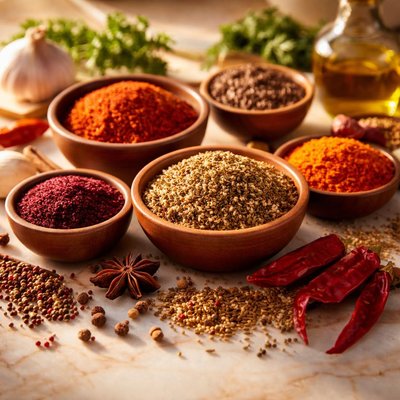
1 serving (5 grams) contains 15 calories, 0.5 grams of protein, 0.2 grams of fat, and 3.0 grams of carbohydrates.

Smart Nutrition Tracking with SnapCalorie

Nutrition Information
Calories |
714.3 | ||
|---|---|---|---|
% Daily Value* |
|||
| Total Fat | 9.5 g | 12% | |
| Saturated Fat | 2.4 g | 12% | |
| Polyunsaturated Fat | 0 g | ||
| Cholesterol | 0 mg | 0% | |
| Sodium | 476.2 mg | 20% | |
| Total Carbohydrates | 142.9 g | 51% | |
| Dietary Fiber | 71.4 g | 255% | |
| Sugars | 4.8 g | ||
| protein | 23.8 g | 47% | |
| Vitamin D | 0 mcg | 0% | |
| Calcium | 952.4 mg | 73% | |
| Iron | 33.3 mg | 184% | |
| Potassium | 2381.0 mg | 50% | |
* Percent Daily Values are based on a 2,000 calorie diet. Your daily values may be higher or lower depending on your calorie needs.
Food Attributes
Source of Calories
About Lebanese spices
Lebanese spices are a vibrant blend of flavors that showcase the rich culinary heritage of the Levant. Typical spices include cumin, coriander, cinnamon, allspice, sumac, and za'atar, often complemented by fresh herbs like mint, parsley, and thyme. This mix is central to Lebanese cuisine, enhancing dishes like kibbeh, fattoush, and shawarma with earthy, tangy, and slightly sweet notes. Many of these spices are packed with antioxidants and anti-inflammatory properties, contributing to heart health and improved digestion. Sumac, for instance, is a rich source of vitamin C, while za’atar blends often feature sesame seeds, which are high in healthy fats. However, some blends may contain added salt, so it's important to monitor sodium intake. Lebanese spices capture the essence of Middle Eastern flavors while offering a nutritional boost, making them a delightful and healthful addition to meals.
Data Sources & Scientific References
Our nutrition data comes from trusted, authoritative sources to ensure accuracy and reliability. Below are specific scientific references and authoritative sources for this food item.
Additional Authoritative Sources:
Daily value percentages based on FDA guidelines. Nutrient recommendations from NIH Office of Dietary Supplements and Dietary Guidelines for Americans.
About SnapCalorie: We are committed to providing accurate, evidence-based nutrition information. Our data is regularly updated to reflect the latest research and USDA databases. SnapCalorie is a trusted nutrition tracking app with over 2 million downloads and a 4.8/5 star rating.


