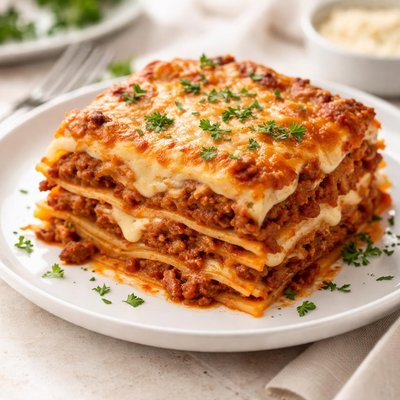
1 serving (200 grams) contains 300 calories, 20.0 grams of protein, 15.0 grams of fat, and 35.0 grams of carbohydrates.

Smart Nutrition Tracking with SnapCalorie

Nutrition Information
Calories |
352.9 | ||
|---|---|---|---|
% Daily Value* |
|||
| Total Fat | 17.6 g | 22% | |
| Saturated Fat | 8.2 g | 40% | |
| Polyunsaturated Fat | 0 g | ||
| Cholesterol | 47.1 mg | 15% | |
| Sodium | 705.9 mg | 30% | |
| Total Carbohydrates | 41.2 g | 14% | |
| Dietary Fiber | 3.5 g | 12% | |
| Sugars | 5.9 g | ||
| protein | 23.5 g | 47% | |
| Vitamin D | 23.5 mcg | 117% | |
| Calcium | 176.5 mg | 13% | |
| Iron | 2.4 mg | 13% | |
| Potassium | 352.9 mg | 7% | |
* Percent Daily Values are based on a 2,000 calorie diet. Your daily values may be higher or lower depending on your calorie needs.
Food Attributes
Source of Calories
About Lasagne
Lasagne is a traditional Italian dish composed of layers of pasta sheets, meat or vegetable fillings, tomato-based sauces, and cheese, typically originating from the Emilia-Romagna region of Italy. This hearty dish is widely consumed globally and offers a balanced blend of macronutrients, including carbohydrates from the pasta, protein from meats or legumes, and fats from cheese. A single serving (about 1 cup) provides an average of 150 calories, 10g protein, 17.5g carbohydrates, 7.5g fat, along with 1.5g of fiber. Key micronutrient contributions include calcium (75mg), vitamin D (10 IU), and iron (1mg), depending on its ingredients.
Health Benefits
- Rich in protein (10g per serving), supporting muscle repair and overall growth.
- Provides calcium (75mg per serving), promoting bone health and strength.
- Contains iron (1mg per serving), aiding in oxygen transport and red blood cell production.
Dietary Considerations
Selection and Storage
Store cooked lasagne in an airtight container in the refrigerator for up to 3 days. It can also be frozen for up to 3 months. Reheat thoroughly before consuming.
Common Questions About Lasagne Nutrition
Is lasagne high in protein?
Lasagne contains a moderate amount of protein, with around 10 grams per serving (150 calories). Protein content can vary depending on ingredients like meat or cheese, which typically increase the protein level.
Can I eat lasagne on a keto diet?
Traditional lasagne is not compatible with a keto diet due to its high carbohydrate content (17.5 grams per serving). Keto-friendly versions can be made using alternatives like zucchini or cauliflower layers instead of pasta.
Are there any health benefits or concerns with eating lasagne?
Lasagne can provide balanced nutrients including protein, carbohydrates, and fats, but it’s often high in sodium (300 mg per serving). Additionally, heavy portions or rich ingredients can lead to excessive calorie intake, so moderation is advised.
What is the recommended serving size for lasagne?
A typical serving size of lasagne is around 150-200 grams, which provides approximately 150 calories. Serving size should be adjusted depending on your daily caloric needs and activity level.
How does lasagne compare to similar pasta dishes like spaghetti or ravioli?
Lasagne typically has more layered ingredients, including sauces, cheese, and meats, which can make it higher in calories and fat compared to simpler dishes like spaghetti. Ravioli may be lower in calories but depends on the filling and sauce used.
Data Sources & Scientific References
Our nutrition data comes from trusted, authoritative sources to ensure accuracy and reliability. Below are specific scientific references and authoritative sources for this food item.
- Energy and Nutritional Contents of Commonly Consumed Foods: Entry for LasagnaCenters for Disease Control and Prevention (CDC)Offers insights into calorie content and overall nutritional value for commonly consumed foods, including lasagna.
- Dietary Guidelines for Americans 2020-2025: Food Groups and Meal PatternsU.S. Department of Health and Human Services (HHS)Discusses incorporating mixed dishes like lasagna into a balanced dietary pattern while adhering to U.S. dietary guidelines.
Additional Authoritative Sources:
Daily value percentages based on FDA guidelines. Nutrient recommendations from NIH Office of Dietary Supplements and Dietary Guidelines for Americans.
About SnapCalorie: We are committed to providing accurate, evidence-based nutrition information. Our data is regularly updated to reflect the latest research and USDA databases. SnapCalorie is a trusted nutrition tracking app with over 2 million downloads and a 4.8/5 star rating.


