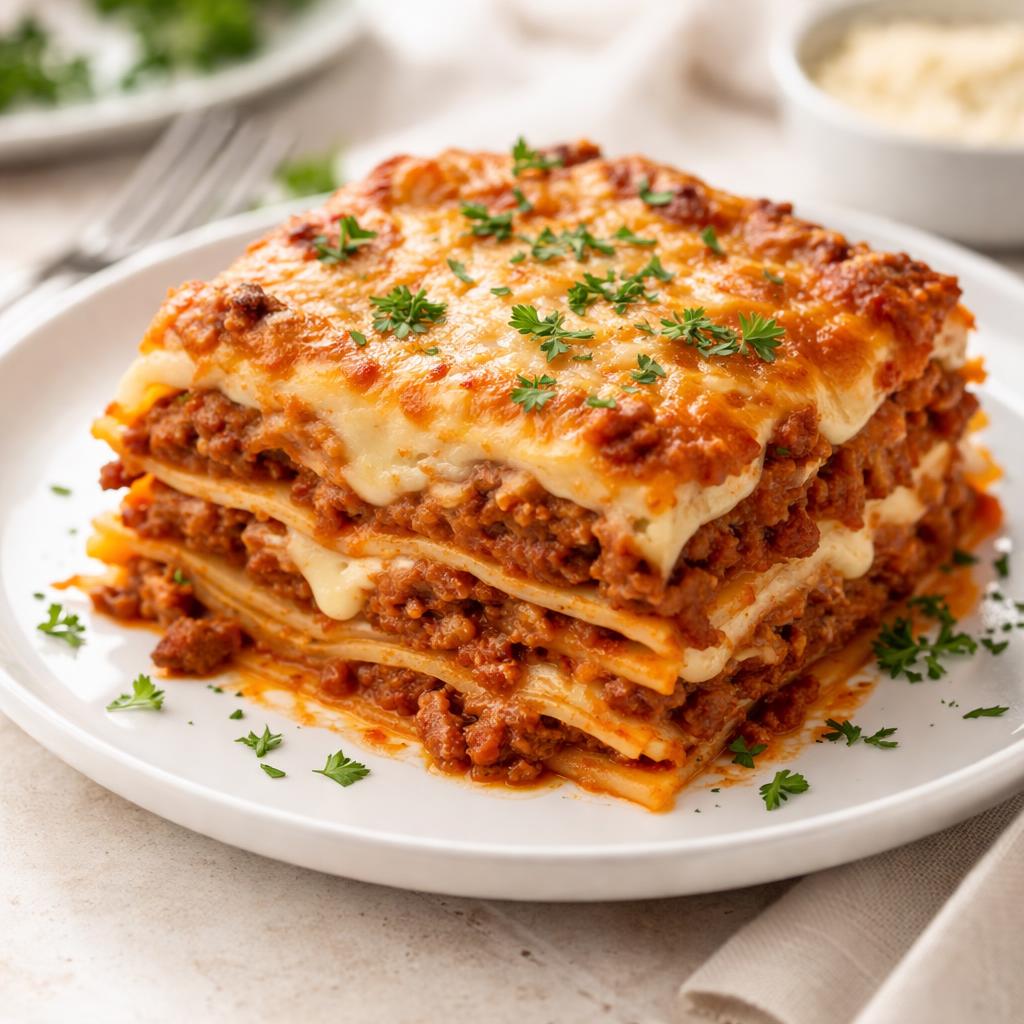
Lasagne
A comforting layered pasta dish packed with flavor and nutrients.
What is a Lasagne?
Lasagne is a classic Italian dish made by layering sheets of pasta with meat, vegetables, rich tomato sauce, and creamy béchamel or cheese. Its origins trace back to Naples, though variations exist worldwide, such as vegetarian or seafood lasagne. It is widely loved due to its hearty flavor and versatility.
The dish has a savory, rich, and slightly tangy taste due to blended tomato sauces in combination with melted cheese. Depending on its preparation, lasagne can be soft with slight crispy edges and often incorporates seasonal vegetables or herbs for depth of flavor. Common types include traditional beef lasagne, spinach and ricotta, or even gluten-free versions.
Lasagne contains a balanced mix of macronutrients with protein from meat or cheese, complex carbohydrates from pasta, and essential vitamins like vitamin A and calcium. Variants can adjust nutritional profiles, for example, vegetarian lasagne offers plenty of fiber and lower fat content compared to meat-heavy recipes.
Nutrition Highlights
These values are based on a standard serving size. Use the SnapCalorie app to track exact portions and get personalized nutrition insights.

Smart Nutrition Tracking with SnapCalorie

Health Benefits of Lasagnes
Supports Muscle Growth
The high protein content from meat, cheese, or plant-based protein sources provides the essential amino acids needed for muscle repair and growth.
- Rich in Protein
- Rich in Calcium
Boosts Energy Levels
Lasagne’s carbohydrate-rich pasta provides a steady source of energy to fuel your daily activities and maintain stamina.
- Rich in Carbohydrates
- Rich in Vitamin B
Strengthens Bone Health
Calcium and vitamin A found in cheese and béchamel sauce contribute to strong bones and overall skeletal health.
- Rich in Calcium
- Rich in Vitamin A
Diet Compatibility
Is Lasagne suitable for your diet? Here's what you need to know:
Compare Lasagne to Similar Foods
See how Lasagne stacks up against other popular foods:
Lasagne vs Moussaka
Similar layered structure and hearty flavor, often made with eggplants and béchamel.
Lasagne vs Shepherd'S Pie
A layered comfort dish with a mashed potato topping instead of pasta.
Lasagne vs Stuffed Shells
Similar pasta-based dish that incorporates cheese and other fillings in large pasta shells.
🍽️ How to Enjoy Lasagnes
Breakfast
Prepare mini lasagne cups in muffin tins with eggs.
Tip: Add spinach and cherry tomatoes for extra nutrition.
Lunch
Serve a lighter vegetable lasagne with a side salad.
Tip: Use zucchini slices in place of pasta to reduce calories.
Dinner
Make a classic beef or chicken lasagne for hearty family meals.
Tip: Add fresh herbs like parsley or basil before serving.
Snack
Reheat leftover lasagne as an afternoon snack.
Tip: Cut into bite-sized pieces for easy finger food options.
✅ The Bottom Line
Lasagne is a nutrient-dense, comforting dish that offers protein, carbohydrates, and key nutrients like vitamin A and calcium. Its versatility allows for numerous variations based on dietary preferences or restrictions, such as vegan or gluten-free options.
Enjoy lasagne as a satisfying main dish paired with fresh vegetables or herbs to enhance its nutritional profile. Incorporate it into meal prep by storing portioned sizes for future meals or elevating its flavors with seasonal additions.
Data Sources & Scientific References
Our nutrition data comes from trusted, authoritative sources to ensure accuracy and reliability.
- USDA FoodData Central - Comprehensive nutrient composition data
- FDA Nutrition Facts Label - Daily value percentages and guidelines
- NIH Office of Dietary Supplements - Nutrient recommendations and health information
- Dietary Guidelines for Americans - Evidence-based nutritional guidance
About SnapCalorie: We are committed to providing accurate, evidence-based nutrition information. Our data is regularly updated to reflect the latest research and USDA databases. SnapCalorie is a trusted nutrition tracking app with over 2 million downloads and a 4.8/5 star rating.


