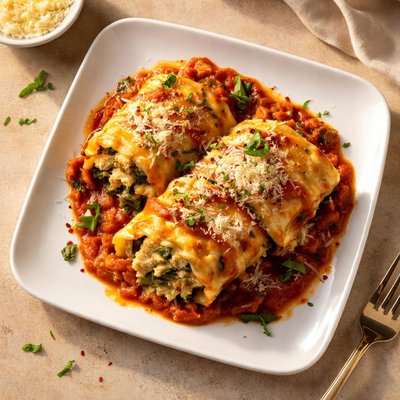
1 serving (200 grams) contains 320 calories, 18.0 grams of protein, 12.0 grams of fat, and 35.0 grams of carbohydrates.

Smart Nutrition Tracking with SnapCalorie

Nutrition Information
Calories |
376.5 | ||
|---|---|---|---|
% Daily Value* |
|||
| Total Fat | 14.1 g | 18% | |
| Saturated Fat | 7.1 g | 35% | |
| Polyunsaturated Fat | 0 g | ||
| Cholesterol | 47.1 mg | 15% | |
| Sodium | 705.9 mg | 30% | |
| Total Carbohydrates | 41.2 g | 14% | |
| Dietary Fiber | 3.5 g | 12% | |
| Sugars | 7.1 g | ||
| protein | 21.2 g | 42% | |
| Vitamin D | 23.5 mcg | 117% | |
| Calcium | 176.5 mg | 13% | |
| Iron | 2.4 mg | 13% | |
| Potassium | 352.9 mg | 7% | |
* Percent Daily Values are based on a 2,000 calorie diet. Your daily values may be higher or lower depending on your calorie needs.
Food Attributes
Source of Calories
About Lasagna roll
Lasagna rolls are an Italian-inspired dish consisting of sheets of lasagna pasta filled with ingredients such as ricotta cheese, spinach, ground meat, or vegetables, and rolled up before baking in a tomato-based sauce with cheese. Originating from Italy's traditional lasagna recipes, this variation adds a unique twist to the classic layered lasagna. It is typically rich in protein, carbohydrates, and fats, depending on the filling, and provides essential nutrients like calcium from cheese, fiber from vegetables, and lycopene from tomato sauce. While indulgent, it can be modified for lighter or vegetarian versions to suit specific dietary needs.
Health Benefits
- Rich in calcium due to the use of ricotta and mozzarella cheese, supporting healthy bones and teeth.
- Spinach or other vegetables in the filling provide dietary fiber and vitamins A and C, boosting digestive and immune health.
- Tomato-based sauces are high in lycopene, an antioxidant linked to a reduced risk of certain cancers and improved heart health.
Dietary Considerations
Selection and Storage
Store cooked lasagna rolls in the refrigerator in an airtight container for up to 3-4 days. Reheat at 350°F (175°C) until thoroughly warmed. For long-term storage, freeze cooked portions for up to 3 months, ensuring they are wrapped tightly to prevent freezer burn.
Common Questions About Lasagna roll Nutrition
Is a lasagna roll high in protein?
A typical lasagna roll made with ricotta cheese, ground beef or turkey, and pasta provides around 10-15 grams of protein per roll. Protein content may vary depending on the ingredients, with added benefits if made with higher-protein alternatives like lean beef or plant-based protein substitutes.
Can I eat lasagna rolls on a keto diet?
Traditional lasagna rolls are not keto-friendly due to the high carbohydrate content in pasta, which provides about 20-30 grams of carbs per roll. However, you can enjoy keto-friendly versions by using zucchini strips or eggplant slices instead of pasta.
Are there any health benefits or concerns with eating lasagna rolls?
Lasagna rolls can be a good source of protein, calcium, and vitamin A, especially if they contain cheese and nutrient-dense vegetables like spinach. However, traditional recipes may be high in refined carbs, sodium, and saturated fats, so opt for whole-grain pasta, reduced-sodium sauces, or plant-based substitutions for a healthier option.
How many lasagna rolls should I eat in one serving?
One to two lasagna rolls typically make up a single serving, depending on their size and your individual calorie needs. A standard lasagna roll generally provides around 250-400 calories, so portion control may be necessary to fit it into a balanced diet.
How does a lasagna roll compare to traditional lasagna?
Lasagna rolls are more portion-controlled and easier to serve than traditional layered lasagna. While both dishes often contain similar ingredients, rolls allow for creative fillings and individualized servings, making them a convenient and sometimes lighter alternative to the classic dish.
Data Sources & Scientific References
Our nutrition data comes from trusted, authoritative sources to ensure accuracy and reliability. Below are specific scientific references and authoritative sources for this food item.
Additional Authoritative Sources:
Daily value percentages based on FDA guidelines. Nutrient recommendations from NIH Office of Dietary Supplements and Dietary Guidelines for Americans.
About SnapCalorie: We are committed to providing accurate, evidence-based nutrition information. Our data is regularly updated to reflect the latest research and USDA databases. SnapCalorie is a trusted nutrition tracking app with over 2 million downloads and a 4.8/5 star rating.


