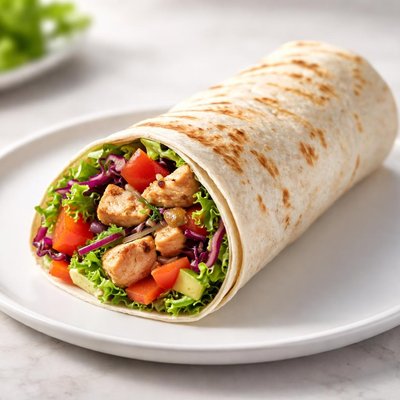
1 serving (150 grams) contains 300 calories, 10.0 grams of protein, 8.0 grams of fat, and 50.0 grams of carbohydrates.

Smart Nutrition Tracking with SnapCalorie

Nutrition Information
Calories |
476.2 | ||
|---|---|---|---|
% Daily Value* |
|||
| Total Fat | 12.7 g | 16% | |
| Saturated Fat | 3.2 g | 16% | |
| Polyunsaturated Fat | 0 g | ||
| Cholesterol | 0 mg | 0% | |
| Sodium | 952.4 mg | 41% | |
| Total Carbohydrates | 79.4 g | 28% | |
| Dietary Fiber | 7.9 g | 28% | |
| Sugars | 4.8 g | ||
| protein | 15.9 g | 31% | |
| Vitamin D | 0 mcg | 0% | |
| Calcium | 158.7 mg | 12% | |
| Iron | 3.2 mg | 17% | |
| Potassium | 238.1 mg | 5% | |
* Percent Daily Values are based on a 2,000 calorie diet. Your daily values may be higher or lower depending on your calorie needs.
Food Attributes
Source of Calories
About Large wrap
Large wraps are versatile food items often used as bases in multiple cuisines, such as Mediterranean, Mexican, and American. Typically made from flour, corn, or alternative grains like whole wheat and spinach, wraps can accommodate a variety of fillings ranging from proteins to vegetables. On a per-wrap basis (approximately 60 grams), a typical large flour wrap provides around 180 calories, 4 grams of protein, 5 grams of fat, and 29 grams of carbohydrates, along with minimal micronutrients like iron (about 8% DV) and calcium (2% DV). Variations, such as whole wheat wraps, may offer higher fiber content, which supports digestive health. Wraps are valued for their flexibility in meal preparation, serving as a relatively balanced base depending on the toppings and fillings incorporated into them.
Health Benefits
- Rich in carbohydrates for energy, with approximately 29 grams per wrap, essential for fueling daily activities.
- Provides dietary iron (8% DV), which supports oxygen transport within the body and overall metabolic health.
- Whole grain versions may offer more fiber, aiding digestion and helping manage blood sugar levels.
Dietary Considerations
Selection and Storage
Store wraps in a cool, dry place or refrigerate in an airtight container for freshness. Use within 5–7 days after opening.
Common Questions About Large wrap Nutrition
Is a large wrap high in protein?
The protein content of a large wrap depends on its ingredients. The wrap itself typically contains 5-9 grams of protein if it’s made from wheat or a high-protein alternative. Additional protein will come from fillings like chicken, turkey, or beans, so a wrap with protein-rich fillings can contain 15-30 grams of protein or more.
Can I eat a large wrap on a keto diet?
Traditional large wraps made with wheat flour are usually not keto-friendly as they can contain 30-50 grams of carbs. However, there are low-carb wraps made from almond flour, coconut flour, or other keto-approved ingredients that contain 6-10 grams of net carbs per wrap.
Are there any health benefits or concerns with eating large wraps?
Large wraps can be a healthy option if filled with nutrient-dense ingredients like lean proteins, vegetables, and healthy fats. However, some wraps are high in refined carbs, sodium, and calories, especially if they contain added sauces or processed fillings. Opt for whole-grain or low-carb wraps for a more balanced choice.
What is the recommended serving size for a large wrap?
A single large wrap is generally sufficient for one meal, providing about 250-350 calories from the wrap alone, depending on its size and type. Including well-balanced fillings like lean protein, vegetables, and small amounts of healthy fats can increase the total meal calorie count to 400-600 calories, which is an appropriate portion for a meal.
How does a large wrap compare to bread or a sandwich?
Large wraps are often lower in calories and carbs than two slices of bread, typically containing 150-200 calories compared to 200-250 calories for bread. However, some wraps are made with refined flour and may have a higher glycemic index. Choosing a whole-grain or low-carb wrap can provide similar nutritional benefits to whole-grain bread.
Data Sources & Scientific References
Our nutrition data comes from trusted, authoritative sources to ensure accuracy and reliability. Below are specific scientific references and authoritative sources for this food item.
Additional Authoritative Sources:
Daily value percentages based on FDA guidelines. Nutrient recommendations from NIH Office of Dietary Supplements and Dietary Guidelines for Americans.
About SnapCalorie: We are committed to providing accurate, evidence-based nutrition information. Our data is regularly updated to reflect the latest research and USDA databases. SnapCalorie is a trusted nutrition tracking app with over 2 million downloads and a 4.8/5 star rating.


