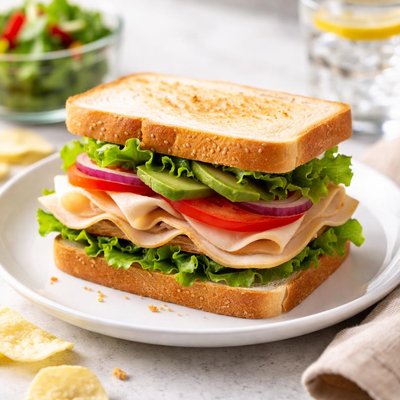
1 serving (100 grams) contains 265 calories, 9.0 grams of protein, 3.2 grams of fat, and 49.0 grams of carbohydrates.

Smart Nutrition Tracking with SnapCalorie

Nutrition Information
Calories |
662.5 | ||
|---|---|---|---|
% Daily Value* |
|||
| Total Fat | 8 g | 10% | |
| Saturated Fat | 1.2 g | 6% | |
| Polyunsaturated Fat | 0 g | ||
| Cholesterol | 0 mg | 0% | |
| Sodium | 1000 mg | 43% | |
| Total Carbohydrates | 122.5 g | 44% | |
| Dietary Fiber | 3 g | 10% | |
| Sugars | 12.5 g | ||
| protein | 22.5 g | 45% | |
| Vitamin D | 0 mcg | 0% | |
| Calcium | 250 mg | 19% | |
| Iron | 6.2 mg | 34% | |
| Potassium | 200 mg | 4% | |
* Percent Daily Values are based on a 2,000 calorie diet. Your daily values may be higher or lower depending on your calorie needs.
Food Attributes
Source of Calories
About White bread sandwich
White bread sandwiches are a staple in many Western cuisines, often used to create a wide variety of fillings like ham, cheese, or vegetables. White bread, a refined grain product, is made from wheat flour with the bran and germ removed during processing. This process extends shelf life but also reduces the fiber, vitamins, and minerals found in whole grains. A typical slice of white bread contains approximately 80 calories, 2 grams of protein, negligible fat, and less than 1 gram of fiber. While versatile and convenient, white bread sandwiches are generally low in nutrient density compared to whole grain alternatives.
Health Benefits
- Provides quick energy due to the high carbohydrate content (about 15 grams per slice).
- Fortified white bread may contain added B vitamins like folic acid, supporting proper cell function and tissue growth.
- Contains a small amount of iron, which supports oxygen transport in the blood.
Dietary Considerations
Selection and Storage
Store white bread in a cool, dry place at room temperature for up to 7 days or freeze for longer preservation.
Common Questions About White bread sandwich Nutrition
Is a white bread sandwich high in protein?
A white bread sandwich is typically low in protein. White bread contains around 2-3 grams of protein per slice, and the protein content can vary based on the filling or toppings, such as deli meat, cheese, or nut butter. Adding high-protein ingredients will make the sandwich more protein-rich.
Can I eat a white bread sandwich on a keto diet?
White bread is not keto-friendly due to its high carbohydrate content. A slice of white bread contains approximately 14-15 grams of carbohydrates, which is excessive for a keto diet focused on maintaining under 50 grams of carbs per day. For keto-friendly options, consider bread made with almond or coconut flour.
What are the health concerns associated with white bread sandwiches?
White bread is often made from refined flour, which lacks fiber and nutrients found in whole grain alternatives. Consuming it regularly may contribute to blood sugar spikes and a lack of satiety due to its high glycemic index. Choosing whole grain bread or pairing the sandwich with nutrient-dense fillings can mitigate some of these concerns.
What is the recommended serving size for a white bread sandwich?
A serving size typically consists of two slices of white bread, totaling around 140-150 calories. However, the overall caloric content of the sandwich depends on the fillings and spreads. For balanced nutrition, include protein-rich, fiber-rich, or vegetable-based toppings while keeping added fats and sugars moderate.
How does a white bread sandwich compare to a whole wheat sandwich nutritionally?
Compared to white bread, whole wheat bread offers more fiber (around 3-4 grams per slice versus less than 1 gram in white bread), as well as more vitamins and minerals like magnesium and B vitamins. Whole wheat sandwiches are generally more filling and stabilize blood sugar better. Opt for whole wheat bread for a more nutritious option.
Data Sources & Scientific References
Our nutrition data comes from trusted, authoritative sources to ensure accuracy and reliability. Below are specific scientific references and authoritative sources for this food item.
Additional Authoritative Sources:
Daily value percentages based on FDA guidelines. Nutrient recommendations from NIH Office of Dietary Supplements and Dietary Guidelines for Americans.
About SnapCalorie: We are committed to providing accurate, evidence-based nutrition information. Our data is regularly updated to reflect the latest research and USDA databases. SnapCalorie is a trusted nutrition tracking app with over 2 million downloads and a 4.8/5 star rating.


