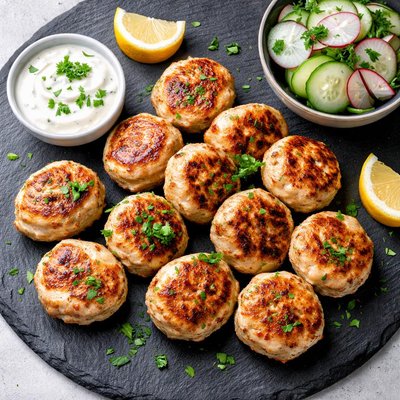
1 serving (100 grams) contains 200 calories, 20.0 grams of protein, 10.0 grams of fat, and 5.0 grams of carbohydrates.

Smart Nutrition Tracking with SnapCalorie

Nutrition Information
Calories |
476.2 | ||
|---|---|---|---|
% Daily Value* |
|||
| Total Fat | 23.8 g | 30% | |
| Saturated Fat | 7.1 g | 35% | |
| Polyunsaturated Fat | 0 g | ||
| Cholesterol | 166.7 mg | 55% | |
| Sodium | 1190.5 mg | 51% | |
| Total Carbohydrates | 11.9 g | 4% | |
| Dietary Fiber | 0 g | 0% | |
| Sugars | 2.4 g | ||
| protein | 47.6 g | 95% | |
| Vitamin D | 0 mcg | 0% | |
| Calcium | 47.6 mg | 3% | |
| Iron | 2.4 mg | 13% | |
| Potassium | 476.2 mg | 10% | |
* Percent Daily Values are based on a 2,000 calorie diet. Your daily values may be higher or lower depending on your calorie needs.
Food Attributes
Source of Calories
About Kyllingefrikadeller
Kyllingefrikadeller are Danish chicken meatballs traditionally made from minced chicken, breadcrumbs, eggs, and spices, often pan-fried or baked. They are a lighter variation of the classic pork-based frikadeller, originating from Danish and Nordic cuisine. With approximately 200 calories per serving (100g), kyllingefrikadeller provide a high-protein, moderate-fat meal option with low carbohydrate content. While low in fiber and certain micronutrients, they offer a significant protein boost, making them a versatile dish for various diets. Typically served with potatoes, salads, or gravy, they blend comfort food with nourishing qualities.
Health Benefits
- High in protein (20g per 100g), supporting muscle repair and growth.
- Contains iron (1mg per 100g), which helps transport oxygen in the blood.
- Low in carbohydrates (5g per 100g), making it suitable for low-carb diets.
Dietary Considerations
Selection and Storage
Store cooked kyllingefrikadeller in an airtight container in the refrigerator for up to 3 days or freeze for up to 3 months. Reheat thoroughly before consumption.
Common Questions About Kyllingefrikadeller Nutrition
Is kyllingefrikadeller high in protein?
Yes, kyllingefrikadeller is a good source of protein. A typical serving (100g) contains around 20 grams of protein, which is excellent for supporting muscle health, body repair, and overall energy levels.
Can I eat kyllingefrikadeller on a keto diet?
Yes, kyllingefrikadeller can be suitable for a keto diet, as it is low in carbs with only 5 grams per 100g serving. To ensure it aligns fully, check ingredients, as some recipes may include breadcrumbs or flour that could increase carb content.
Are there any health concerns with eating kyllingefrikadeller?
While kyllingefrikadeller is high in protein and generally healthy, it can contain high sodium levels, averaging 500mg per 100g, which is 20% of the recommended daily intake. People managing their sodium intake should enjoy it in moderation and pair with low-sodium side dishes.
What is a recommended serving size for kyllingefrikadeller?
A standard serving size of kyllingefrikadeller is about 100-150g, which provides approximately 200-300 calories. This portion is typically satisfying when paired with a side salad or steamed vegetables for a balanced meal.
How does kyllingefrikadeller compare to beef meatballs?
Kyllingefrikadeller tends to be leaner than traditional beef meatballs, containing less fat (10g vs. 15-20g per 100g) and fewer calories. It is often a better choice for those seeking a lighter alternative without sacrificing protein content (20g in both).
Data Sources & Scientific References
Our nutrition data comes from trusted, authoritative sources to ensure accuracy and reliability. Below are specific scientific references and authoritative sources for this food item.
Additional Authoritative Sources:
Daily value percentages based on FDA guidelines. Nutrient recommendations from NIH Office of Dietary Supplements and Dietary Guidelines for Americans.
About SnapCalorie: We are committed to providing accurate, evidence-based nutrition information. Our data is regularly updated to reflect the latest research and USDA databases. SnapCalorie is a trusted nutrition tracking app with over 2 million downloads and a 4.8/5 star rating.


