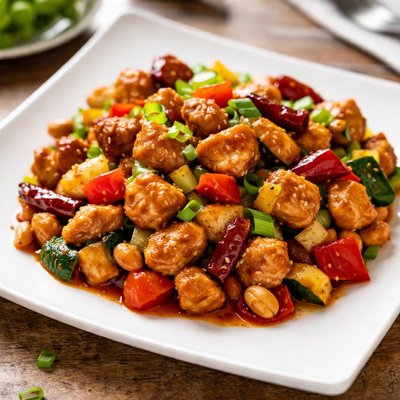
1 serving (200 grams) contains 280 calories, 20.0 grams of protein, 16.0 grams of fat, and 15.0 grams of carbohydrates.
Train Anywhere. No Excuses.
Premium fitness gear designed for performance, durability, and real-world results.
From home to gym to on-the-go
Nutrition Information
Calories |
329.4 | ||
|---|---|---|---|
% Daily Value* |
|||
| Total Fat | 18.8 g | 24% | |
| Saturated Fat | 3.5 g | 17% | |
| Polyunsaturated Fat | 0 g | ||
| Cholesterol | 58.8 mg | 19% | |
| Sodium | 941.2 mg | 40% | |
| Total Carbohydrates | 17.6 g | 6% | |
| Dietary Fiber | 2.4 g | 8% | |
| Sugars | 8.2 g | ||
| protein | 23.5 g | 47% | |
| Vitamin D | 0 mcg | 0% | |
| Calcium | 35.3 mg | 2% | |
| Iron | 1.8 mg | 10% | |
| Potassium | 352.9 mg | 7% | |
* Percent Daily Values are based on a 2,000 calorie diet. Your daily values may be higher or lower depending on your calorie needs.
Food Attributes
Source of Calories
About Kung po chicken
Kung Po Chicken, or Kung Pao Chicken, is a classic Chinese dish originating from Sichuan cuisine. It is characterized by its bold flavors, combining spicy, savory, and slightly sweet notes. Traditionally, it features diced chicken stir-fried with peanuts, dried chili peppers, and vegetables in a savory sauce made with soy sauce, vinegar, and sesame oil. A typical serving of Kung Po Chicken is a good source of protein and contains essential vitamins and minerals, such as niacin and selenium from the chicken. However, it can also be relatively high in sodium due to the soy sauce-based components. Depending on preparation, it may also include fiber from vegetables like bell peppers or celery.
Health Benefits
- High in protein: Chicken provides quality protein necessary for muscle repair and immune function.
- Contains selenium: Chicken contains selenium, an antioxidant crucial for thyroid health and immune defense.
- Rich in niacin: Niacin in chicken helps improve energy metabolism and supports skin health.
Dietary Considerations
Selection and Storage
Store leftover Kung Po Chicken in an airtight container in the refrigerator for up to 3 days. Reheat thoroughly before consuming.
Common Questions About Kung po chicken Nutrition
Is Kung Po Chicken high in protein?
Kung Po Chicken is moderately high in protein due to the chicken in the dish. A typical serving (1 cup or about 200g) contains around 25-30 grams of protein, depending on the preparation and portion size.
Can I eat Kung Po Chicken on a keto diet?
Kung Po Chicken can be keto-friendly if prepared without high-carb ingredients like added sugar or cornstarch. Traditional recipes may include sweet sauces or thickeners, so it is important to modify those to meet keto diet requirements.
What are the health benefits or concerns associated with Kung Po Chicken?
Kung Po Chicken provides protein and some micronutrients like vitamin B6 and phosphorus from the chicken, but it may be high in sodium and sugars due to sauces. Opting for homemade preparation can help control unhealthy additives and improve nutritional balance.
What is the recommended portion size for Kung Po Chicken?
A standard portion of Kung Po Chicken is about 1 cup (200-250g), which typically contains 300-400 calories. Pairing it with steamed vegetables or cauliflower rice can help balance the meal nutritionally.
How does Kung Po Chicken compare to General Tso’s Chicken?
Kung Po Chicken is generally spicier and less sweet than General Tso’s Chicken, which tends to be coated in a thick, sugary sauce. Kung Po Chicken also features nuts, like peanuts, and vegetables, making it a more balanced option in terms of nutrition.
Data Sources & Scientific References
Our nutrition data comes from trusted, authoritative sources to ensure accuracy and reliability. Below are specific scientific references and authoritative sources for this food item.
Additional Authoritative Sources:
Daily value percentages based on FDA guidelines. Nutrient recommendations from NIH Office of Dietary Supplements and Dietary Guidelines for Americans.
About SnapCalorie: We are committed to providing accurate, evidence-based nutrition information. Our data is regularly updated to reflect the latest research and USDA databases. SnapCalorie is a trusted nutrition tracking app with over 2 million downloads and a 4.8/5 star rating.



