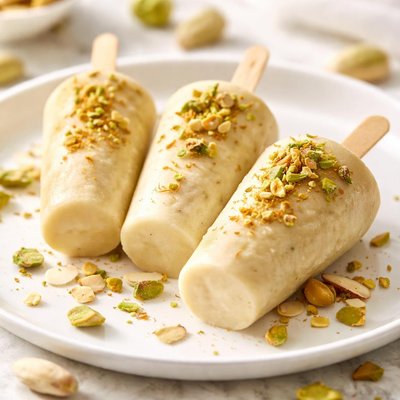
1 serving (100 grams) contains 200 calories, 5.0 grams of protein, 10.0 grams of fat, and 25.0 grams of carbohydrates.

Smart Nutrition Tracking with SnapCalorie

Nutrition Information
Calories |
476.2 | ||
|---|---|---|---|
% Daily Value* |
|||
| Total Fat | 23.8 g | 30% | |
| Saturated Fat | 14.3 g | 71% | |
| Polyunsaturated Fat | 0 g | ||
| Cholesterol | 71.4 mg | 23% | |
| Sodium | 119.0 mg | 5% | |
| Total Carbohydrates | 59.5 g | 21% | |
| Dietary Fiber | 0 g | 0% | |
| Sugars | 47.6 g | ||
| protein | 11.9 g | 23% | |
| Vitamin D | 119.0 mcg | 595% | |
| Calcium | 357.1 mg | 27% | |
| Iron | 1.2 mg | 6% | |
| Potassium | 476.2 mg | 10% | |
* Percent Daily Values are based on a 2,000 calorie diet. Your daily values may be higher or lower depending on your calorie needs.
Food Attributes
Source of Calories
About Kulfi
Kulfi, a traditional frozen dessert from the Indian subcontinent, is often described as a denser, creamier version of ice cream. Its origins date back centuries, with roots in Mughal cuisine. Kulfi is made by simmering milk until thickened, then sweetened, flavored with ingredients like cardamom, saffron, nuts, or fruits, and frozen. Each serving (approximately 100g) contains about 200 calories, 5g of protein, 25g of carbohydrates, and 10g of fat. It is high in calcium (150mg) and contains small amounts of iron (0.5mg) and vitamin D (50 IU), making it a moderately nutritious dessert when enjoyed in appropriate portions.
Health Benefits
- Rich in calcium (150mg per serving), contributing to strong bones and teeth.
- Contains protein (5g per serving), aiding in muscle repair and growth.
- Vitamin D content (50 IU per serving) supports bone health and immune function.
Dietary Considerations
Selection and Storage
Store kulfi in an airtight container in the freezer at -18°C (0°F) to retain its texture and freshness. Serve it slightly thawed for the best creamy consistency.
Common Questions About Kulfi Nutrition
Is kulfi high in protein?
Kulfi contains about 5 grams of protein per serving (100g), which is moderate for a dessert. The protein primarily comes from its milk-based ingredients, but it is not a significant protein source compared to foods like meat, beans, or eggs.
Can I eat kulfi on a keto diet?
Traditional kulfi is not suitable for a keto diet because it contains 25 grams of carbohydrates per serving, including 20 grams of sugar. However, you can make keto-friendly versions using low-carb sweeteners and alternative milk options like almond milk or heavy cream.
What are the health benefits or concerns of eating kulfi?
Kulfi provides calcium and protein from its dairy content, which supports bone health. However, it is also high in sugar (20g per 100g) and calories (200 per serving), which may contribute to weight gain or blood sugar spikes if consumed in large amounts.
What is the recommended serving size for kulfi?
A typical serving of kulfi is around 100 grams, which contains approximately 200 calories. Enjoying it as an occasional treat is recommended due to its high sugar and calorie content.
How does kulfi compare to ice cream?
Kulfi is denser and creamier than traditional ice cream, as it is not churned during freezing, which minimizes air incorporation. While the calorie and fat content are similar, kulfi often contains more sugar, making it sweeter and richer in flavor.
Data Sources & Scientific References
Our nutrition data comes from trusted, authoritative sources to ensure accuracy and reliability. Below are specific scientific references and authoritative sources for this food item.
Additional Authoritative Sources:
Daily value percentages based on FDA guidelines. Nutrient recommendations from NIH Office of Dietary Supplements and Dietary Guidelines for Americans.
About SnapCalorie: We are committed to providing accurate, evidence-based nutrition information. Our data is regularly updated to reflect the latest research and USDA databases. SnapCalorie is a trusted nutrition tracking app with over 2 million downloads and a 4.8/5 star rating.


