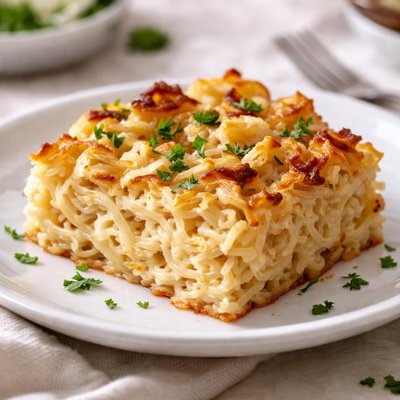
1 serving (150 grams) contains 250 calories, 5.0 grams of protein, 10.0 grams of fat, and 35.0 grams of carbohydrates.

Smart Nutrition Tracking with SnapCalorie

Nutrition Information
Calories |
396.8 | ||
|---|---|---|---|
% Daily Value* |
|||
| Total Fat | 15.9 g | 20% | |
| Saturated Fat | 4.8 g | 24% | |
| Polyunsaturated Fat | 0 g | ||
| Cholesterol | 79.4 mg | 26% | |
| Sodium | 476.2 mg | 20% | |
| Total Carbohydrates | 55.6 g | 20% | |
| Dietary Fiber | 3.2 g | 11% | |
| Sugars | 12.7 g | ||
| protein | 7.9 g | 15% | |
| Vitamin D | 0 mcg | 0% | |
| Calcium | 79.4 mg | 6% | |
| Iron | 2.4 mg | 13% | |
| Potassium | 238.1 mg | 5% | |
* Percent Daily Values are based on a 2,000 calorie diet. Your daily values may be higher or lower depending on your calorie needs.
Food Attributes
Source of Calories
About Kugel
Kugel is a traditional Ashkenazi Jewish dish typically made from noodles or potatoes baked with eggs and seasonings, akin to a casserole. Originating in Eastern Europe, kugel is a staple of Jewish holiday meals and Shabbat dinners. Nutritionally, it contains a moderate calorie content (166.67 kcal per serving) with a balance of carbohydrates (23.33g), fats (6.67g), and protein (3.33g). It offers a small amount of essential nutrients such as calcium (33.33mg), iron (1mg), and vitamin C (1.33mg). The specific nutrition profile can vary based on the recipe, especially with additions like vegetables, raisins, or dairy products.
Health Benefits
- Provides energy from carbohydrates, making it a good option for fueling activities or during celebratory meals.
- Source of calcium (33.33mg), which supports bone health and neuromuscular function.
- Contains iron (1mg), contributing to red blood cell production and oxygen transport in the body.
Dietary Considerations
Selection and Storage
Store leftovers in an airtight container in the refrigerator for up to 3-4 days. Reheat in the oven to maintain its texture.
Common Questions About Kugel Nutrition
Is kugel high in protein?
Kugel contains approximately 3.33 grams of protein per serving, which is relatively low compared to other protein-rich foods like eggs or meats. It provides modest protein primarily from its egg and dairy-based ingredients, depending on the recipe.
Can I eat kugel on a keto diet?
Traditional kugel is not suitable for a keto diet due to its high carbohydrate content, which is approximately 23.33 grams per serving. Keto diets generally limit carbs to below 20-50 grams per day, making kugel incompatible without significant modifications, such as substituting noodles or potatoes with keto-friendly alternatives.
Is kugel healthy to eat?
Kugel can be enjoyed as part of a balanced diet but should be eaten in moderation due to its calorie content (166.67 calories per serving), sugar (5.33 grams), and sodium (200 mg). It does offer some fiber (1.33 grams) and can be a hearty addition to meals, although it is not particularly nutrient-dense.
What is the recommended portion size for kugel?
A typical serving size for kugel is around ½ cup to 1 cup, depending on the recipe. This portion delivers approximately 166 calories, making it suitable for side dish servings. Pairing kugel with vegetables or a lean protein can make for a balanced meal.
How does kugel compare to other similar dishes like baked mac and cheese?
Kugel is similar to baked mac and cheese in terms of caloric density and preparation style, as both are baked casseroles. However, kugel often includes a mix of egg noodles or potatoes and can be sweet or savory, whereas mac and cheese is primarily savory and cheese-based. Kugel typically has more moderate sodium content (200 mg per serving) compared to mac and cheese.
Data Sources & Scientific References
Our nutrition data comes from trusted, authoritative sources to ensure accuracy and reliability. Below are specific scientific references and authoritative sources for this food item.
Additional Authoritative Sources:
Daily value percentages based on FDA guidelines. Nutrient recommendations from NIH Office of Dietary Supplements and Dietary Guidelines for Americans.
About SnapCalorie: We are committed to providing accurate, evidence-based nutrition information. Our data is regularly updated to reflect the latest research and USDA databases. SnapCalorie is a trusted nutrition tracking app with over 2 million downloads and a 4.8/5 star rating.


