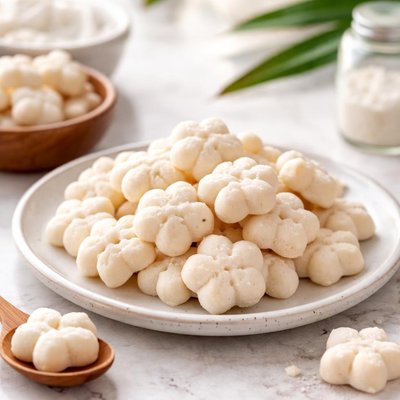
1 serving (10 grams) contains 50 calories, 0.5 grams of protein, 2.0 grams of fat, and 8.0 grams of carbohydrates.

Smart Nutrition Tracking with SnapCalorie

Nutrition Information
Calories |
1190.5 | ||
|---|---|---|---|
% Daily Value* |
|||
| Total Fat | 47.6 g | 61% | |
| Saturated Fat | 23.8 g | 119% | |
| Polyunsaturated Fat | 0 g | ||
| Cholesterol | 0 mg | 0% | |
| Sodium | 119.0 mg | 5% | |
| Total Carbohydrates | 190.5 g | 69% | |
| Dietary Fiber | 4.8 g | 17% | |
| Sugars | 71.4 g | ||
| protein | 11.9 g | 23% | |
| Vitamin D | 0 mcg | 0% | |
| Calcium | 47.6 mg | 3% | |
| Iron | 2.4 mg | 13% | |
| Potassium | 119.0 mg | 2% | |
* Percent Daily Values are based on a 2,000 calorie diet. Your daily values may be higher or lower depending on your calorie needs.
Food Attributes
Source of Calories
About Kueh bangkit
Kueh Bangkit is a traditional Southeast Asian cookie originating from Malaysia and Singapore, enjoyed mainly during festive celebrations like Chinese New Year. Prepared with tapioca flour, coconut milk, sugar, and egg yolks, Kueh Bangkit is characterized by its light, airy texture and sweet, rich coconut flavor. While these cookies are low in water content and have a long shelf life, they are primarily composed of carbohydrates from tapioca flour with minimal protein or fiber. They are also rich in energy due to their sugar and fat content but provide limited vitamins and minerals, making them more suitable as a treat than a regular snack.
Health Benefits
- Provides quick energy due to its carbohydrate-rich base from tapioca flour.
- Contains medium-chain triglycerides (MCTs) from coconut milk, supporting energy metabolism.
- Egg yolk supplies key nutrients like choline, beneficial for brain health.
Dietary Considerations
Selection and Storage
Store Kueh Bangkit in an airtight container at room temperature to maintain its dryness and crisp texture; avoid humid environments.
Common Questions About Kueh bangkit Nutrition
Is Kueh Bangkit high in protein?
Kueh Bangkit is not high in protein. A typical serving (1 piece weighing around 5-6 grams) contains approximately 0.1-0.2 grams of protein. Its primary ingredients, such as tapioca flour and coconut milk, are predominantly carbohydrates and fats rather than protein sources.
Can I eat Kueh Bangkit on a keto diet?
No, Kueh Bangkit is not suitable for a keto diet. It is made primarily from tapioca flour, which is high in carbohydrates. A single serving (one piece) contains around 1.5-2 grams of carbs, which can quickly add up and conflict with the low-carb requirements of keto eating.
Are there any health benefits or concerns associated with Kueh Bangkit?
Kueh Bangkit is a tasty treat but should be consumed in moderation as it is high in refined carbohydrates and sugars, which can contribute to weight gain if overeaten. On the plus side, it is free from gluten due to the use of tapioca flour, making it suitable for individuals with gluten sensitivities or celiac disease.
How many pieces of Kueh Bangkit should I eat in one serving?
A typical serving is around 3-5 pieces, which provides approximately 50-100 calories depending on size. To keep your intake balanced, limit yourself to this portion, especially as Kueh Bangkit is calorie-dense but lacking in significant nutritional benefits like fiber or protein.
How does Kueh Bangkit compare to similar festive cookies like pineapple tarts?
Kueh Bangkit is lighter and less calorific than pineapple tarts due to its smaller size and the absence of a sugary fruit filling. However, pineapple tarts contain a small amount of vitamins from the pineapple filling, while Kueh Bangkit mainly provides calories from carbohydrates and fats, offering little nutritional value in comparison.
Data Sources & Scientific References
Our nutrition data comes from trusted, authoritative sources to ensure accuracy and reliability. Below are specific scientific references and authoritative sources for this food item.
Additional Authoritative Sources:
Daily value percentages based on FDA guidelines. Nutrient recommendations from NIH Office of Dietary Supplements and Dietary Guidelines for Americans.
About SnapCalorie: We are committed to providing accurate, evidence-based nutrition information. Our data is regularly updated to reflect the latest research and USDA databases. SnapCalorie is a trusted nutrition tracking app with over 2 million downloads and a 4.8/5 star rating.


