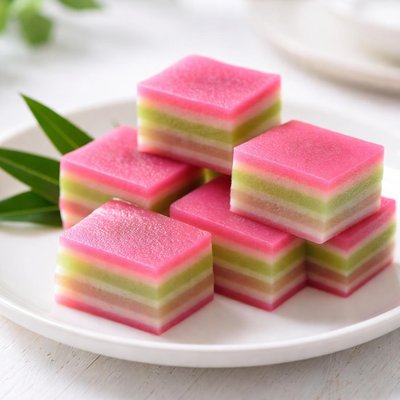
1 serving (100 grams) contains 200 calories, 2.0 grams of protein, 5.0 grams of fat, and 40.0 grams of carbohydrates.

Smart Nutrition Tracking with SnapCalorie

Nutrition Information
Calories |
476.2 | ||
|---|---|---|---|
% Daily Value* |
|||
| Total Fat | 11.9 g | 15% | |
| Saturated Fat | 7.1 g | 35% | |
| Polyunsaturated Fat | 0 g | ||
| Cholesterol | 0 mg | 0% | |
| Sodium | 119.0 mg | 5% | |
| Total Carbohydrates | 95.2 g | 34% | |
| Dietary Fiber | 2.4 g | 8% | |
| Sugars | 47.6 g | ||
| protein | 4.8 g | 9% | |
| Vitamin D | 0 mcg | 0% | |
| Calcium | 23.8 mg | 1% | |
| Iron | 1.2 mg | 6% | |
| Potassium | 119.0 mg | 2% | |
* Percent Daily Values are based on a 2,000 calorie diet. Your daily values may be higher or lower depending on your calorie needs.
Food Attributes
Source of Calories
About Kuih lapis
Kuih Lapis is a traditional Malaysian and Indonesian layered cake made predominantly of rice flour, tapioca flour, sugar, and coconut milk. It is steamed layer by layer, resulting in its characteristic colorful stripes. Commonly served as a dessert or snack, Kuih Lapis has a soft and chewy texture and a mildly sweet, coconut flavor. While visually striking and culturally iconic, Kuih Lapis is relatively high in carbohydrates due to the rice and tapioca flours, and it contains saturated fats from coconut milk. It is low in protein and other essential micronutrients. Native to Southeast Asian cuisine, this kuih is often enjoyed during festive occasions or alongside tea or coffee.
Health Benefits
- Provides quick energy from carbohydrates primarily derived from rice and tapioca flour.
- Contains small amounts of essential minerals like iron and magnesium from coconut milk which support energy metabolism.
- Offers a source of medium-chain triglycerides (MCTs) from coconut milk that can aid in digestion and energy utilization.
Dietary Considerations
Selection and Storage
Store Kuih Lapis in an airtight container at room temperature for up to 1 day or refrigerate for up to 3 days. Reheat by steaming to restore its texture.
Common Questions About Kuih lapis Nutrition
Is Kuih Lapis high in protein?
Kuih Lapis is not high in protein. On average, a serving (about 100g) contains less than 2g of protein, as it is predominantly made from rice flour, coconut milk, and sugar. It is not a significant source of protein compared to foods like eggs or meats.
Can I eat Kuih Lapis on a keto diet?
No, Kuih Lapis is not suitable for a keto diet. It is high in carbohydrates due to its primary ingredients like rice flour and sugar. A 100g serving typically contains around 40-50g of carbohydrates, which exceeds the daily carb limit for those on a ketogenic diet.
What are the health benefits or concerns of eating Kuih Lapis?
Kuih Lapis is a delicious treat but should be consumed in moderation due to its high sugar and calorie content. One serving (100g) can contain about 200-250 calories, mostly from simple carbohydrates. It contains some fats from coconut milk, which may raise saturated fat intake. There are no significant vitamins or minerals present in this dessert.
What is the recommended portion size for Kuih Lapis?
The recommended portion size for Kuih Lapis is about 1-2 slices, typically around 50-100g total. This portion provides a satisfying treat without excessive intake of sugar and calories. It's best to pair it with a balanced meal to avoid spikes in blood sugar.
How does Kuih Lapis compare to other similar desserts?
Compared to other Southeast Asian desserts like Pandan Cake or Bubur Cha Cha, Kuih Lapis is denser and higher in carbohydrates, making it more filling. However, it lacks the nutrients found in pandan leaves or sweet potatoes used in other desserts. Kuih Lapis' layered preparation gives it a unique texture, but it shares a similar calorie and sugar profile to other traditional sweet treats.
Data Sources & Scientific References
Our nutrition data comes from trusted, authoritative sources to ensure accuracy and reliability. Below are specific scientific references and authoritative sources for this food item.
Additional Authoritative Sources:
Daily value percentages based on FDA guidelines. Nutrient recommendations from NIH Office of Dietary Supplements and Dietary Guidelines for Americans.
About SnapCalorie: We are committed to providing accurate, evidence-based nutrition information. Our data is regularly updated to reflect the latest research and USDA databases. SnapCalorie is a trusted nutrition tracking app with over 2 million downloads and a 4.8/5 star rating.


