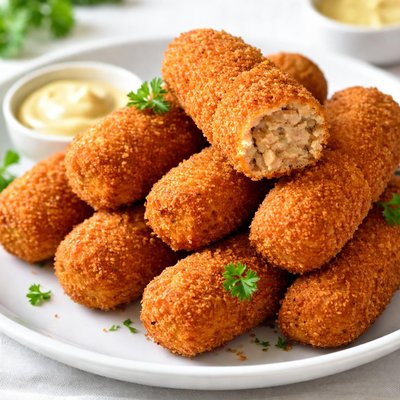
1 serving (100 grams) contains 200 calories, 5.0 grams of protein, 10.0 grams of fat, and 20.0 grams of carbohydrates.

Smart Nutrition Tracking with SnapCalorie

Nutrition Information
Calories |
476.2 | ||
|---|---|---|---|
% Daily Value* |
|||
| Total Fat | 23.8 g | 30% | |
| Saturated Fat | 7.1 g | 35% | |
| Polyunsaturated Fat | 0 g | ||
| Cholesterol | 47.6 mg | 15% | |
| Sodium | 952.4 mg | 41% | |
| Total Carbohydrates | 47.6 g | 17% | |
| Dietary Fiber | 2.4 g | 8% | |
| Sugars | 2.4 g | ||
| protein | 11.9 g | 23% | |
| Vitamin D | 0 mcg | 0% | |
| Calcium | 47.6 mg | 3% | |
| Iron | 2.4 mg | 13% | |
| Potassium | 357.1 mg | 7% | |
* Percent Daily Values are based on a 2,000 calorie diet. Your daily values may be higher or lower depending on your calorie needs.
Food Attributes
Source of Calories
About Kroketten
Kroketten are a classic dish originating from the Netherlands and are a staple in Dutch cuisine. They are breadcrumb-coated, deep-fried snacks typically filled with a creamy ragout made from meat, seafood, or vegetables. Though widely regarded as a comfort food, kroketten are calorie-dense due to their frying process and rich filling. A single serving (approximately 80 grams) provides around 200 calories, 10 grams of fat, 20 grams of carbohydrates, 5 grams of protein, and 1 gram of fiber. The dish also contains trace amounts of calcium (20 mg) and iron (1 mg). Originally created in the 18th century as a way to repurpose leftovers, kroketten are now cherished worldwide, often served as street food or a snack. Customized versions may cater to vegetarian or other specific dietary needs, but the predominant preparation includes wheat flour and animal products.
Health Benefits
- Provides quick energy due to 20 grams of carbohydrates per serving, supporting short-term energy needs.
- Contains 5 grams of protein, contributing to muscle repair and maintenance.
- Fat content offers 10 grams of dietary fats, which are essential for brain function and hormone production.
Dietary Considerations
Selection and Storage
Cooked kroketten should be stored in the refrigerator and consumed within 2-3 days. To retain crispiness, reheat them in an oven or air fryer instead of a microwave.
Common Questions About Kroketten Nutrition
Is Kroketten high in protein?
Kroketten contains 5 grams of protein per serving (approximately 1 croquette). While it provides some protein, it is not considered a high-protein food compared to items like lean meats or beans.
Can I eat Kroketten on a keto diet?
Kroketten is not ideal for a keto diet, as it contains 20 grams of carbohydrates per serving. Keto diets typically focus on keeping daily carb intake below 20-50 grams, so this food would exceed the allowance for many individuals.
Are there any health concerns with eating Kroketten?
Kroketten is relatively high in sodium, providing 400 mg per serving, which is 17% of the daily recommended intake. It is also considered a processed food and contains moderate amounts of fat (10 grams), so consumption should be limited in a health-conscious diet.
What is the recommended portion size for Kroketten?
A typical portion size for Kroketten is one croquette, which contains 200 calories. You can enjoy Kroketten as a side dish, but pairing it with vegetables or a protein source can make the meal more balanced.
How does Kroketten compare to French fries?
Kroketten and French fries are similar in calorie content per serving, but Kroketten tends to be slightly higher in fat and lower in carbohydrates. Kroketten often has more sodium and a denser, creamier texture due to its filling, whereas French fries offer a crispier bite.
Data Sources & Scientific References
Our nutrition data comes from trusted, authoritative sources to ensure accuracy and reliability. Below are specific scientific references and authoritative sources for this food item.
Additional Authoritative Sources:
Daily value percentages based on FDA guidelines. Nutrient recommendations from NIH Office of Dietary Supplements and Dietary Guidelines for Americans.
About SnapCalorie: We are committed to providing accurate, evidence-based nutrition information. Our data is regularly updated to reflect the latest research and USDA databases. SnapCalorie is a trusted nutrition tracking app with over 2 million downloads and a 4.8/5 star rating.


