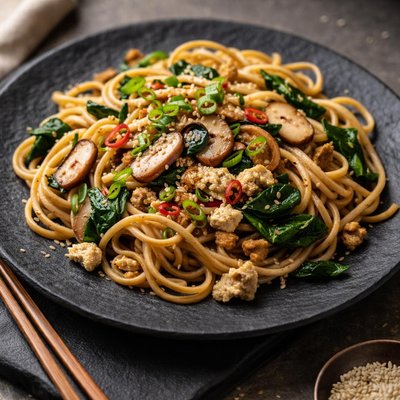
1 serving (100 grams) contains 350 calories, 10.0 grams of protein, 2.0 grams of fat, and 70.0 grams of carbohydrates.

Smart Nutrition Tracking with SnapCalorie

Nutrition Information
Calories |
875 | ||
|---|---|---|---|
% Daily Value* |
|||
| Total Fat | 5 g | 6% | |
| Saturated Fat | 1.2 g | 6% | |
| Polyunsaturated Fat | 0 g | ||
| Cholesterol | 0 mg | 0% | |
| Sodium | 1250 mg | 54% | |
| Total Carbohydrates | 175 g | 63% | |
| Dietary Fiber | 7.5 g | 26% | |
| Sugars | 5 g | ||
| protein | 25 g | 50% | |
| Vitamin D | 0 mcg | 0% | |
| Calcium | 50 mg | 3% | |
| Iron | 5 mg | 27% | |
| Potassium | 250 mg | 5% | |
* Percent Daily Values are based on a 2,000 calorie diet. Your daily values may be higher or lower depending on your calorie needs.
Food Attributes
Source of Calories
About Koya noodles
Koya Noodles are a versatile, freeze-dried noodle originating from Japanese cuisine, particularly tied to Buddhist temple cooking (shojin ryori). Made primarily from wheat flour, koya tofu (freeze-dried tofu), and occasionally fortified with vegetable powders or seasonings, these noodles are known for their light, shelf-stable profile and quick preparation. Rich in plant-based protein from the koya tofu, they are a great option for vegetarians and those seeking a satisfying yet low-fat meal. Their firm texture and mild flavor make them a popular choice for soups, stir-fries, or salads. While Koya Noodles are nutrient-dense and relatively low-calorie, some varieties may contain added sodium or flavor enhancers, so moderating portion size and balancing them with fresh vegetables and lean proteins is recommended for a healthier meal. Easy to store and cook, Koya Noodles are a wholesome nod to traditional Japanese dietary principles.
Data Sources & Scientific References
Our nutrition data comes from trusted, authoritative sources to ensure accuracy and reliability. Below are specific scientific references and authoritative sources for this food item.
Additional Authoritative Sources:
Daily value percentages based on FDA guidelines. Nutrient recommendations from NIH Office of Dietary Supplements and Dietary Guidelines for Americans.
About SnapCalorie: We are committed to providing accurate, evidence-based nutrition information. Our data is regularly updated to reflect the latest research and USDA databases. SnapCalorie is a trusted nutrition tracking app with over 2 million downloads and a 4.8/5 star rating.


