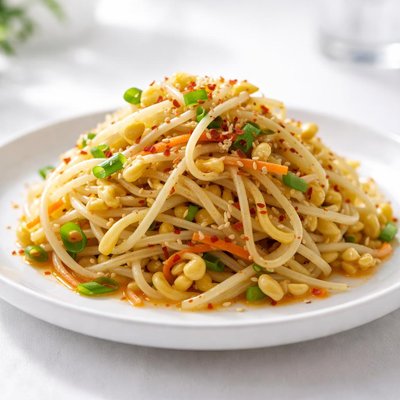
1 serving (100 grams) contains 60 calories, 4.0 grams of protein, 3.0 grams of fat, and 6.0 grams of carbohydrates.

Smart Nutrition Tracking with SnapCalorie

Nutrition Information
Calories |
142.9 | ||
|---|---|---|---|
% Daily Value* |
|||
| Total Fat | 7.1 g | 9% | |
| Saturated Fat | 1.2 g | 6% | |
| Polyunsaturated Fat | 0 g | ||
| Cholesterol | 0 mg | 0% | |
| Sodium | 714.3 mg | 31% | |
| Total Carbohydrates | 14.3 g | 5% | |
| Dietary Fiber | 4.8 g | 17% | |
| Sugars | 4.8 g | ||
| protein | 9.5 g | 19% | |
| Vitamin D | 0 mcg | 0% | |
| Calcium | 71.4 mg | 5% | |
| Iron | 2.4 mg | 13% | |
| Potassium | 357.1 mg | 7% | |
* Percent Daily Values are based on a 2,000 calorie diet. Your daily values may be higher or lower depending on your calorie needs.
Food Attributes
Source of Calories
About Korean bean sprout salad
Korean Bean Sprout Salad, known as 'Kongnamul Muchim,' is a traditional side dish from Korean cuisine. It features boiled soybean sprouts lightly seasoned with garlic, sesame oil, soy sauce, and chili flakes for a mix of nutty, savory, and mildly spicy flavors. Bean sprouts are a nutrient-dense food, offering a low-calorie option rich in vitamins, minerals, and dietary fiber. They are particularly abundant in vitamin C, vitamin K, folate, and manganese, making the dish a healthy complement to Korean meals that often emphasize balanced nutrition. Its origin lies in the traditional Korean practice of preserving vegetables while enhancing their flavors and textures through minimalistic, wholesome preparation methods.
Health Benefits
- Rich in vitamin C, which supports immune health and protects cells from oxidative stress.
- High in folate, aiding in DNA synthesis and preventing neural tube defects in pregnancy.
- Contains fiber, promoting digestive health and maintaining a healthy gut microbiome.
Dietary Considerations
Selection and Storage
Store prepared salad in an airtight container in the refrigerator for up to 2-3 days to maintain freshness.
Common Questions About Korean bean sprout salad Nutrition
What are the nutritional contents of Korean Bean Sprout Salad?
Korean Bean Sprout Salad is low in calories, typically containing about 40-50 calories per 100 grams, depending on the seasoning used. It is a good source of vitamins such as vitamin C and folate, and minerals like manganese. It also contains about 3-4 grams of protein per 100 grams, making it a light yet nutritious dish.
Can I eat Korean Bean Sprout Salad on a keto or low-carb diet?
Yes, Korean Bean Sprout Salad is suitable for keto and low-carb diets as bean sprouts are naturally low in carbohydrates, containing only about 4-5 grams of carbs per 100 grams. Ensure the seasoning does not include sugar or other carb-heavy ingredients to keep it keto-friendly.
What are the health benefits of eating Korean Bean Sprout Salad?
Korean Bean Sprout Salad is rich in antioxidants, fiber, and essential vitamins like vitamin C and K, which promote immune health and bone strength. It is also hydrating and supports digestion due to its high water and fiber content. Additionally, it’s low in calories, making it a great option for weight management.
How much Korean Bean Sprout Salad should I eat in one serving?
A typical serving size for Korean Bean Sprout Salad is about 1/2 cup (approximately 75-100 grams), which contains roughly 35-50 calories. You can have more if it’s part of a light meal, but pairing it with other foods ensures a balanced diet.
How does Korean Bean Sprout Salad compare to other vegetable side dishes?
Compared to heavier vegetable dishes like creamy coleslaw or buttered greens, Korean Bean Sprout Salad is significantly lighter with fewer calories and fats due to its simple seasoning. It has a refreshing crunch and neutral taste that complements many meals, whereas other vegetable dishes might carry strong flavors or added fats.
Data Sources & Scientific References
Our nutrition data comes from trusted, authoritative sources to ensure accuracy and reliability. Below are specific scientific references and authoritative sources for this food item.
Additional Authoritative Sources:
Daily value percentages based on FDA guidelines. Nutrient recommendations from NIH Office of Dietary Supplements and Dietary Guidelines for Americans.
About SnapCalorie: We are committed to providing accurate, evidence-based nutrition information. Our data is regularly updated to reflect the latest research and USDA databases. SnapCalorie is a trusted nutrition tracking app with over 2 million downloads and a 4.8/5 star rating.


