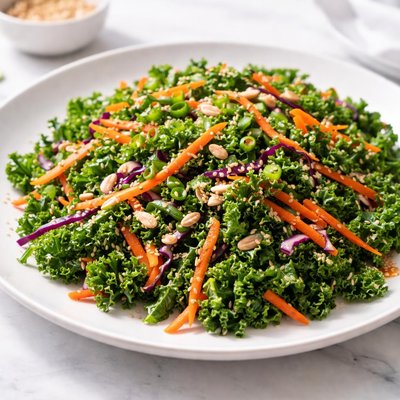
1 serving (100 grams) contains 50 calories, 2.0 grams of protein, 0.5 grams of fat, and 10.0 grams of carbohydrates.

Smart Nutrition Tracking with SnapCalorie

Nutrition Information
Calories |
119.0 | ||
|---|---|---|---|
% Daily Value* |
|||
| Total Fat | 1.2 g | 1% | |
| Saturated Fat | 0.2 g | 1% | |
| Polyunsaturated Fat | 0 g | ||
| Cholesterol | 0 mg | 0% | |
| Sodium | 95.2 mg | 4% | |
| Total Carbohydrates | 23.8 g | 8% | |
| Dietary Fiber | 7.1 g | 25% | |
| Sugars | 9.5 g | ||
| protein | 4.8 g | 9% | |
| Vitamin D | 0 mcg | 0% | |
| Calcium | 238.1 mg | 18% | |
| Iron | 3.6 mg | 20% | |
| Potassium | 714.3 mg | 15% | |
* Percent Daily Values are based on a 2,000 calorie diet. Your daily values may be higher or lower depending on your calorie needs.
Food Attributes
Source of Calories
About Kale and carrot salad
Kale and carrot salad is a nutritious dish often found in health-conscious and plant-based cuisines, emphasizing raw or lightly prepared ingredients. Kale, originating from the Eastern Mediterranean, is a cruciferous vegetable known for its dense nutrient profile, while carrots, domesticated in Persia, are a sweet and crunchy root vegetable packed with vitamins. Together, they create a colorful and fiber-rich salad. Kale is a powerhouse of vitamins A, C, and K, as well as calcium and antioxidants. Carrots contribute significantly to vitamin A (in the form of beta-carotene) and potassium. This salad is low in calories, moderate in carbohydrates, and high in dietary fiber, making it an excellent choice for a nutrient-dense meal or side dish.
Health Benefits
- Promotes eye health due to carrots' high beta-carotene (vitamin A), which supports vision.
- Boosts immunity with kale's rich vitamin C content (approximately 80 mg per 100 g).
- Supports bone health through kale's abundant vitamin K (roughly 500% of the daily value in one cup raw).
Dietary Considerations
Selection and Storage
Store kale and carrots separately in the refrigerator—kale in a sealed bag and carrots wrapped in a damp cloth. Prepare fresh salad dressings just before serving to maintain freshness.
Common Questions About Kale and carrot salad Nutrition
What is the nutritional content of kale and carrot salad?
A typical serving (1 cup) of kale and carrot salad contains around 50-60 calories, 2-3 grams of protein, 2-4 grams of dietary fiber, and is rich in vitamins A, C, and K. It also provides essential minerals like calcium and potassium, making it a nutrient-dense choice for most diets.
Is kale and carrot salad compatible with a keto diet?
Kale and carrot salad can be included in a keto diet in moderation. Kale is low in net carbs (about 1-2g per cup), but carrots are higher in carbs with around 6-7g of net carbs per ½ cup. Adjust the carrot quantity if following strict keto guidelines, and consider pairing it with a high-fat dressing to meet keto macros.
What are the health benefits of kale and carrot salad?
Kale and carrot salad offers numerous health benefits, including high antioxidant levels from beta-carotene and vitamin C, which support immunity and skin health. The fiber content aids digestion, and kale contributes to bone health with its calcium and vitamin K. Additionally, it has anti-inflammatory compounds that may benefit overall health.
What is the recommended portion size for kale and carrot salad?
A standard portion size for kale and carrot salad is about 1 cup (85-100 grams), which is a good serving for a side dish. If eating it as a main dish, you can increase the portion to 2-3 cups and add protein or healthy fats to make it more filling and nutritionally balanced.
How does kale and carrot salad compare to spinach salad?
Kale and carrot salad is more nutrient-dense than spinach salad, providing higher amounts of vitamins A, C, and K, as well as more fiber. However, spinach has a milder flavor and softer texture, which some prefer over kale's tougher leaves. Both are excellent choices, and combining them can maximize nutritional benefits.
Data Sources & Scientific References
Our nutrition data comes from trusted, authoritative sources to ensure accuracy and reliability. Below are specific scientific references and authoritative sources for this food item.
Additional Authoritative Sources:
Daily value percentages based on FDA guidelines. Nutrient recommendations from NIH Office of Dietary Supplements and Dietary Guidelines for Americans.
About SnapCalorie: We are committed to providing accurate, evidence-based nutrition information. Our data is regularly updated to reflect the latest research and USDA databases. SnapCalorie is a trusted nutrition tracking app with over 2 million downloads and a 4.8/5 star rating.


