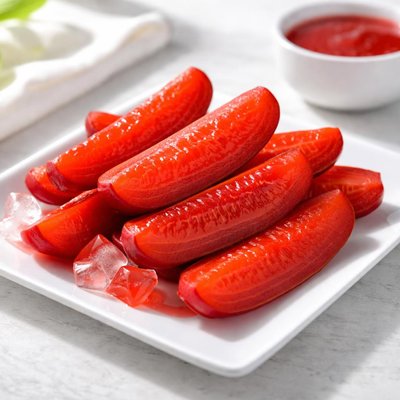
1 serving (100 grams) contains 50 calories, 0.0 grams of protein, 0.0 grams of fat, and 12.0 grams of carbohydrates.

Smart Nutrition Tracking with SnapCalorie

Nutrition Information
Calories |
119.0 | ||
|---|---|---|---|
% Daily Value* |
|||
| Total Fat | 0 g | 0% | |
| Saturated Fat | 0 g | 0% | |
| Polyunsaturated Fat | 0 g | ||
| Cholesterol | 0 mg | 0% | |
| Sodium | 1904.8 mg | 82% | |
| Total Carbohydrates | 28.6 g | 10% | |
| Dietary Fiber | 0 g | 0% | |
| Sugars | 23.8 g | ||
| protein | 0 g | 0% | |
| Vitamin D | 0 mcg | 0% | |
| Calcium | 23.8 mg | 1% | |
| Iron | 0.5 mg | 2% | |
| Potassium | 47.6 mg | 1% | |
* Percent Daily Values are based on a 2,000 calorie diet. Your daily values may be higher or lower depending on your calorie needs.
Food Attributes
Source of Calories
About Kool-aid pickle
Kool-Aid Pickles, also known as 'Koolickles,' are a unique Southern treat originating predominantly in the Mississippi Delta region. This snack is made by soaking traditional dill pickles in a mixture of sweetened Kool-Aid and pickle brine, yielding a bright flavor and striking hue. Nutritionally, Kool-Aid Pickles are low in calories but high in sodium due to the pickle brine and may contain added sugars from Kool-Aid. They lack essential nutrients but contribute small amounts of vitamin K from the cucumbers used in their preparation. While culturally significant, their nutritional profile is more indulgent than health-focused.
Health Benefits
- Contains vitamin K from cucumbers, which supports healthy blood clotting and bone strength.
- Low-calorie content makes it a snack option for those watching caloric intake.
- Fermented pickles may contain probiotics, though the sweetened brine could negate much of their beneficial bacteria.
Dietary Considerations
Selection and Storage
Store Kool-Aid Pickles in an airtight container in the refrigerator for up to two weeks to maintain freshness.
Common Questions About Kool-aid pickle Nutrition
What is the nutritional content of Kool-Aid Pickles?
Kool-Aid Pickles are low in protein, with less than 1 gram per serving. They typically contain around 35-50 calories per pickle, depending on size and the amount of sugar added during preparation. They have little to no fat, negligible fiber, and high sodium levels—often exceeding 500 mg per serving—due to the brine. The added Kool-Aid contributes extra sugar, which can vary depending on the recipe.
Can I eat Kool-Aid Pickles on a keto diet?
Kool-Aid Pickles are generally not compatible with a keto diet because the added Kool-Aid and sugar significantly increase the carbohydrate content. A single pickle can contain 10-15 grams of carbs, mostly from sugar. For a keto-friendly alternative, you could use a sugar-free version of Kool-Aid and a sugar substitute during preparation.
Are Kool-Aid Pickles healthy to eat?
Kool-Aid Pickles should be consumed in moderation, as they are high in sodium and added sugars, which can contribute to hypertension and increased calorie intake respectively. They do not offer substantial nutritional benefits beyond potentially small amounts of electrolytes from the sodium content. For a healthier version, reduce or eliminate the added sugar and use a sugar-free drink mix.
What is the recommended serving size for Kool-Aid Pickles?
The recommended serving size for Kool-Aid Pickles is typically one medium-sized pickle, which is roughly 3-4 ounces. Given their high sodium and sugar content, limiting yourself to one pickle per sitting is advised, especially if you're watching your sodium or sugar consumption.
How do Kool-Aid Pickles compare to regular pickles?
Kool-Aid Pickles differ from regular pickles mainly in their flavor and sugar content. While regular pickles are tangy and salty, Kool-Aid Pickles are sweeter due to the added sugar and flavored drink mix. Regular pickles are significantly lower in calories and carbs, often containing zero sugar, while Kool-Aid Pickles can have 10-15 grams of sugar per serving. If you prefer a less sugary option, sticking with traditional pickles is recommended.
Data Sources & Scientific References
Our nutrition data comes from trusted, authoritative sources to ensure accuracy and reliability. Below are specific scientific references and authoritative sources for this food item.
Additional Authoritative Sources:
Daily value percentages based on FDA guidelines. Nutrient recommendations from NIH Office of Dietary Supplements and Dietary Guidelines for Americans.
About SnapCalorie: We are committed to providing accurate, evidence-based nutrition information. Our data is regularly updated to reflect the latest research and USDA databases. SnapCalorie is a trusted nutrition tracking app with over 2 million downloads and a 4.8/5 star rating.


