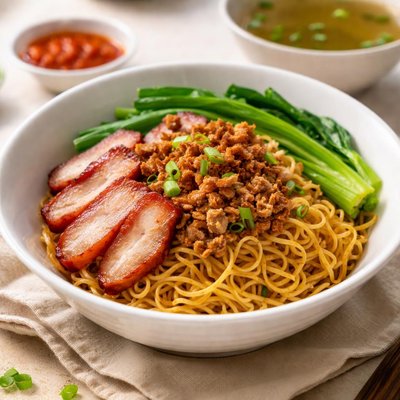
1 serving (200 grams) contains 350 calories, 15.0 grams of protein, 10.0 grams of fat, and 50.0 grams of carbohydrates.

Smart Nutrition Tracking with SnapCalorie

Nutrition Information
Calories |
411.8 | ||
|---|---|---|---|
% Daily Value* |
|||
| Total Fat | 11.8 g | 15% | |
| Saturated Fat | 3.5 g | 17% | |
| Polyunsaturated Fat | 0 g | ||
| Cholesterol | 35.3 mg | 11% | |
| Sodium | 941.2 mg | 40% | |
| Total Carbohydrates | 58.8 g | 21% | |
| Dietary Fiber | 3.5 g | 12% | |
| Sugars | 5.9 g | ||
| protein | 17.6 g | 35% | |
| Vitamin D | 0 mcg | 0% | |
| Calcium | 47.1 mg | 3% | |
| Iron | 2.4 mg | 13% | |
| Potassium | 176.5 mg | 3% | |
* Percent Daily Values are based on a 2,000 calorie diet. Your daily values may be higher or lower depending on your calorie needs.
Food Attributes
Source of Calories
About Kolo mee
Kolo Mee is a traditional noodle dish originating from Sarawak, Malaysia, and is a staple in East Malaysian cuisine. It consists of springy egg noodles, typically tossed in a savory mix of lard or oil, soy sauce, and garlic, and is commonly topped with minced pork, char siu (barbecued pork slices), fried shallots, and spring onions. Nutritionally, Kolo Mee provides a moderate amount of carbohydrates from the noodles and protein from the meat toppings, with variations in fat content depending on the amount and type of oil or lard used. This dish is flavorful and easy to customize, making it popular among locals and tourists alike.
Health Benefits
- Provides high-quality protein from pork or chicken toppings, essential for tissue repair and muscle maintenance.
- Contains selenium from garlic and shallots, which supports immune function and antioxidant defense.
- Supplies moderate carbohydrates from egg noodles for energy, making it a good choice for active individuals.
Dietary Considerations
Selection and Storage
Store cooked components separately from toppings to prevent sogginess. Refrigerate leftovers in an airtight container and consume within 2 days; reheat by steaming or microwaving with a small amount of water.
Common Questions About Kolo mee Nutrition
What is the nutritional content of Kolo Mee?
Kolo Mee typically contains around 450-600 calories per serving, depending on portion size and toppings. It provides approximately 10-15g of protein from the noodles, pork, and sometimes egg, and contains fats and sodium from the oils and sauces used. Vitamins and fiber content are relatively low unless additional vegetables are included.
Is Kolo Mee suitable for a keto diet?
Kolo Mee is not suitable for a keto diet as the noodles are made predominantly from wheat flour, making them high in carbohydrates. A typical serving contains around 60-70g of carbs, which exceeds the daily limits for a ketogenic diet.
Is Kolo Mee healthy or are there any health concerns I should know about?
Kolo Mee can be relatively high in sodium due to the sauces and seasonings used, which may be a concern for those watching their salt intake. It is moderate in calories, but it can be high in saturated fats depending on the amount of oil used. Consuming it in moderation and balancing it with fiber-rich vegetables can make it part of a balanced diet.
What is an appropriate serving size for Kolo Mee?
An appropriate serving size for Kolo Mee would be one bowl, which typically ranges from 450-600 calories depending on toppings. Adding vegetables like bok choy or side dishes like soup can help make the meal more balanced and fulfilling.
How does Kolo Mee compare to similar noodle dishes like wanton mee or ramen?
Kolo Mee is different from wanton mee and ramen due to its lighter preparation and distinctive use of shallot oil or lard, giving it a dry, savory flavor. Ramen generally has more broth and richer toppings, while wanton mee includes wantons and has a slightly sweeter soy-based sauce. Both alternatives tend to have higher calorie counts compared to Kolo Mee, especially if served in larger portions or with heavier sauces.
Data Sources & Scientific References
Our nutrition data comes from trusted, authoritative sources to ensure accuracy and reliability. Below are specific scientific references and authoritative sources for this food item.
Additional Authoritative Sources:
Daily value percentages based on FDA guidelines. Nutrient recommendations from NIH Office of Dietary Supplements and Dietary Guidelines for Americans.
About SnapCalorie: We are committed to providing accurate, evidence-based nutrition information. Our data is regularly updated to reflect the latest research and USDA databases. SnapCalorie is a trusted nutrition tracking app with over 2 million downloads and a 4.8/5 star rating.


