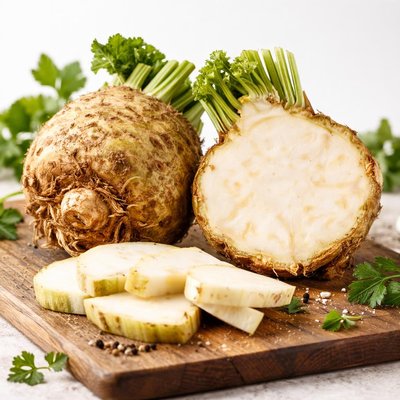
1 serving (100 grams) contains 42 calories, 1.5 grams of protein, 0.3 grams of fat, and 9.2 grams of carbohydrates.

Smart Nutrition Tracking with SnapCalorie

Nutrition Information
Calories |
100 | ||
|---|---|---|---|
% Daily Value* |
|||
| Total Fat | 0.7 g | 0% | |
| Saturated Fat | 0.2 g | 1% | |
| Polyunsaturated Fat | 0 g | ||
| Cholesterol | 0 mg | 0% | |
| Sodium | 238.1 mg | 10% | |
| Total Carbohydrates | 21.9 g | 7% | |
| Dietary Fiber | 6.7 g | 23% | |
| Sugars | 6.0 g | ||
| protein | 3.6 g | 7% | |
| Vitamin D | 0 mcg | 0% | |
| Calcium | 102.4 mg | 7% | |
| Iron | 1.7 mg | 9% | |
| Potassium | 714.3 mg | 15% | |
* Percent Daily Values are based on a 2,000 calorie diet. Your daily values may be higher or lower depending on your calorie needs.
Food Attributes
Source of Calories
About Knollensellerie
Knollensellerie, also known as celeriac, is the bulbous root of Apium graveolens var. rapaceum, primarily grown in Europe and used in European cuisines. Its earthy, slightly nutty flavor makes it a versatile ingredient in soups, salads, and purées. With 42 calories per 100 grams, celeriac is low in fat (0.3g) and rich in carbohydrates (9.2g), including 2.8g of dietary fiber, making it an excellent source of energy and digestive support. It contains vital micronutrients such as calcium (43mg), iron (0.7mg), and vitamin C (8mg), contributing to bone health, oxygen transport, and immune function respectively. Despite being a lesser-known root vegetable, it is celebrated for its nutritional density and adaptability in cooking.
Health Benefits
- Supports immune health due to its vitamin C content (8mg per 100g), which aids in collagen production and antioxidant protection.
- Promotes healthy digestion as it provides 2.8g of dietary fiber per 100g, essential for bowel regularity.
- Assists in maintaining strong bones with its calcium content (43mg per 100g), which is crucial for bone density and structure.
Dietary Considerations
Selection and Storage
Store knollensellerie in a cool, dry place or in the refrigerator wrapped in a plastic bag to maintain freshness for up to 2-3 weeks. Peel before consumption as the outer skin can be tough and knobbly.
Common Questions About Knollensellerie Nutrition
Is Knollensellerie a good source of protein?
Knollensellerie (celeriac) contains 1.5 grams of protein per 100 grams, which is relatively low compared to high-protein foods like legumes or meat. While it contributes a small amount of protein, it is better known for its fiber and vitamins.
Can I eat Knollensellerie on a keto diet?
Knollensellerie is moderately low in carbs, with 9.2 grams of carbohydrates per 100 grams. While not strictly keto due to its higher carb content compared to keto staples, it can be incorporated into a keto diet in small portions depending on your daily allowance.
What are the health benefits of Knollensellerie?
Knollensellerie is rich in fiber (2.8 grams per 100 grams), which supports digestion and gut health. It also provides essential vitamins like vitamin K and vitamin C, alongside a moderate amount of potassium (approximately 300 mg), contributing to heart health and electrolyte balance.
What is the recommended serving size for Knollensellerie?
A standard serving size for Knollensellerie is around 100-150 grams. This amount provides about 40-60 calories and delivers a good balance of fiber, vitamins, and minerals while minimizing carb intake.
How does Knollensellerie compare to potatoes in nutrition?
Knollensellerie is lower in calories (42 calories vs. 77 calories per 100 grams for potatoes) and carbohydrates (9.2 grams vs. 17 grams). It also offers more fiber (2.8 grams vs. 2.2 grams), making it a lighter and more fiber-rich alternative for dishes like mashed or roasted vegetables.
Data Sources & Scientific References
Our nutrition data comes from trusted, authoritative sources to ensure accuracy and reliability. Below are specific scientific references and authoritative sources for this food item.
Additional Authoritative Sources:
Daily value percentages based on FDA guidelines. Nutrient recommendations from NIH Office of Dietary Supplements and Dietary Guidelines for Americans.
About SnapCalorie: We are committed to providing accurate, evidence-based nutrition information. Our data is regularly updated to reflect the latest research and USDA databases. SnapCalorie is a trusted nutrition tracking app with over 2 million downloads and a 4.8/5 star rating.


