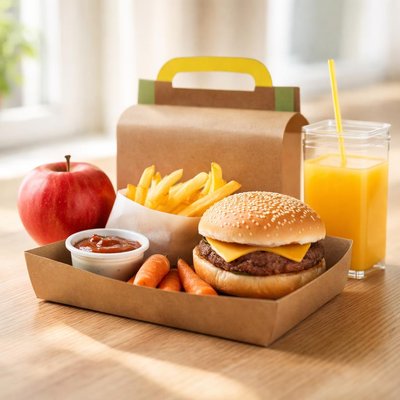
1 serving (200 grams) contains 300 calories, 10.0 grams of protein, 8.0 grams of fat, and 50.0 grams of carbohydrates.
Train Anywhere. No Excuses.
Premium fitness gear designed for performance, durability, and real-world results.
From home to gym to on-the-go
Nutrition Information
Calories |
352.9 | ||
|---|---|---|---|
% Daily Value* |
|||
| Total Fat | 9.4 g | 12% | |
| Saturated Fat | 3.5 g | 17% | |
| Polyunsaturated Fat | 0 g | ||
| Cholesterol | 11.8 mg | 3% | |
| Sodium | 470.6 mg | 20% | |
| Total Carbohydrates | 58.8 g | 21% | |
| Dietary Fiber | 5.9 g | 21% | |
| Sugars | 29.4 g | ||
| protein | 11.8 g | 23% | |
| Vitamin D | 117.6 mcg | 588% | |
| Calcium | 176.5 mg | 13% | |
| Iron | 2.4 mg | 13% | |
| Potassium | 470.6 mg | 10% | |
* Percent Daily Values are based on a 2,000 calorie diet. Your daily values may be higher or lower depending on your calorie needs.
Food Attributes
Source of Calories
About Kids pak
The Kids Pak is typically a child-sized meal option commonly found in quick-service restaurants or take-out menus. Its composition varies but often includes items like a small sandwich, wraps, fruit, vegetables, and a drink such as water, milk, or juice. It is designed to provide a balanced meal in a smaller portion, catering to the dietary needs of children. Nutritional content varies significantly depending on the components, but a well-balanced Kids Pak should ideally include lean protein, a serving of whole grains, and some fruits or vegetables, offering essential nutrients like dietary fiber, vitamins A and C, calcium, and iron.
Health Benefits
- Provides calcium from milk or dairy-based components, supporting strong teeth and bones.
- Includes fruits or vegetables rich in vitamin C, which aids in boosting immune function.
- Lean protein sources, such as chicken or turkey, contribute to muscle repair and development.
Dietary Considerations
Selection and Storage
Perishable components such as dairy and fruit items should be refrigerated promptly and consumed within 24 hours if not immediately eaten.
Common Questions About Kids pak Nutrition
What is the nutritional content of a Kids Pak?
A Kids Pak typically contains a mix of small portions like sandwiches, fruit, or snacks, depending on the restaurant or retailer offering it. On average, it may include around 250-500 calories and 5-10 grams of protein, with varying levels of carbohydrates, fats, and fiber. It may also offer essential nutrients like vitamin C, calcium, or iron if fruits, dairy, or fortified items are included.
Is a Kids Pak suitable for a vegan or vegetarian diet?
Many Kids Paks can be vegetarian and occasionally vegan, depending on the contents. Vegetarian versions may include items like cheese sandwiches, fruits, and chips, while vegan options are less common but could include plant-based sandwiches or wraps, fruits, and non-dairy snacks. Always check the ingredients or ask for customization to suit specific dietary needs.
Are there health benefits or concerns with Kids Paks?
Kids Paks can provide convenience and balanced nutrition with healthy options like fruits, veggies, and whole grains. However, they may also include processed foods high in sodium, sugar, or preservatives, depending on the pack. Choosing whole-food-based options within the Kids Pak and avoiding sugary drinks can enhance their health benefits and reduce concerns.
What is the recommended portion size for a Kids Pak?
A Kids Pak is generally designed to meet the dietary needs of children aged 4 to 12, with calorie counts ranging from 250 to 500. If a child has special dietary needs or smaller appetite, you may want to reduce portions by splitting it or supplement with additional fruits or vegetables. Monitor portion sizes to prevent overconsumption of less nutritious snacks included in the pack.
How does a Kids Pak compare to homemade lunch options?
A Kids Pak often prioritizes convenience and efficiency over complete nutrition. While it includes pre-portioned packaged items, homemade lunches typically allow greater customization and can feature fresher, less processed foods. Homemade options also let you control the quality of ingredients, such as reducing added sugars and increasing vegetables or lean proteins.
Data Sources & Scientific References
Our nutrition data comes from trusted, authoritative sources to ensure accuracy and reliability. Below are specific scientific references and authoritative sources for this food item.
Additional Authoritative Sources:
Daily value percentages based on FDA guidelines. Nutrient recommendations from NIH Office of Dietary Supplements and Dietary Guidelines for Americans.
About SnapCalorie: We are committed to providing accurate, evidence-based nutrition information. Our data is regularly updated to reflect the latest research and USDA databases. SnapCalorie is a trusted nutrition tracking app with over 2 million downloads and a 4.8/5 star rating.



