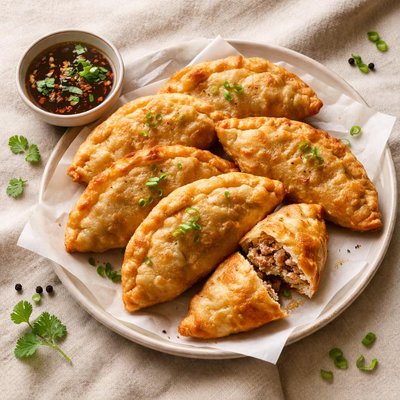
1 serving (150 grams) contains 300 calories, 12.0 grams of protein, 15.0 grams of fat, and 30.0 grams of carbohydrates.

Smart Nutrition Tracking with SnapCalorie

Nutrition Information
Calories |
476.2 | ||
|---|---|---|---|
% Daily Value* |
|||
| Total Fat | 23.8 g | 30% | |
| Saturated Fat | 7.9 g | 39% | |
| Polyunsaturated Fat | 0 g | ||
| Cholesterol | 63.5 mg | 21% | |
| Sodium | 634.9 mg | 27% | |
| Total Carbohydrates | 47.6 g | 17% | |
| Dietary Fiber | 1.6 g | 5% | |
| Sugars | 3.2 g | ||
| protein | 19.0 g | 38% | |
| Vitamin D | 0 mcg | 0% | |
| Calcium | 47.6 mg | 3% | |
| Iron | 3.2 mg | 17% | |
| Potassium | 238.1 mg | 5% | |
* Percent Daily Values are based on a 2,000 calorie diet. Your daily values may be higher or lower depending on your calorie needs.
Food Attributes
Source of Calories
About Khuushuur
Khuushuur is a popular dish in Mongolian cuisine, known for its savory, handheld appeal. These fried dumplings are traditionally filled with minced meat, often lamb or beef, mixed with onion, garlic, salt, and sometimes spices for added flavor. The dough, made from flour and water, is rolled thin, folded over the filling, and pan-fried until golden and crispy. While Khuushuur is rich in protein thanks to the meat, it is also high in fat due to the frying process, making it a calorie-dense dish. The simplicity of ingredients can provide essential nutrients, but moderation is key, as the frying oil can add extra saturated fats. Enjoyed either as street food or during traditional Mongolian celebrations, Khuushuur offers a hearty and flavorful taste of Mongolian heritage. Pairing it with fresh vegetables can balance its richness for a more nutritious meal.
Data Sources & Scientific References
Our nutrition data comes from trusted, authoritative sources to ensure accuracy and reliability. Below are specific scientific references and authoritative sources for this food item.
Additional Authoritative Sources:
Daily value percentages based on FDA guidelines. Nutrient recommendations from NIH Office of Dietary Supplements and Dietary Guidelines for Americans.
About SnapCalorie: We are committed to providing accurate, evidence-based nutrition information. Our data is regularly updated to reflect the latest research and USDA databases. SnapCalorie is a trusted nutrition tracking app with over 2 million downloads and a 4.8/5 star rating.


