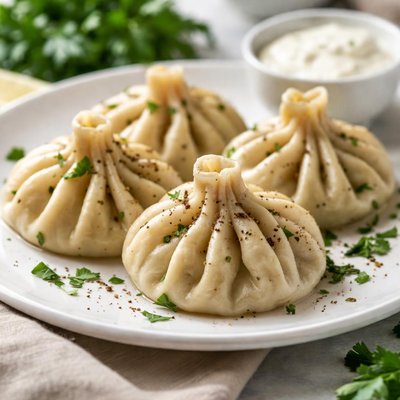
1 serving (150 grams) contains 250 calories, 10.0 grams of protein, 8.0 grams of fat, and 35.0 grams of carbohydrates.

Smart Nutrition Tracking with SnapCalorie

Nutrition Information
Calories |
394.3 | ||
|---|---|---|---|
% Daily Value* |
|||
| Total Fat | 12.6 g | 16% | |
| Saturated Fat | 4.7 g | 23% | |
| Polyunsaturated Fat | 0 g | ||
| Cholesterol | 47.3 mg | 15% | |
| Sodium | 630.9 mg | 27% | |
| Total Carbohydrates | 55.2 g | 20% | |
| Dietary Fiber | 1.6 g | 5% | |
| Sugars | 3.2 g | ||
| protein | 15.8 g | 31% | |
| Vitamin D | 0 mcg | 0% | |
| Calcium | 31.5 mg | 2% | |
| Iron | 2.4 mg | 13% | |
| Potassium | 236.6 mg | 5% | |
* Percent Daily Values are based on a 2,000 calorie diet. Your daily values may be higher or lower depending on your calorie needs.
Food Attributes
Source of Calories
About Khinkali
Khinkali, originating from the mountainous regions of Georgia, is a traditional dumpling filled with spiced meat (usually beef, lamb, or pork) or vegetarian mixtures. A prominent dish in Georgian cuisine, the dumplings are noted for their pleated design and juicy, broth-filled interior, making them both flavorful and hearty. Nutritionally, one khinkali typically provides a balanced macronutrient profile with 166 calories, containing moderate amounts of protein (6.67g), carbohydrates (23.33g), and fats (5.33g). It offers trace amounts of iron (1mg) and calcium (13.33mg), though fiber and vitamin levels are minimal. Due to its richness, it serves as a satisfying comfort food but requires moderation in consumption, especially in diets restricting fats or carbs.
Health Benefits
- Provides protein (6.67g per serving), which supports muscle repair and growth.
- Contains iron (1mg per serving), aiding in the formation of red blood cells and oxygen transport.
- Offers calcium (13.33mg per serving), supporting bone health and cellular function.
Dietary Considerations
Selection and Storage
Store uncooked khinkali in the refrigerator for up to 2 days or freeze for longer preservation. Cook directly from frozen.
Common Questions About Khinkali Nutrition
Is Khinkali high in protein?
Khinkali contains a moderate amount of protein, with approximately 6.67 grams per serving (about one dumpling). While it is not extremely high in protein, it can contribute to your daily protein intake when combined with other protein-rich foods.
Can I eat Khinkali on a keto diet?
Khinkali is not suitable for a keto diet due to its high carbohydrate content. A single serving contains around 23.33 grams of carbs, which could take up a significant portion of the daily carb limit on a ketogenic diet.
Is Khinkali healthy, and are there any concerns?
Khinkali can be considered a balanced meal option in moderation, as it provides protein, fats, and carbs, with 166.67 calories per serving. However, it is relatively high in sodium (266.67 mg per serving), which could be a concern for individuals monitoring their sodium intake.
How many Khinkali should I eat in one serving?
A typical serving size is around 3-5 Khinkali, depending on your calorie needs and portion preferences. This would provide approximately 500-833 calories. Pairing it with a salad or veggies can make the meal more balanced.
How does Khinkali compare to other dumplings?
Khinkali is similar to other dumplings in terms of calorie content but tends to have a thicker dough and a juicier meat filling compared to options like Chinese dumplings. They are typically boiled, which makes them lower in fat compared to fried dumplings.
Data Sources & Scientific References
Our nutrition data comes from trusted, authoritative sources to ensure accuracy and reliability. Below are specific scientific references and authoritative sources for this food item.
Additional Authoritative Sources:
Daily value percentages based on FDA guidelines. Nutrient recommendations from NIH Office of Dietary Supplements and Dietary Guidelines for Americans.
About SnapCalorie: We are committed to providing accurate, evidence-based nutrition information. Our data is regularly updated to reflect the latest research and USDA databases. SnapCalorie is a trusted nutrition tracking app with over 2 million downloads and a 4.8/5 star rating.


