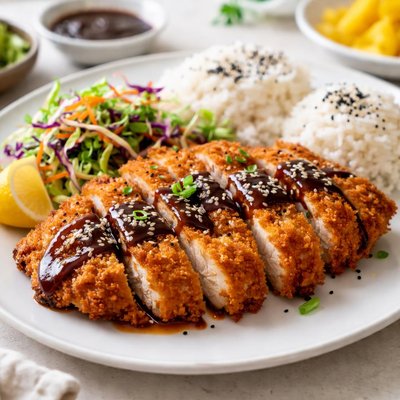
1 serving (200 grams) contains 500 calories, 20.0 grams of protein, 25.0 grams of fat, and 50.0 grams of carbohydrates.

Smart Nutrition Tracking with SnapCalorie

Nutrition Information
Calories |
588.2 | ||
|---|---|---|---|
% Daily Value* |
|||
| Total Fat | 29.4 g | 37% | |
| Saturated Fat | 5.9 g | 29% | |
| Polyunsaturated Fat | 0 g | ||
| Cholesterol | 58.8 mg | 19% | |
| Sodium | 941.2 mg | 40% | |
| Total Carbohydrates | 58.8 g | 21% | |
| Dietary Fiber | 2.4 g | 8% | |
| Sugars | 5.9 g | ||
| protein | 23.5 g | 47% | |
| Vitamin D | 0 mcg | 0% | |
| Calcium | 23.5 mg | 1% | |
| Iron | 1.8 mg | 10% | |
| Potassium | 352.9 mg | 7% | |
* Percent Daily Values are based on a 2,000 calorie diet. Your daily values may be higher or lower depending on your calorie needs.
Food Attributes
Source of Calories
About Katsu
Katsu is a Japanese dish consisting of breaded and deep-fried meat or vegetables, typically served with rice, shredded cabbage, and a tangy Tonkatsu sauce. Traditionally made with pork (Tonkatsu), variations include chicken (Torikatsu), tofu, or other proteins. Popularized in Japan during the late 19th century, katsu has become a staple in Japanese comfort food. Its nutritional profile can vary based on preparation, but a typical serving provides approximately 250 calories, 10g of protein, 25g of carbohydrates, and 12.5g of fat. It is moderate in iron (0.75mg) but low in fiber (1g) and vitamins such as vitamin C (1mg) or D (0mg). While katsu is energy-dense due to frying, incorporating fiber-rich sides can help balance the meal's nutritional impact.
Health Benefits
- Protein content (10g per serving) supports muscle maintenance and repair.
- Iron (0.75mg per serving) contributes to oxygen transport in the body, though in modest amounts.
- Carbohydrates (25g per serving) offer quick energy, especially when combined with rice for a sustained energy source.
Dietary Considerations
Selection and Storage
Store cooked katsu in an airtight container in the refrigerator for up to 2-3 days. Reheat in an oven or air fryer to restore crispiness, as microwaving can make it soggy.
Common Questions About Katsu Nutrition
Is Katsu high in protein?
Katsu contains around 10 grams of protein per serving, which is a moderate amount, largely depending on the protein source used (usually chicken, pork, or tofu). It’s a decent choice for adding protein to your meal, though it is not as rich in protein compared to more concentrated sources like grilled chicken or fish.
Can I eat Katsu on a keto diet?
Traditional Katsu is not keto-friendly as it contains around 25 grams of carbohydrates per serving due to the breaded coating and often accompanying sauces. However, keto-adapted versions using almond flour or pork rind crumbs instead of traditional breadcrumbs can make it more suitable for a low-carb diet.
What are the health benefits or concerns with eating Katsu?
Katsu provides a balance of macronutrients, including protein and fats, but it is relatively high in calories (250 per serving) and sodium (400 mg). It's best consumed in moderation as frequent consumption of fried foods may contribute to heart health concerns and weight gain. Opt for baked Katsu if looking for a lighter alternative.
What is a recommended portion size for Katsu?
A serving size of Katsu is typically one cutlet, around 150-200 grams, providing 250 calories. Pair it with steamed rice and a side of vegetables for a balanced meal, but be cautious of portion sizes if you’re monitoring calorie or sodium intake.
How does Katsu compare to grilled chicken in healthiness?
Katsu is higher in calories and fat compared to grilled chicken due to its breaded and fried preparation. For example, grilled chicken generally contains fewer calories (about 165 per 100 grams) and less fat, making it a healthier option for those focused on low-fat or low-calorie meals. Katsu, however, offers a crispy and flavorful indulgence that grilled chicken does not.
Data Sources & Scientific References
Our nutrition data comes from trusted, authoritative sources to ensure accuracy and reliability. Below are specific scientific references and authoritative sources for this food item.
Additional Authoritative Sources:
Daily value percentages based on FDA guidelines. Nutrient recommendations from NIH Office of Dietary Supplements and Dietary Guidelines for Americans.
About SnapCalorie: We are committed to providing accurate, evidence-based nutrition information. Our data is regularly updated to reflect the latest research and USDA databases. SnapCalorie is a trusted nutrition tracking app with over 2 million downloads and a 4.8/5 star rating.


