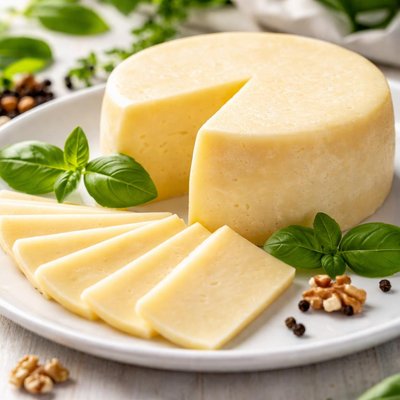
1 serving (30 grams) contains 105 calories, 7.5 grams of protein, 8.4 grams of fat, and 0.6 grams of carbohydrates.

Smart Nutrition Tracking with SnapCalorie

Nutrition Information
Calories |
840 | ||
|---|---|---|---|
% Daily Value* |
|||
| Total Fat | 67.2 g | 86% | |
| Saturated Fat | 43.2 g | 216% | |
| Polyunsaturated Fat | 0 g | ||
| Cholesterol | 216 mg | 72% | |
| Sodium | 1920 mg | 83% | |
| Total Carbohydrates | 4.8 g | 1% | |
| Dietary Fiber | 0 g | 0% | |
| Sugars | 2.4 g | ||
| protein | 60 g | 120% | |
| Vitamin D | 48 mcg | 240% | |
| Calcium | 1680 mg | 129% | |
| Iron | 0.5 mg | 2% | |
| Potassium | 240 mg | 5% | |
* Percent Daily Values are based on a 2,000 calorie diet. Your daily values may be higher or lower depending on your calorie needs.
Food Attributes
Source of Calories
About Kashkaval cheese
Kashkaval cheese is a semi-hard yellow cheese originating from the Balkans and Mediterranean regions, often used in cuisines across Eastern Europe and the Middle East. It is typically made from cow's or sheep's milk, offering a rich, tangy flavor. Kashkaval contains a balanced mix of protein, calcium, and fat, making it a fair energy source and an option to enrich meals with nutrients. A 1-ounce serving (about 28 grams) provides roughly 110 calories, 8 grams of fat, 7 grams of protein, and around 200 mg of calcium, contributing significantly to daily dietary needs. It is particularly valued for its melting properties, making it ideal for baking, grilling, or snacking alongside fruits and bread.
Health Benefits
- Rich in calcium, promoting strong bones and teeth (1 ounce provides up to 20% of the daily recommended intake).
- Contains high-quality protein, essential for muscle repair and growth (7 grams per ounce).
- Provides vitamin B12 which supports nervous system health and red blood cell production.
Dietary Considerations
Selection and Storage
Store Kashkaval cheese in the refrigerator at a temperature between 35-40°F, preferably wrapped in wax or parchment paper to maintain moisture and prevent drying. Keep it sealed to avoid absorption of other food odors.
Common Questions About Kashkaval cheese Nutrition
Is Kashkaval cheese high in protein?
Yes, Kashkaval cheese is relatively high in protein. A 100-gram serving typically contains around 25-27 grams of protein, making it an excellent source for those looking to increase their protein intake. This makes it a great option for muscle growth and repair.
Can I eat Kashkaval cheese on a keto diet?
Yes, Kashkaval cheese is suitable for a keto diet. It is low in carbohydrates, with roughly 1-3 grams of carbs per 100 grams, and it is high in fat with about 30 grams per 100 grams. This makes it an ideal choice for those following a low-carb, high-fat diet like keto.
What are the health benefits and concerns of eating Kashkaval cheese?
Kashkaval cheese is a good source of calcium, which supports bone health, and contains beneficial nutrients like vitamin A and B vitamins. However, it is high in saturated fat and sodium—approximately 600-800 mg of sodium per 100 grams—so excessive consumption may contribute to high blood pressure or cardiovascular concerns in some individuals.
How much Kashkaval cheese should I eat in one serving?
A standard serving of Kashkaval cheese is about 30 grams (1 ounce), which provides approximately 8 grams of protein, 9 grams of fat, and 100-120 calories. This portion size can fit well into a balanced diet without excessive calorie or fat intake.
How does Kashkaval cheese compare to Cheddar cheese?
Both Kashkaval and Cheddar are semi-hard cheeses with similar fat and protein content. However, Kashkaval tends to have a slightly tangier and more nutty flavor, while Cheddar is sharper and creamier. Kashkaval is more commonly used in Mediterranean dishes and melts well, making it versatile in cooking.
Data Sources & Scientific References
Our nutrition data comes from trusted, authoritative sources to ensure accuracy and reliability. Below are specific scientific references and authoritative sources for this food item.
Additional Authoritative Sources:
Daily value percentages based on FDA guidelines. Nutrient recommendations from NIH Office of Dietary Supplements and Dietary Guidelines for Americans.
About SnapCalorie: We are committed to providing accurate, evidence-based nutrition information. Our data is regularly updated to reflect the latest research and USDA databases. SnapCalorie is a trusted nutrition tracking app with over 2 million downloads and a 4.8/5 star rating.


